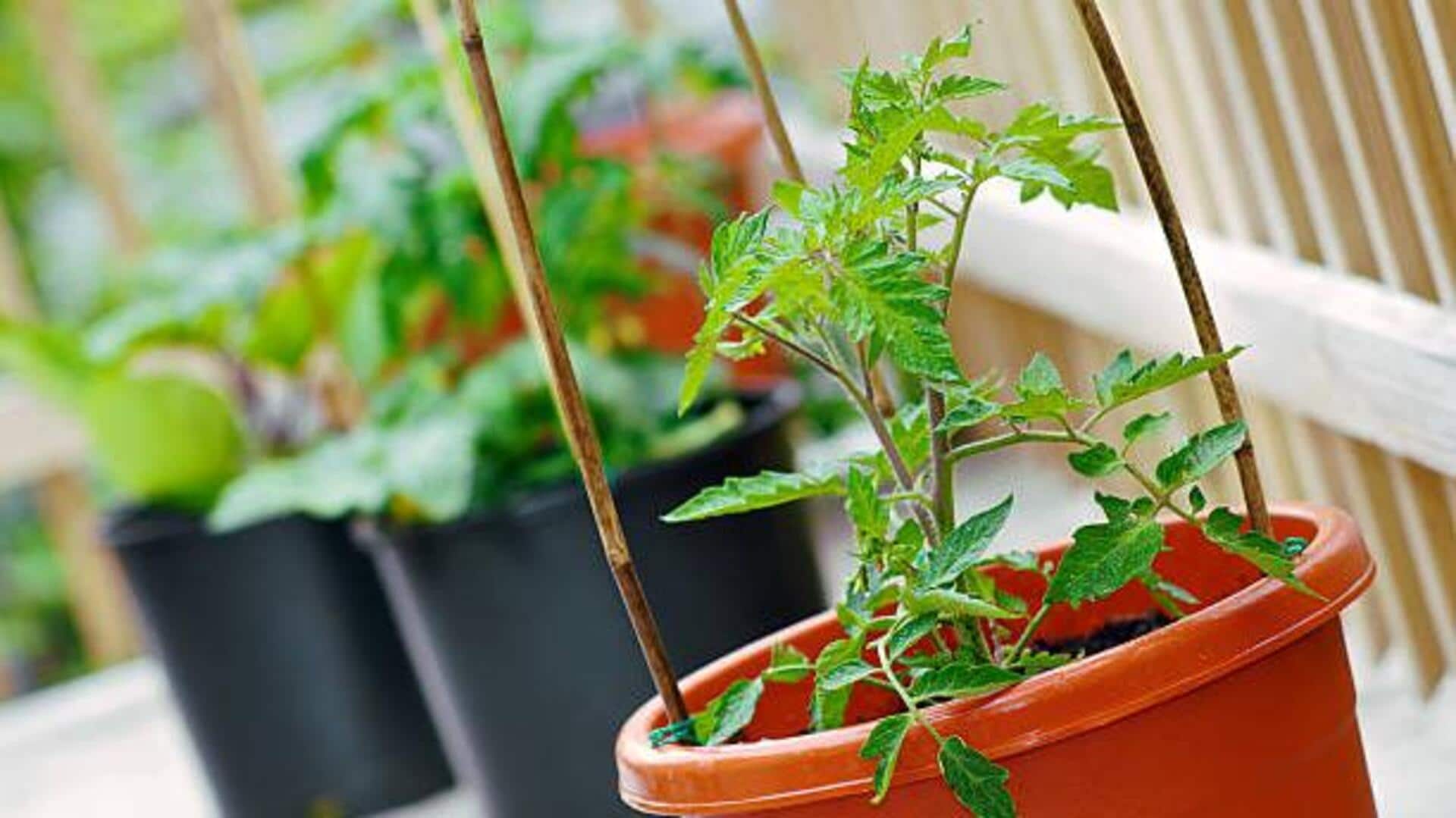
Container gardening: 5 tips for healthy plants
What's the story
Soil aeration is the key to healthy container gardening. It allows roots to breathe, promotes nutrient absorption, and prevents waterlogging. In container gardens, soil can easily become compacted, restricting airflow and harming plant growth. Here are five practical ways to improve soil aeration in your container gardens. These tips will help keep your plants healthy by ensuring optimal conditions for root development.
Tip 1
Use well-draining potting mix
Choosing a well-draining potting mix is essential for good soil aeration. Go for mixes with perlite or vermiculite, as they promote better drainage and air circulation. These materials keep the soil light and fluffy, preventing it from compacting over time. A good potting mix not only helps with drainage, but also retains enough moisture for plants to thrive.
Tip 2
Add organic matter regularly
Incorporating organic matter like compost or peat moss can greatly enhance soil structure and aeration. Organic materials break down over time, creating spaces within the soil that allow air to circulate more freely. Adding organic matter regularly also enriches the soil with nutrients, promoting healthier plant growth and improved microbial activity.
Tip 3
Ensure proper container size
Choosing the right container size is crucial for good aeration. If containers are too small, roots may become root-bound, leading to compacted soils. On the other hand, larger containers allow more room for roots to spread out, promoting better airflow within the soil. Make sure your containers are big enough to accommodate your plants' root systems, without restricting growth.
Tip 4
Incorporate mulch layers
Applying a layer of mulch on top of your container's soil can help with aeration by minimizing surface compaction from watering or foot traffic. Mulch also helps retain moisture and regulates temperature fluctuations within the container environment. Use organic mulches like shredded bark or straw that decompose slowly over time while still allowing air exchange.
Tip 5
Rotate plant placements regularly
Rotating plant placements in containers helps avoid uneven compaction of soils caused by root systems taking up space in certain areas over time. This practice promotes uniformity throughout all parts of each individual potting unit, and it ensures consistent levels of oxygenation across all sections, regardless of where specific species are located within those units themselves.