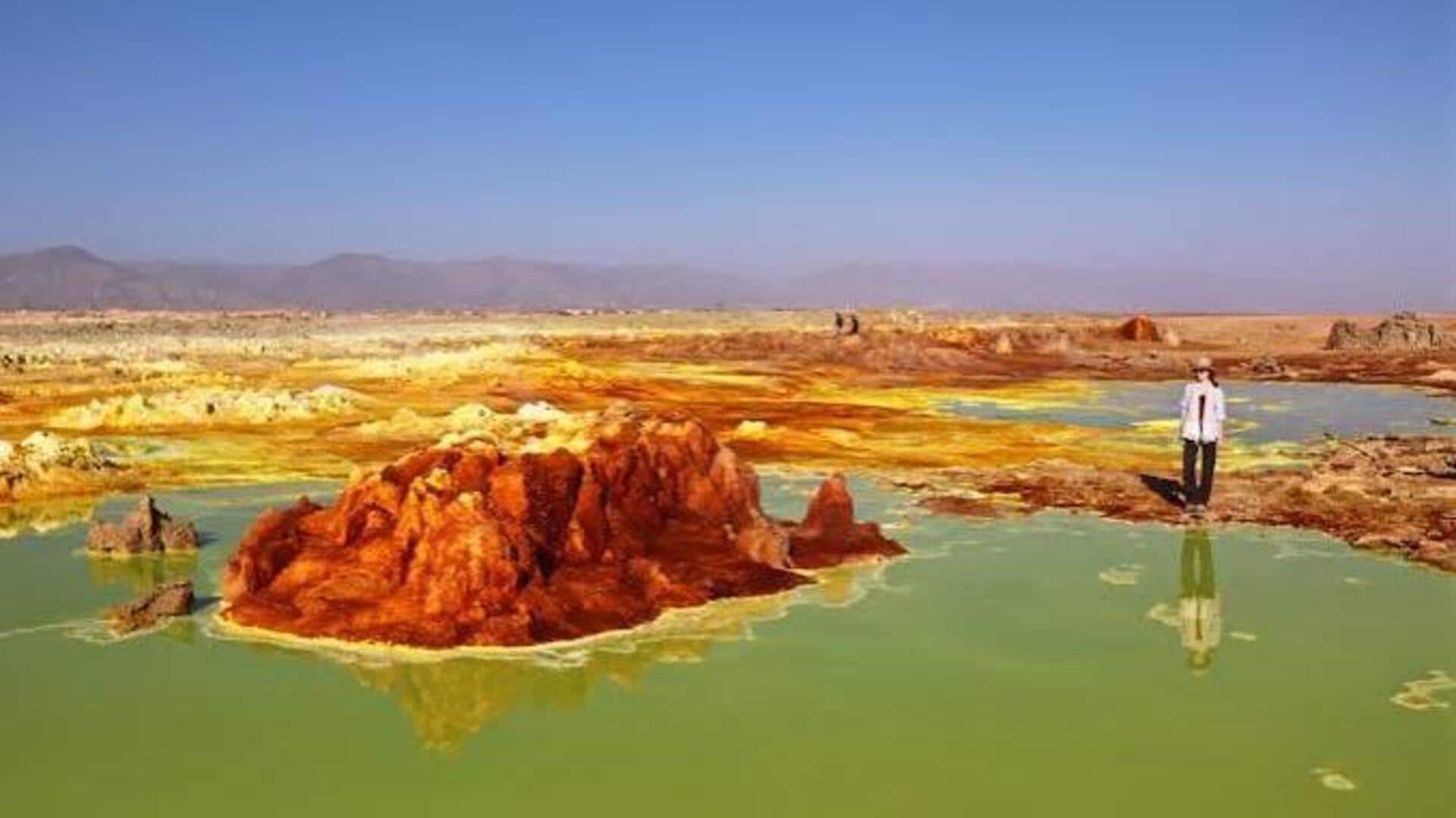
Ethiopia's Danakil Depression is a destination like no other!
What's the story
Ethiopia's Danakil Depression is one of the hottest places on Earth and an adventurer's dream. With its colorful mineral deposits, active volcanoes, and vast salt flats, this otherworldly landscape is unlike anything else. Exploring this region is not for the faint-hearted, but for those willing to brave extreme conditions, it offers a unique glimpse into Earth's geological wonders. Here's how to prepare for an unforgettable journey.
Temperature prep
Preparing for extreme temperatures
The Danakil Depression is famous for its extreme heat, with temperatures often crossing 40 degrees Celsius (104 degrees Fahrenheit).
To prepare, wear light, breathable clothes, and a wide-brimmed hat to shield yourself from the sun.
Staying hydrated is key; carry plenty of water at all times.
Plan your excursions during the early morning or late afternoon when the heat is less intense.
Volcanic safety
Navigating volcanic landscapes safely
The Danakil Depression is home to some of the most active volcanoes on the planet.
While visiting these sites, it is important to follow safety guidelines and stay within the designated areas.
Always listen to local guides who are familiar with the terrain and potential hazards.
Be aware of any volcanic activity warnings before your visit, as conditions can change rapidly.
Mineral exploration
Exploring colorful mineral formations
The unique mineral formations of the Danakil Depression are a sight to behold. The vivid colors of the landscape are a result of sulfur, salt, and other minerals.
When exploring these areas, respect the natural environment by not disturbing or removing any material. This will help preserve the beauty of this region for future visitors.
Cultural insights
Understanding local culture and communities
The Afar people, who live in the Danakil Depression, have a rich culture and history.
Respect them by learning a few basic phrases in their language and understanding their customs before visiting.
Engaging with local communities can give you a deeper understanding of the region's cultural heritage and make your trip more meaningful.