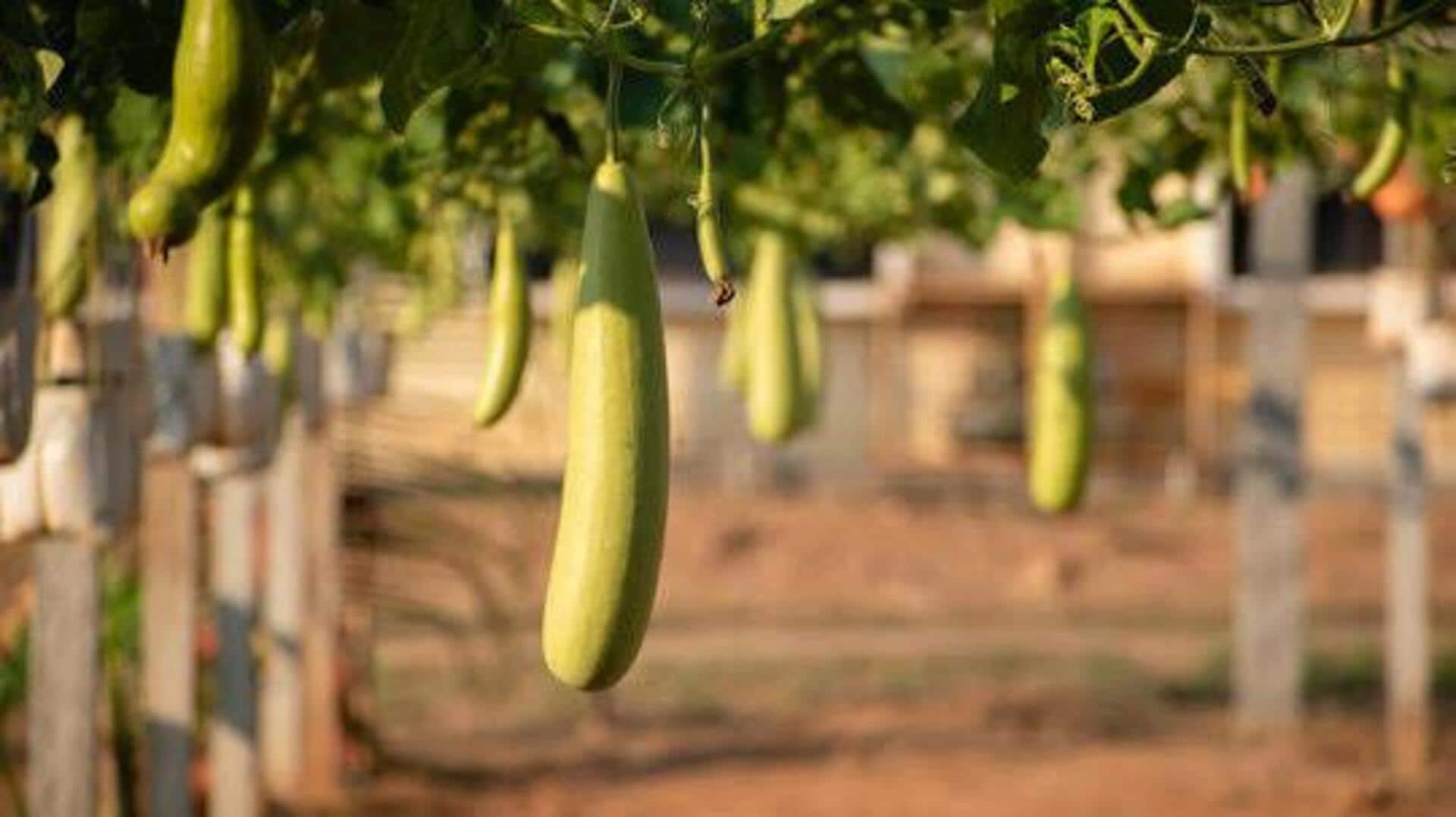
How to grow bottle gourds at home
What's the story
Growing bottle gourds at home can be a rewarding experience, especially if you have limited space. These versatile vegetables are not only easy to grow but also provide a nutritious addition to your diet. With the right conditions and care, you can enjoy a bountiful harvest of fresh bottle gourds. Here are some practical tips to help you successfully grow bottle gourds in your home garden.
Tip 1
Choosing the right container
Selecting an appropriate container is crucial for growing bottle gourds indoors.
A pot with a minimum depth of 12 inches and adequate drainage holes is recommended.
This ensures the roots have enough space to grow and prevents waterlogging, which can damage the plant.
Using a lightweight potting mix will make it easier to move the container around as needed.
Tip 2
Providing adequate sunlight
Bottle gourds require plenty of sunlight to thrive, ideally six hours of direct sunlight every day.
Place your container in a south-facing window or balcony, where it can soak up the sun's rays.
If natural light isn't enough, you can use grow lights to supplement it, ensuring that the plants receive adequate light for healthy growth.
Tip 3
Maintaining optimal soil conditions
The soil pH for bottle gourds should be between 6.0 and 7.0.
Use well-draining soil enriched with organic matter like compost or peat moss for best results.
Regularly check moisture levels; keep the soil consistently moist, but not waterlogged, by watering when the top inch feels dry.
Tip 4
Pruning and supporting plants
As bottle gourd plants grow, they may require pruning to control their size and shape.
Trim back excessive foliage, ensuring that leaves near the base remain intact for photosynthesis.
Providing support with trellises or stakes helps keep vines upright, preventing them from sprawling out too much in limited spaces.
Tip 5
Monitoring for pests and diseases
Regularly inspect your bottle gourd plants for signs of pests, such as aphids or spider mites, which can damage leaves and stems.
Use insecticidal soap or neem oil as natural remedies if necessary.
Also, watch out for fungal diseases by ensuring good air circulation around plants, and avoiding overhead watering during humid conditions.