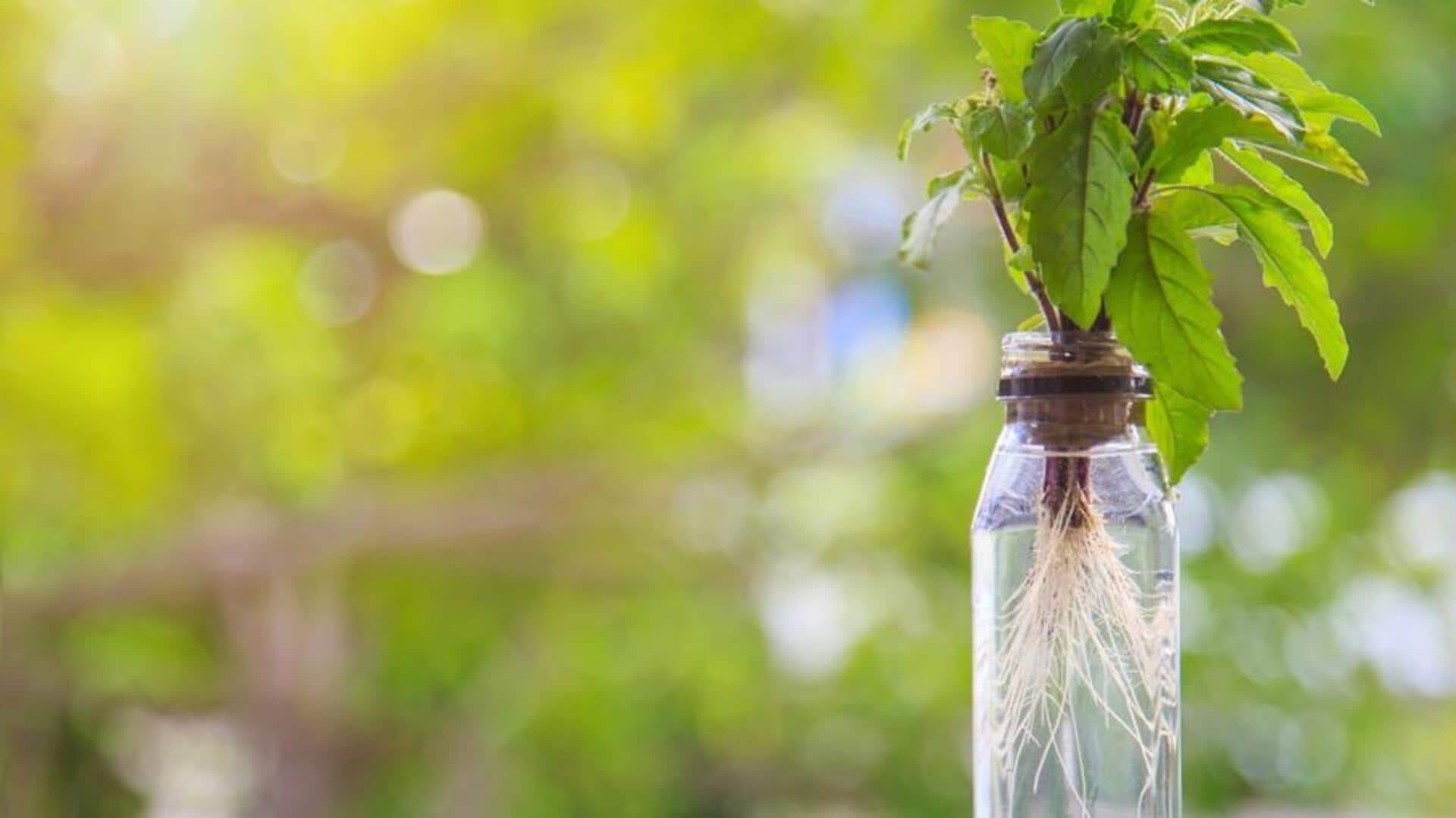
How to grow basil in plastic bottles
What's the story
Growing tulsi (Holi basil) at home can be a rewarding experience, especially if you have limited space. Using plastic bottles as planters is an innovative way to cultivate this sacred herb without requiring much room. This method not only promotes recycling but also provides an efficient way to grow tulsi indoors or on small balconies. With just a few materials and simple steps, you can enjoy fresh tulsi leaves year-round.
Tip 1
Choosing the right bottle
Selecting the right size of plastic bottle is important for your tulsi plant's growth. A one-liter bottle usually does the trick, giving enough space for the roots to grow. Make sure the bottle is clean and free from any residues of previous contents. Cut the bottle in half horizontally, using the bottom half as your planter.
Tip 2
Preparing the soil mix
A good soil mix is essential for healthy tulsi growth. Combine equal parts of potting soil, compost, and sand to create a well-draining mix. This combination ensures that the soil retains moisture while allowing excess water to drain out easily. Fill the bottom half of your cut bottle with this mixture, leaving some space at the top.
Tip 3
Planting tulsi seeds or seedlings
You can either sow tulsi seeds directly into the prepared soil or transplant small seedlings from another source. If using seeds, plant them about one centimeter deep and cover lightly with soil. Water gently after planting to settle the soil around them. If transplanting seedlings, make sure they are well-rooted before placing them in the soil.
Tip 4
Watering and sunlight requirements
Tulsi needs regular watering, but make sure you do not overwater it, as it can lead to root rot. Water when the top layer of soil feels dry to touch, but avoid letting water accumulate at the bottom of your planter bottle. Place your planter in a spot where it gets plenty of sunlight every day—ideally six hours—to ensure healthy growth.
Tip 5
Maintaining your tulsi plant
Regular pruning encourages bushier growth and prevents flowering, which can affect leaf flavor. Use clean scissors or pruning shears to trim back any leggy stems or excess leaves, as needed. Keep an eye out for pests like aphids, and treat them promptly with natural remedies, like neem oil, if necessary.