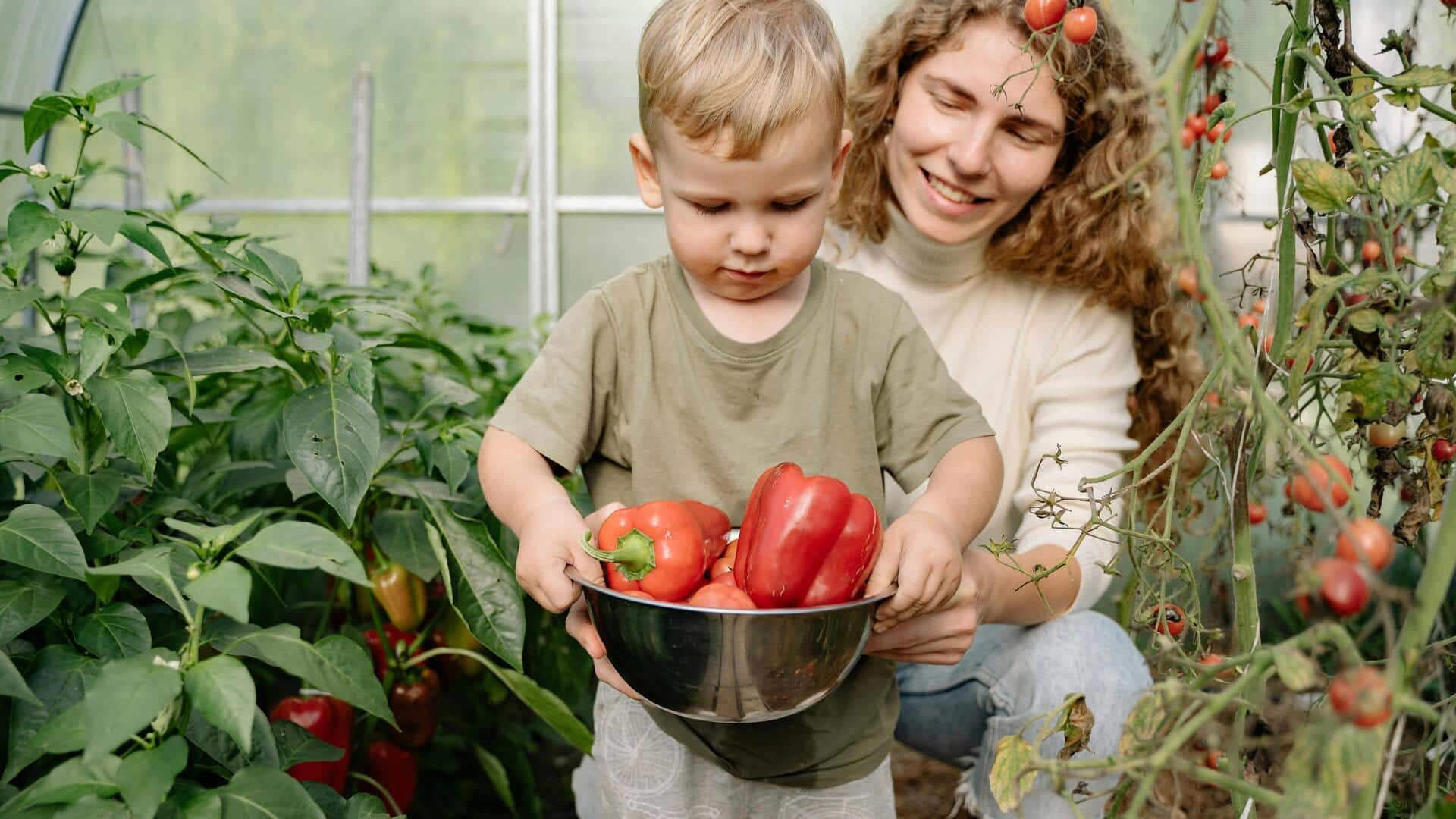
How to grow your own veggies at home
What's the story
Creating a vegetable garden at home can be a rewarding and sustainable way to ensure a steady supply of fresh produce. With the right approach, even small spaces can be transformed into productive gardens. This guide provides practical tips for setting up and maintaining a vegetable garden that meets your family's needs. From choosing the right location to understanding plant care, these insights will help you cultivate an efficient gardening space.
Tip 1
Choosing the right location
Selecting an appropriate location is key to a successful vegetable garden.
Look for a spot that gets at least six hours of sunlight every day.
Ensure the area is well-drained so that water does not accumulate, which can damage plants.
Keep the garden close to your home for easy access and regular maintenance.
Avoid areas with strong winds or heavy foot traffic that could disturb your plants.
Tip 2
Selecting suitable vegetables
Choosing the right vegetables is essential for maximizing your garden's efficiency.
Opt for crops that suit your climate and soil conditions.
Consider planting fast-growing varieties like lettuce or radishes if you're short on time, or opt for more substantial crops like tomatoes if you have space to spare.
Rotate crops each season to maintain soil health and prevent pest buildup.
Tip 3
Efficient watering techniques
Proper watering is crucial for plant health and productivity.
Use drip irrigation systems or soaker hoses to deliver water directly to plant roots, minimizing evaporation losses compared to traditional sprinklers.
Water early in the morning or late in the evening when temperatures are cooler, reducing evaporation rates further.
Tip 4
Implementing pest control measures
Pest management is key to keeping your vegetable garden productive without harming beneficial insects or the environment.
Use natural deterrents like *neem* oil or insecticidal soap, and introduce beneficial insects like ladybugs to keep pest populations in check.
Regularly inspect plants for signs of trouble, and take immediate action if needed to prevent widespread damage.
Tip 5
Maximizing space with vertical gardening
Vertical gardening is a smart way to make the most of limited space by growing plants upwards instead of outwards.
Use trellises, wall planters, or hanging pots to grow climbing vegetables like cucumbers or beans vertically.
This method not only saves space but also improves air circulation around plants, reducing disease risk, while making harvesting easier.