
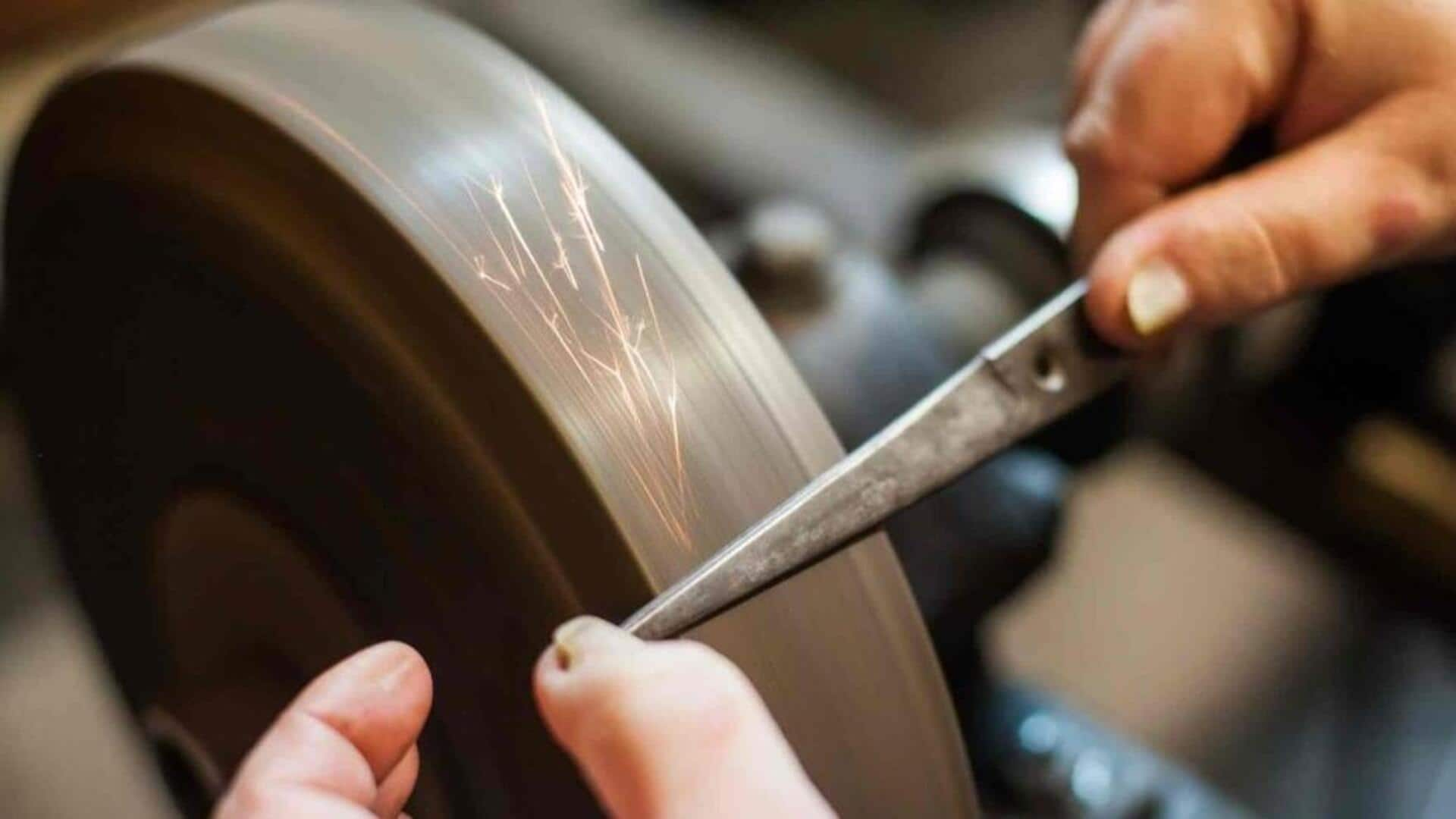
How to keep scissors sharp using household items
What's the story
Keeping scissors sharp is essential for efficient cutting, but it doesn't have to be an expensive affair. There are many budget-friendly methods to keep your scissors in top shape without spending a fortune on professional services or fancy tools. With some simple household items and techniques, you can keep your scissors sharp and functional. Here's how you can do just that.
Tip 1
Use aluminum foil for sharpening
Aluminum foil is another surprisingly effective tool for sharpening scissors. Just fold a piece of aluminum foil a few times until it is thick enough to be cut through easily. Cut through the folded foil several times with your scissors. This action will realign the blades' edges and restore their sharpness without any cost.
Tip 2
Cut through sandpaper strips
Sandpaper is another great tool to sharpen scissors at home. Just cut a strip of sandpaper (medium grit) and fold it in half with the rough sides facing outwards. Cut through this folded strip with your scissors a few times. The abrasive surface will help remove any dullness from the blades, making them sharp again.
Tip 3
Use a sharpening stone at home
If you have a small sharpening stone lying around at home, you can use it to sharpen your scissors. Just open one blade of the scissor and gently rub it against the stone at an angle of 20 degrees. Repeat this a few times on both sides of the blade until you notice an improvement in sharpness.
Tip 4
Try ceramic coffee mug edges
The unglazed edge of a ceramic coffee mug can also double up as a makeshift sharpening tool for scissors. Simply open one blade of the scissor and gently scrape it against the unglazed rim of the mug. This method realigns the blade's edge effectively without any cost involved.
Tip 5
Regular maintenance tips
Regular maintenance is key to keeping your scissors sharp over time. Clean them after every use to prevent debris from building up between blades, which can dull them faster. Also, store them properly by keeping them closed when not in use, so they don't get damaged or lose their shape over time.