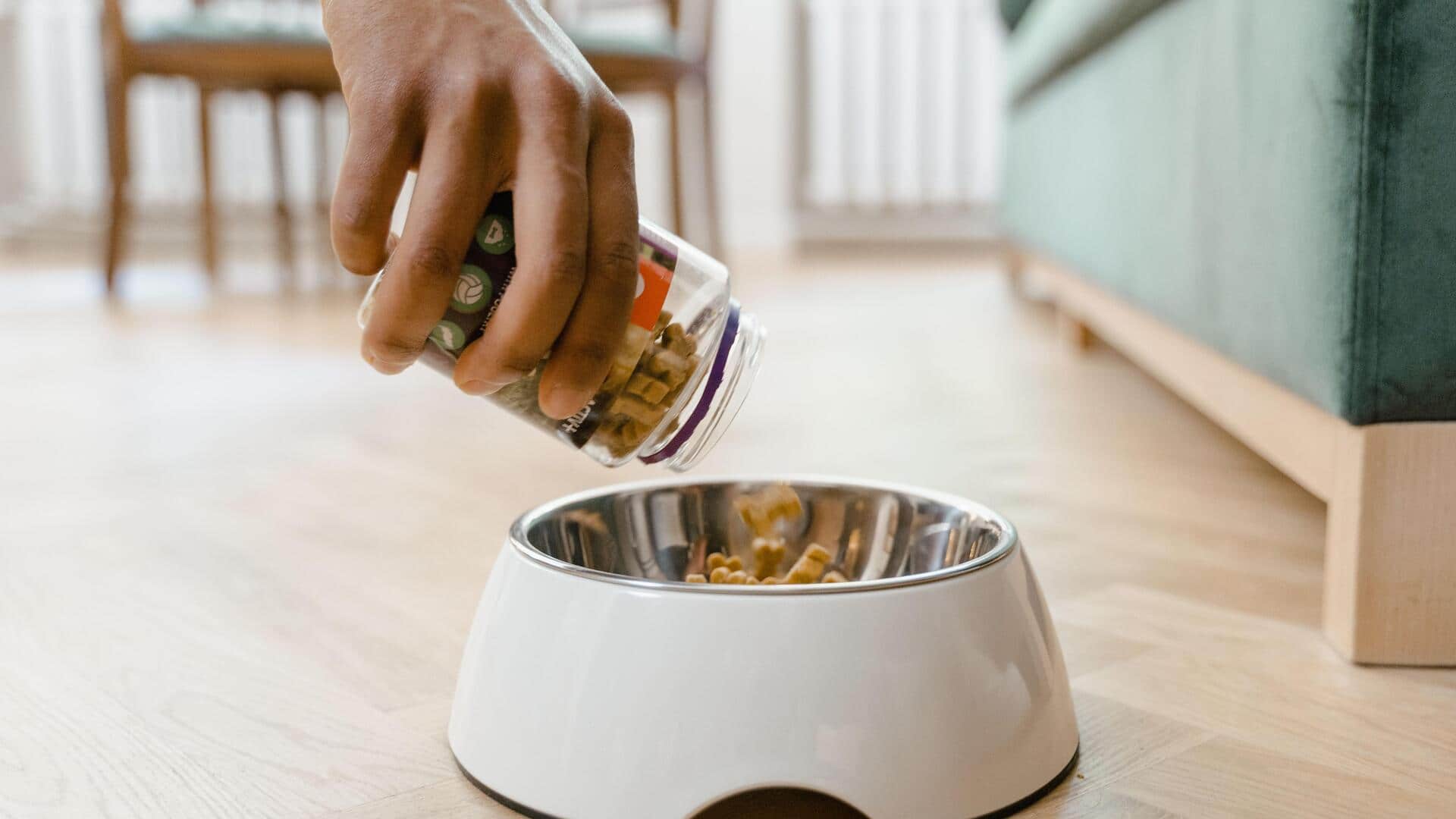
Keep your dog's food fresh with these tips
What's the story
Organizing your dog's food can be a daunting task, but it doesn't have to be. With a few simple tips and tricks, you can keep your pet's meals well-organized and easily accessible. This not only makes feeding time more efficient but also ensures that the food stays fresh and safe for your furry friend. Here are some practical ways to keep your dog's food organized.
Tip 1
Use airtight containers
Airtight containers are essential for keeping dog food fresh. They keep moisture and pests away from the food, keeping it safe for consumption.
Pick containers that are easy to open and close, so you can access the food easily when needed.
Label each container with the type of food and date of purchase/expiration to keep track of freshness.
Tip 2
Designate a storage space
Designating a specific storage space for your dog's food can help you keep things organized.
Be it a shelf in a pantry or a corner of your kitchen, having a dedicated space makes it easier to find what you need quickly.
Make sure this area is cool and dry to keep the quality of the food intact.
Tip 3
Use measuring cups or scoops
Using measuring cups or scoops for portioning out dog food ensures consistency in serving sizes.
This practice not only helps in maintaining your pet's diet but also makes it easier to manage their calorie intake.
Keeping these tools next to the storage container encourages regular use, promoting an organized feeding routine.
It's a simple yet effective way to streamline meal prep and ensure your dog's nutritional needs are met consistently.
Tip 4
Rotate stock regularly
Rotating stock regularly means using older bags of dog food before newer ones.
This way, you prevent waste and ensure that your pet always eats the freshest food possible.
When you bring home new bags of dog food, place them behind older ones in your storage area.
Tip 5
Keep treats separate from kibble
Keeping treats separate from kibble helps keep things organized and prevents mix-ups during feeding times.
Designate separate containers for treats and kibble, and label them clearly for easy identification.
This way, you can ensure that your dog gets the right kind of food at the right time, without any confusion.