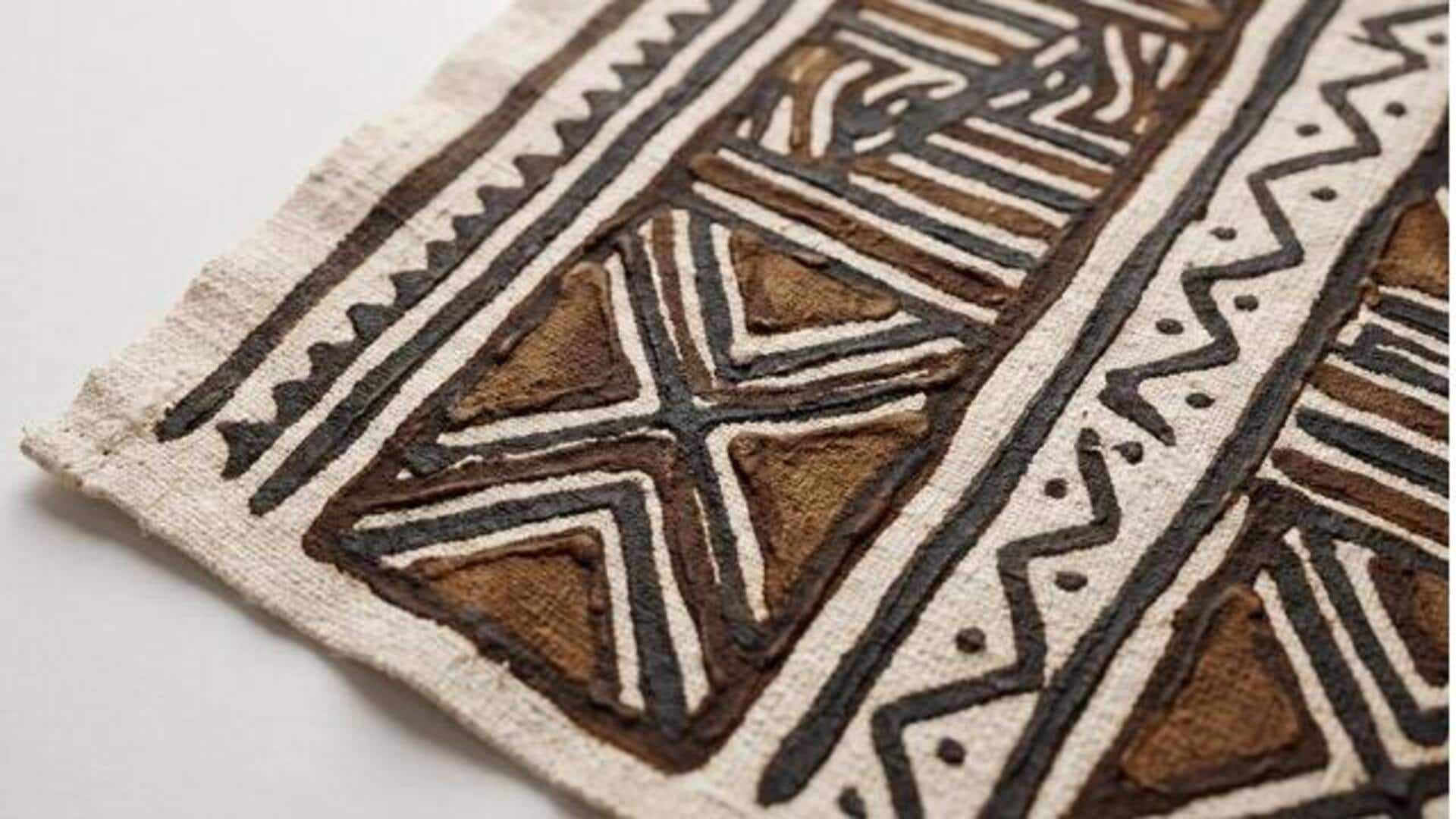
How to make mudcloth art at home
What's the story
African mudcloth print art is a unique craft that involves creating intricate patterns on fabric. This traditional art form, originating from West Africa, uses natural dyes and specific techniques to produce distinctive designs. The process is not only about aesthetics but also cultural significance, as each pattern tells a story or represents a particular meaning. Here are some insights into this fascinating craft.
#1
Understanding mudcloth origins
Mudcloth, or bogo, is a traditional textile from Mali, West Africa.
It is made from strips of cotton fabric sewn together and dyed with fermented mud.
The process takes weeks, as artisans apply layers of mud and let them dry before washing it off.
The final product is a durable cloth with a rich texture and earthy tones.
#2
Techniques in creating patterns
Creating patterns on mudcloth requires skill and precision. Artisans use a variety of tools to apply dye in specific shapes and lines.
Common designs include geometric shapes, zigzags, and symbols representing different aspects of life or beliefs.
Each pattern is carefully planned out before being applied to ensure it tells the intended story.
#3
Cultural significance of designs
The designs on African mudcloth are not just decorative but also carry deep cultural meanings.
Each symbol or pattern can represent anything from historical events to personal achievements or spiritual beliefs.
This makes every piece unique and valuable, as it connects the wearer or owner with their heritage.
#4
Modern adaptations of mudcloth art
In recent years, African mudcloth print art has found its way into contemporary fashion and home decor.
Designers incorporate these traditional patterns into clothing, accessories, and interior design elements like cushions or wall hangings.
This adaptation helps preserve the craft while introducing it to new audiences around the world.