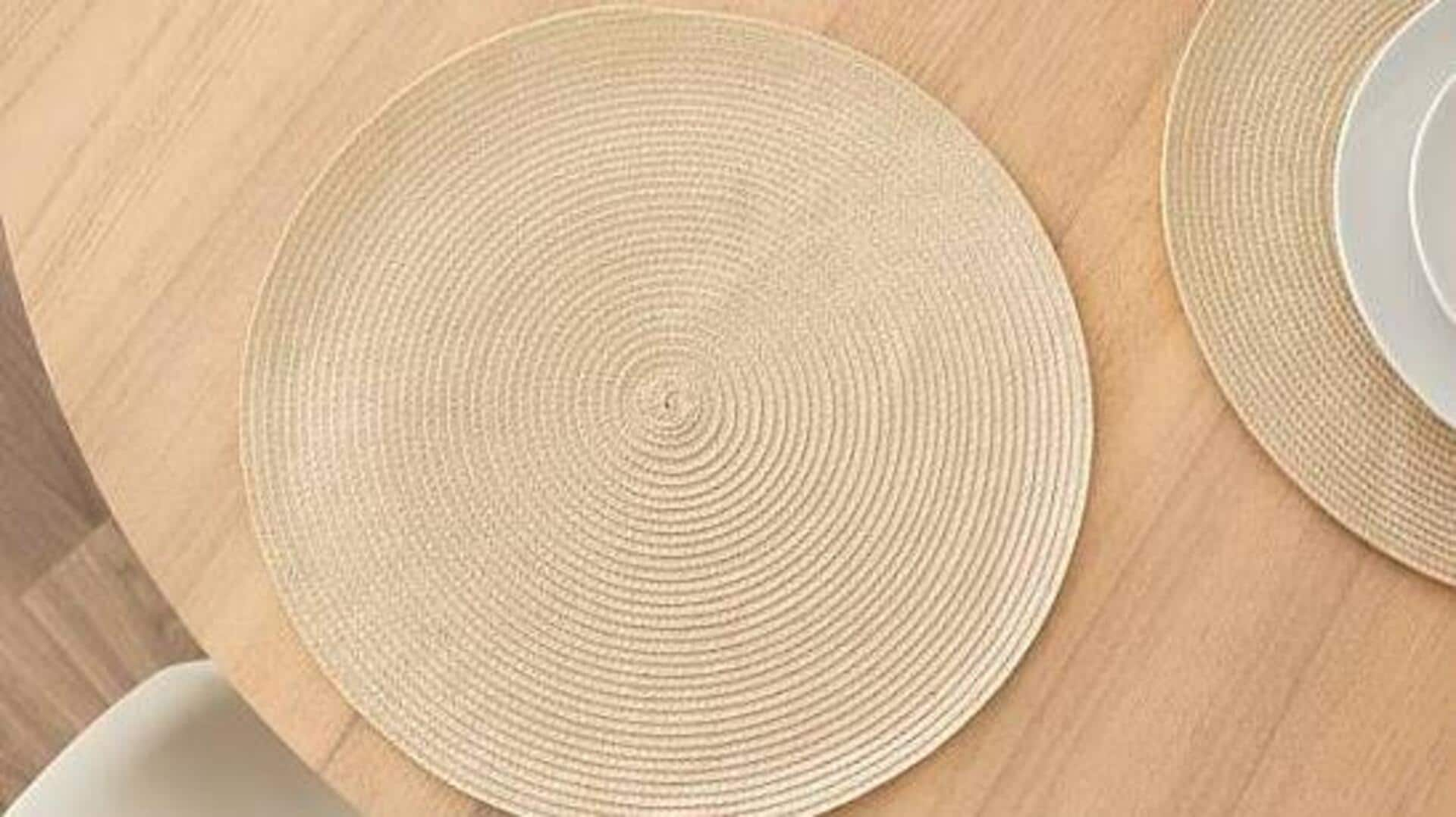
How to make sisal placemats at home
What's the story
African sisal placemats are a beautiful fusion of culture and utility. These handmade beauties are crafted from natural fibers, making them eco-friendly and durable. Not only do they add a touch of elegance to your dining table, but they also support traditional craftsmanship. The intricate patterns and textures of these placemats tell stories of African heritage. Using them can elevate your dining experience while promoting sustainable practices.
Fiber selection
Choosing the right sisal fiber
Choosing the right sisal fiber is important for making durable placemats. The quality of the fiber determines the texture and strength of the placemat.
Opt for long, unbroken strands, as they are more resilient than shorter ones.
The natural color of sisal is preferred, but you can dye it using natural dyes for added aesthetics without compromising on durability.
Weaving methods
Techniques for weaving placemats
Weaving techniques vary across regions, each with its own unique patterns.
The most common methods include twining and coiling. Twining involves twisting two strands together to create a tight weave, while coiling wraps fibers around a central point or core.
Both techniques require skillful hands to ensure that the patterns are consistent, and the placemats are strong.
Pattern integration
Incorporating traditional patterns
Traditional African patterns add cultural significance to the placemats.
Geometric shapes, zigzag lines, and spirals are commonly used motifs that have been passed down through generations.
These patterns not only enhance the visual appeal but also tell stories or represent symbols important to different communities across Africa.
Maintenance tips
Caring for your sisal placemat
Proper care extends the life of your sisal placemat.
Regularly shake off crumbs or debris, and avoid exposing it to excessive moisture, as this can weaken fibers over time.
If necessary, gently spot clean with a damp cloth and mild soap, then air dry away from direct sunlight to prevent fading or warping.