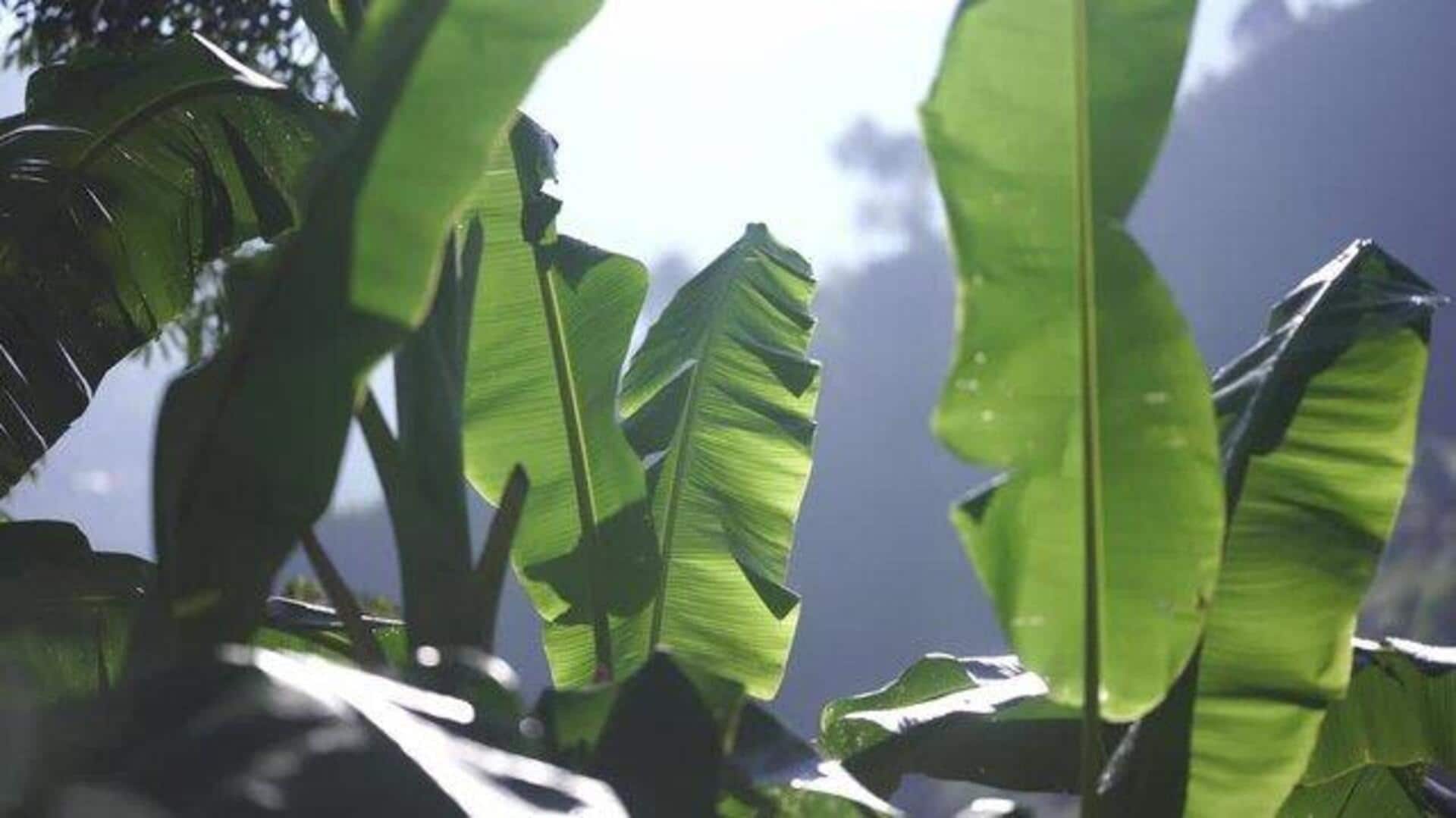
Have banana leaves? Try this DIY idea
What's the story
African masks have always fascinated us with their cultural significance and artistic beauty. Using banana leaves to create these masks gives a sustainable twist to the traditional craft. Not only is this method eco-friendly, but it also gives you an opportunity to explore creativity with natural materials. Here are five ways to make African masks using banana leaves, each offering a unique insight into this age-old art form.
Tip 1
Selecting the right banana leaves
Choosing the right banana leaves is the first step in making an authentic African mask.
Pick mature, green leaves as they are more durable and flexible.
The size of the leaf should be big enough to cover the desired mask shape.
Avoid leaves with holes or tears, as they can compromise the integrity of your mask.
Tip 2
Preparing the leaves for crafting
Once you have selected your banana leaves, it is time to prepare them for crafting.
Rinse the leaves thoroughly under running water to remove any dirt or debris.
Lay them flat under sunlight for a few hours until they become pliable but not too dry.
This will make it easier to mold and shape them into your desired mask design.
Tip 3
Designing your mask shape
Designing your mask shape is where creativity comes into play.
Sketch your desired design on paper first before transferring it onto the prepared banana leaf.
Use natural dyes or paints made from plant-based materials for coloring if desired.
Carefully cut out the shape using sharp scissors or a craft knife, ensuring clean edges.
Tip 4
Assembling the mask components
Assembling different components of your mask is the key to achieving a cohesive look.
Use twine made from natural fibers or glue made from plant-based materials to attach different parts securely together.
Pay attention to symmetry and balance while assembling each piece, as these elements are often emphasized in traditional African masks.
Tip 5
Finishing touches and embellishments
Once your mask is assembled, add finishing touches and embellishments for added character and authenticity.
Use beads, shells, or other natural materials commonly used in African art forms as decorative elements on your creation.
These additions enhance visual appeal while paying homage to cultural traditions associated with these iconic artifacts.