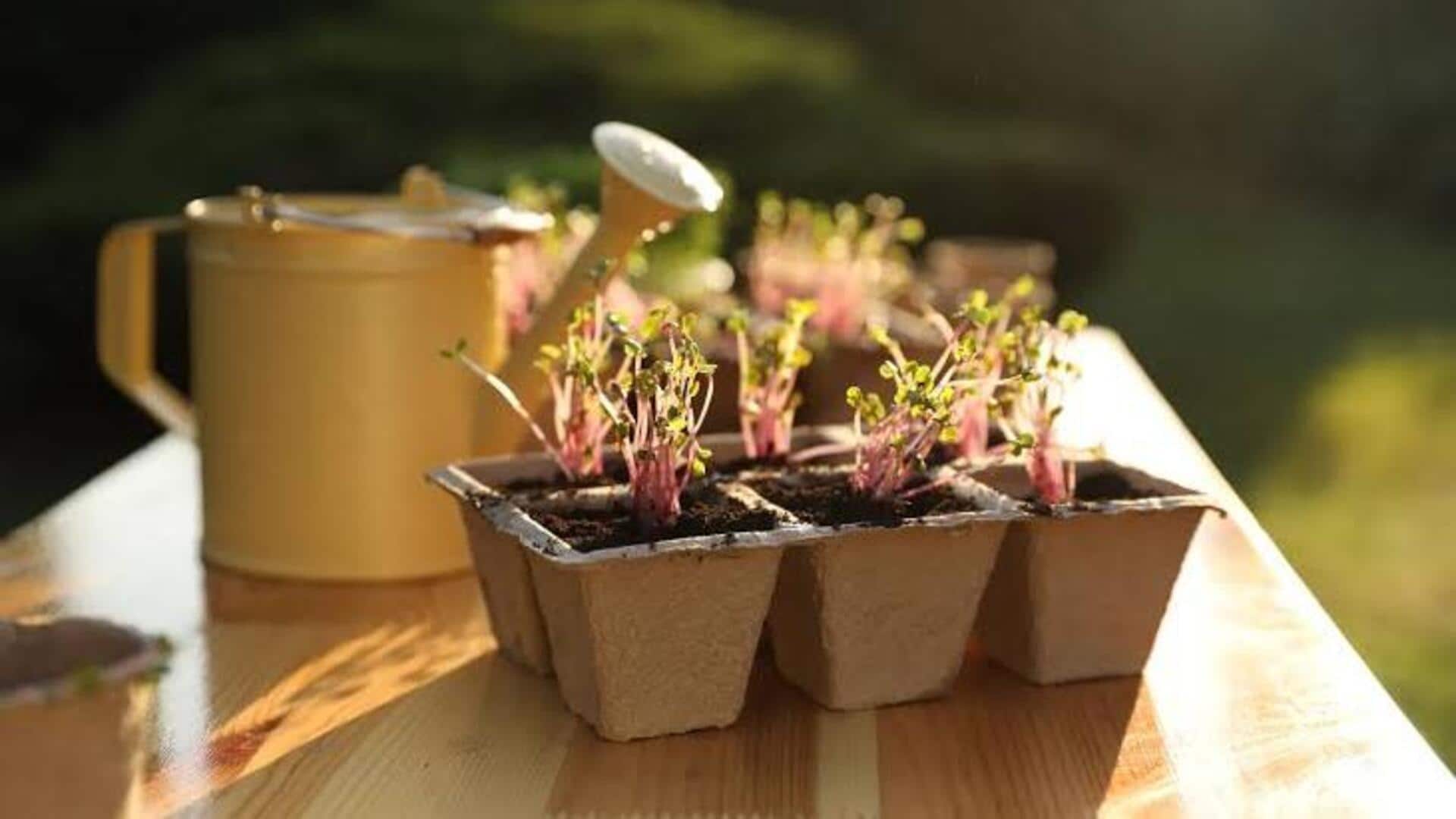
How to make seedling pots from recycled paper
What's the story
Creating eco-friendly seedling pots from recycled paper is a sustainable way to start your gardening projects. This method not only reduces waste but also provides an inexpensive alternative to store-bought pots. By using materials you already have at home, you can contribute to environmental conservation while nurturing your plants. The process is simple and requires minimal resources, making it accessible for everyone looking to adopt greener practices in their gardening routine.
Materials needed
Gather necessary materials
To make seedling pots, you will need old newspapers or scrap paper, scissors, a container for shaping the pots, and water.
These are easily available and inexpensive.
The paper should be clean and free from any plastic coatings or inks that may be harmful to plants.
Paper preparation
Cut and prepare the paper
Start by cutting the paper into strips about five centimeters wide and 20 centimeters long.
These dimensions are perfect for making small pots. If you want bigger pots, adjust the size of the strips accordingly.
Make sure the strips are uniform in size for uniform pot size.
Pot shaping
Shape the pots using a container
Take a strip of paper and wrap it around a container, like a small cup or bottle, to form a cylinder.
Overlap the edges slightly to hold the shape.
Fold one end of the strip over itself to create a base for the pot, and secure it with tape or glue if required.
Final steps
Secure and plant your seeds
Once shaped, carefully remove the pot from the container without losing its shape.
Fill each pot with soil, and plant your seeds as you would in any other container.
Water them gently, and place them in an appropriate location for germination.
Helpful hints
Tips for successful seedling pots
Ensure that each pot has drainage holes by poking small holes at the bottom before filling them with soil.
This will prevent waterlogging and promote healthy root development.
Keep your pots moist, but not soggy, until seedlings are established, then transplant them into larger containers if necessary.