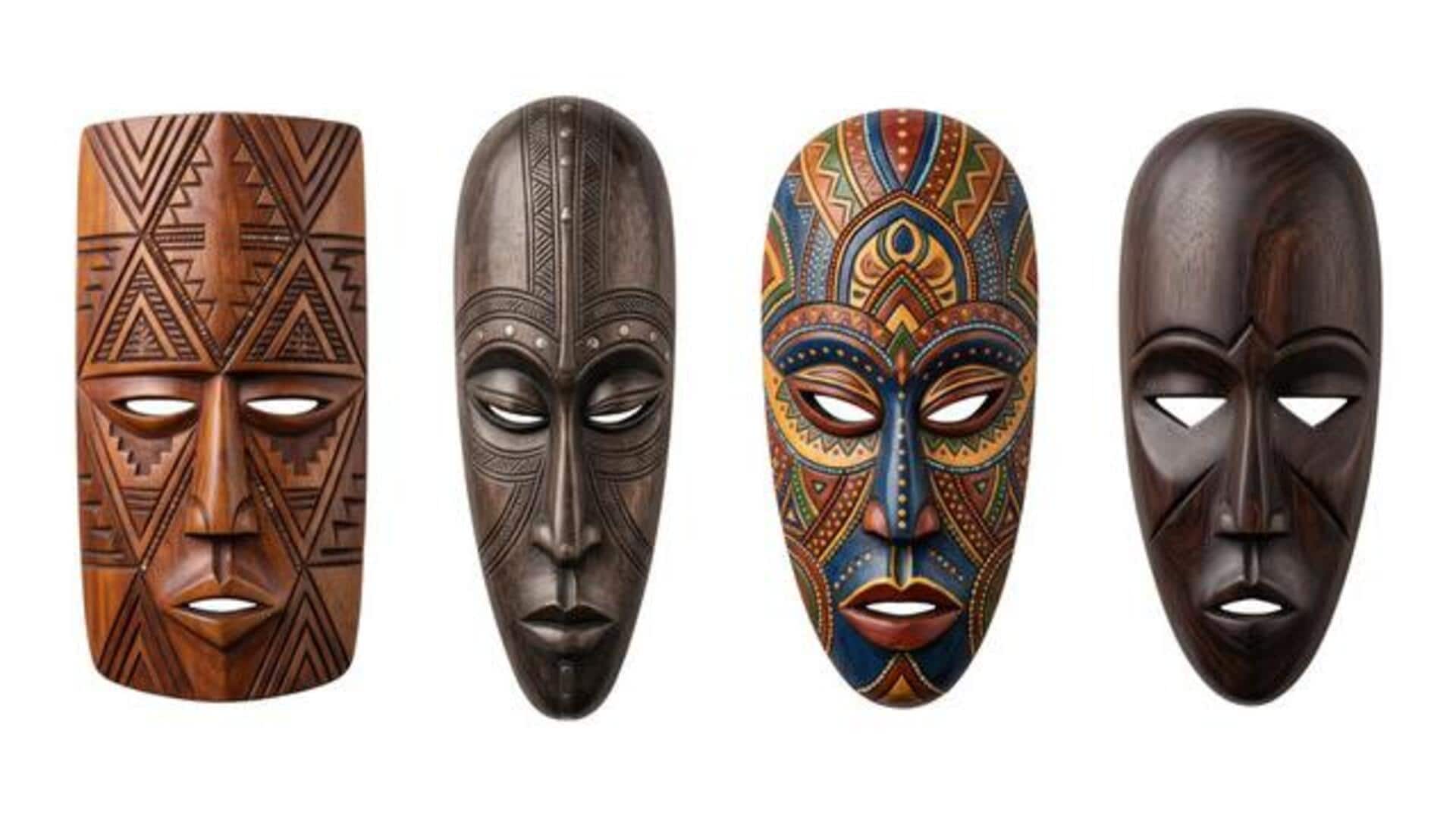
How to make wooden mask wall art
What's the story
Nigerian wooden mask wall art is a unique and cultural craft that has been practiced for centuries. These masks are not only decorative pieces but also hold significant cultural and spiritual meanings. Creating such art requires understanding the traditional methods and materials used by artisans in Nigeria. This article delves into the techniques involved in crafting these masks, providing insights into the process and its cultural importance.
Tip 1
Selecting the right wood
Choosing the right wood is essential for crafting durable Nigerian wooden masks.
Hardwoods like mahogany or teak are preferred because of their strength and fine grain.
These woods allow intricate carvings without cracking or splitting.
The selection process also involves ensuring that the wood is free from knots or defects that could affect the final product.
Tip 2
Traditional carving techniques
Traditional carving techniques have been passed down through generations of Nigerian artisans.
Carvers use simple tools like chisels and knives to shape the wood into desired forms.
The process requires patience and precision, as each detail contributes to the mask's overall expression and character.
Mastering these techniques takes years of practice.
Tip 3
Incorporating cultural symbols
Nigerian wooden masks are often adorned with cultural symbols that represent different aspects of life, such as fertility, protection, or ancestral reverence.
Incorporating these symbols into the design adds depth to the artwork and connects it to its cultural roots.
Artists must have a deep understanding of what each symbol represents to ensure accurate representation.
Tip 4
Finishing touches: Painting and polishing
Once carved, finishing touches like painting and polishing bring Nigerian wooden masks to life.
Natural pigments or dyes are used for coloring, while beeswax or oil can be applied for polishing.
These steps enhance the mask's visual appeal, while protecting it from environmental damage over time.