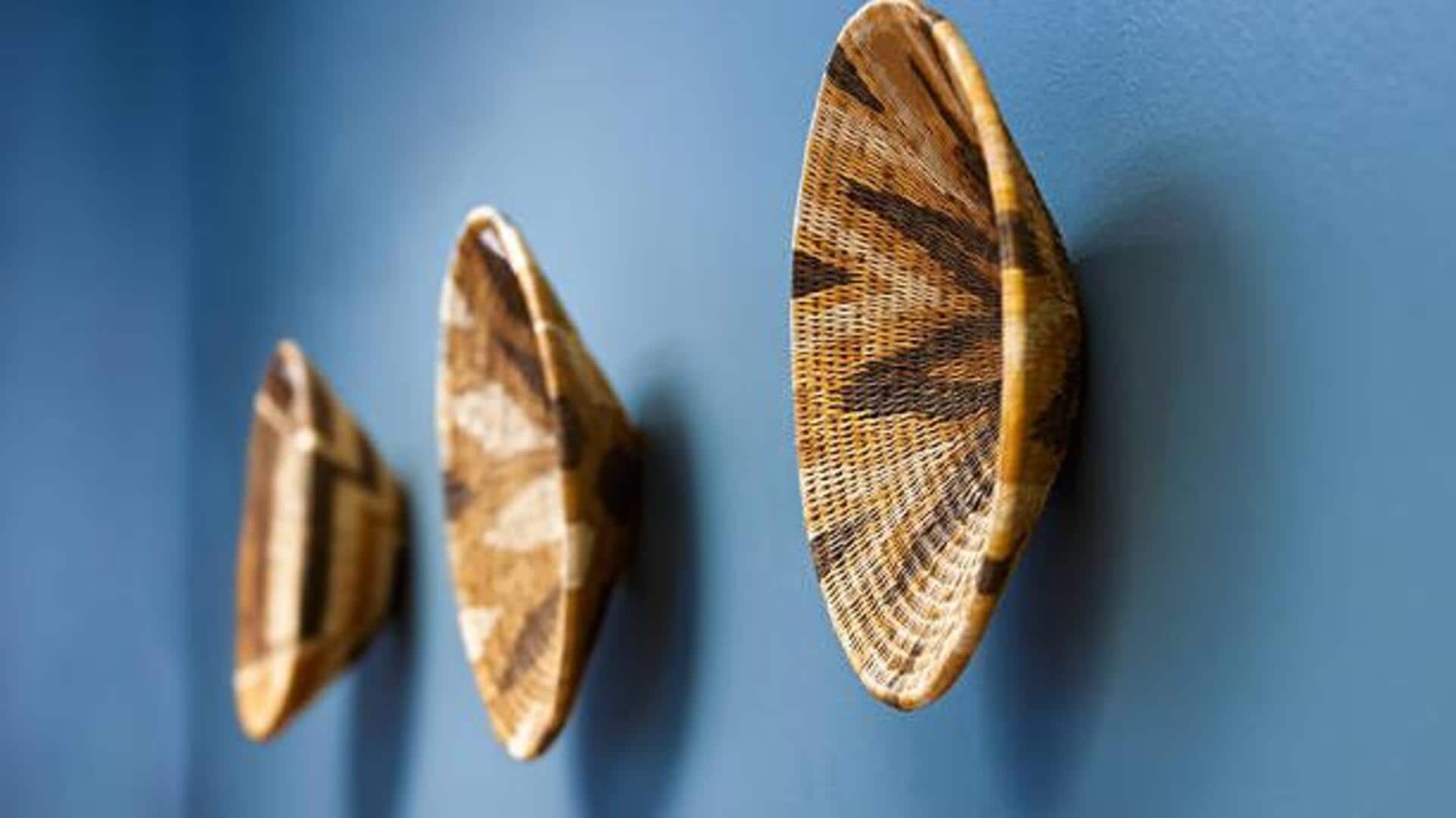
How to make raffia wall art at home
What's the story
African raffia is a versatile, natural fiber that has been used for centuries in traditional crafts. Its unique texture and durability make it an ideal material for creating stunning wall art. By incorporating this eco-friendly resource, artisans can craft beautiful pieces that reflect cultural heritage and artistic innovation. Here are some insights into how African raffia can be transformed into captivating wall art, highlighting its potential and versatility.
#1
Understanding African raffia's texture
African raffia's texture is what makes it so unique.
The fibers are soft yet strong, which allows them to be woven into intricate patterns without losing their shape.
This texture adds depth and dimension to any wall art piece, making it visually appealing.
The natural color variations in the fibers also contribute to the overall aesthetic, giving each creation a distinct look.
#2
Techniques for weaving with raffia
Weaving with African raffia requires skill and patience. Artisans often use traditional techniques passed down through generations.
These techniques involve twisting, braiding, or knotting the fibers to form complex designs.
The flexibility of raffia allows for endless possibilities in pattern creation, enabling artists to experiment with different styles while maintaining structural integrity.
#3
Incorporating color into designs
While the natural hues of African raffia are beautiful, adding color can take the wall art to the next level.
Dyes made from plants or other organic materials can be used to color the fibers before weaving them.
This way, artisans can add vibrant shades that complement or contrast with the natural tones of the raffia, giving the final piece a whole new look.
#4
Sustainable practices in crafting
Using African raffia in wall art is a sustainable practice that promotes environmental conservation.
The fibers are harvested from palm trees without harming the plant's growth cycle, ensuring a renewable source of material.
Artisans who work with raffia often prioritize eco-friendly methods throughout their crafting process, reducing waste, and supporting sustainable livelihoods within their communities.