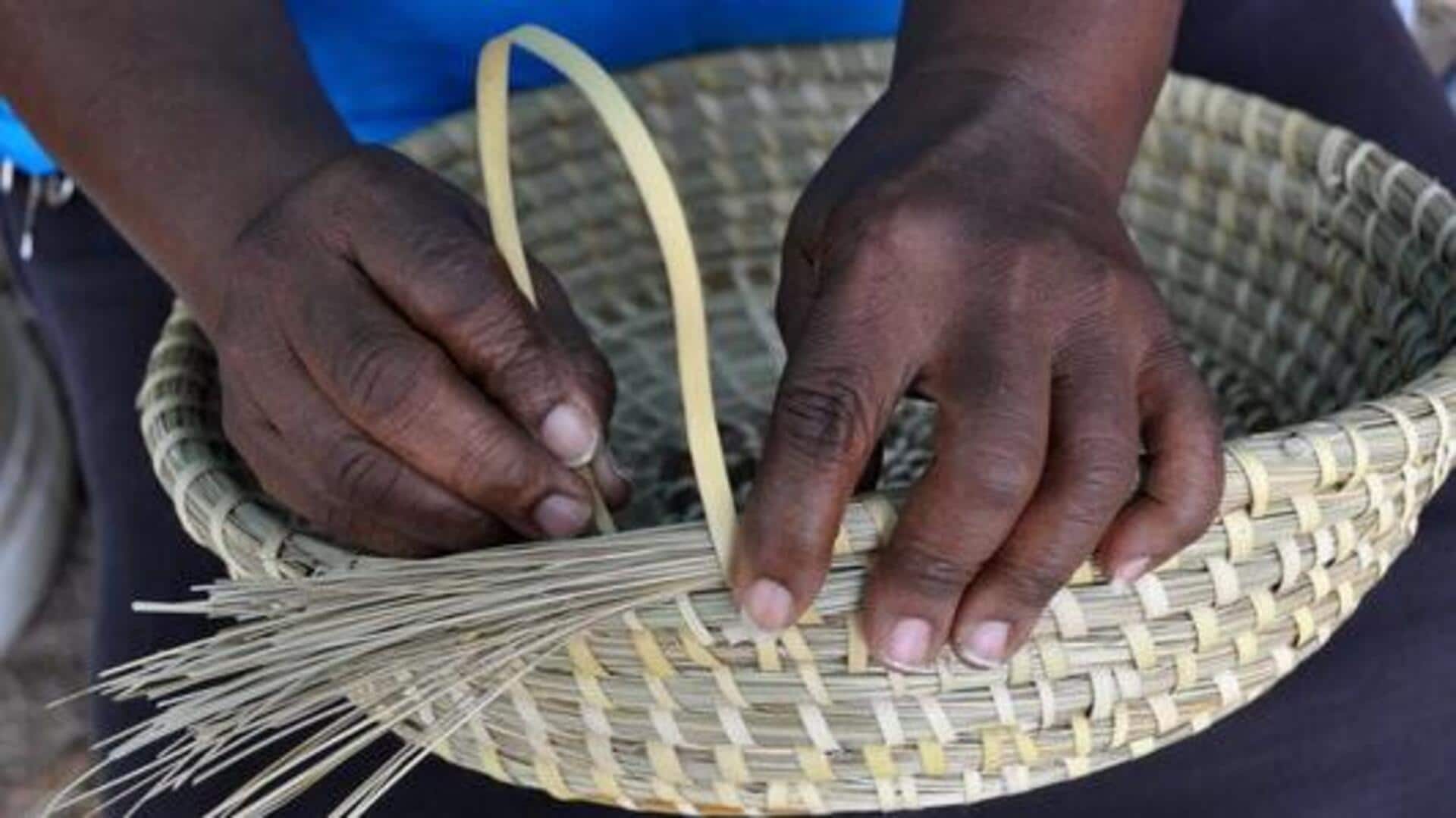
A glimpse into traditional basket weaving
What's the story
African weave baskets are a beautiful blend of tradition and craftsmanship. These baskets are not just functional, but also a work of art, representing the rich cultural heritage of Africa. The art of weaving these baskets is passed down through generations, with each region having its own unique style. Knowing the techniques and materials used in making these baskets can give you a glimpse into the diverse cultures across the continent.
#1
Materials used in basket weaving
The materials used for African basket weaving vary from region to region.
Grasses, reeds, and palm leaves are commonly used because of their flexibility and durability.
In some areas, colorful dyes are added to make the designs more vibrant.
The choice of material also depends on the availability in the region and the purpose of the basket.
#2
Techniques employed by artisans
Artisans employ various techniques to create intricate patterns in African weave baskets.
Coiling is a common method where strands are wrapped around a core material to form spirals.
Twining involves interlacing two or more strands together to create a tight weave.
Each technique requires skill and precision, resulting in unique designs that reflect local traditions.
#3
Cultural significance of basket weaving
Basket weaving holds immense cultural significance across Africa. It is not only a source of livelihood for many communities but also an expression of identity and heritage.
Baskets are often used in ceremonies, as gifts, or as symbols of status within communities.
The designs can tell stories or represent specific tribal affiliations.
#4
Economic impact on communities
The craft of basket weaving has a huge economic impact on communities across Africa.
It provides a source of income to artisans and their families, while also promoting sustainable practices by using locally sourced materials.
With the growing demand for handmade products globally, African weave baskets are becoming increasingly popular in international markets, further boosting economic opportunities for these communities.