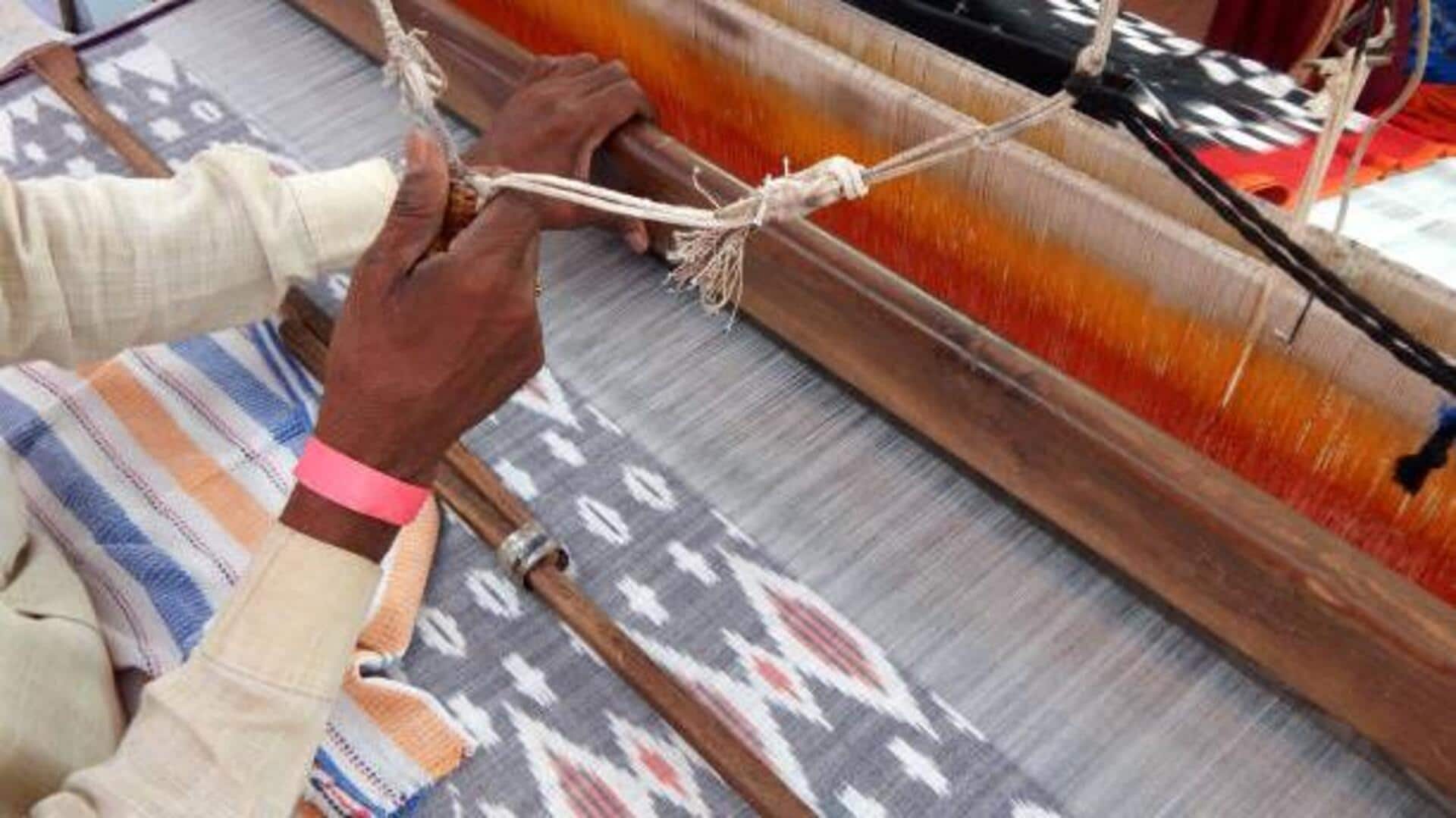
Exploring traditional African weaving techniques
What's the story
African weaving techniques are a beautiful blend of tradition and artistry, passed down generations. These techniques are not only functional but also deeply cultural, often telling stories or representing community values. From the intricate patterns to the vibrant colors, African weavings are a testament to the skill and creativity of artisans across the continent. Exploring these techniques gives an insight into Africa's rich heritage and craftsmanship.
#1
Kente weaving: A Ghanaian tradition
Kente weaving is a famous Ghanaian tradition featuring brightly colored, patterned cloths.
Traditionally, these cloths were worn by royalty, but now they are worn by people at special occasions.
The technique involves using silk and cotton to create intricate designs that have symbolic meanings.
Each color and pattern in kente cloth tells a story or represents certain values, making it both beautiful and meaningful.
#2
Aso Oke: Nigeria's textile legacy
Aso Oke is a traditional Nigerian textile made by the Yoruba people.
It is made from cotton or silk threads, woven into strips that are sewn together to make garments or caps.
Aso Oke is popularly worn during important ceremonies, such as weddings and festivals.
The technique highlights vibrant colors and geometric patterns, each with its own significance in Yoruba culture.
#3
Mudcloth: Mali's artistic expression
Mudcloth, or bogolanfini, is a Malian textile made from cotton dyed with fermented mud.
The process involves painting intricate designs on the cloth with natural dyes before it dries in the sun.
Mudcloths are used for clothing, blankets, or wall hangings. The motifs often depict historical events or proverbs, making them an important medium for storytelling in Malian culture.
#4
Adinkra symbols in textiles
Adinkra symbols are visual representations of concepts or aphorisms in West African cultures, especially among the Akan people of Ghana.
These symbols are frequently incorporated into textiles, like cloths worn during funerals or celebrations of life achievements.
Each symbol conveys a unique message about wisdom, strength, and harmony, adding layers of meaning beyond aesthetics to the garments they adorn.