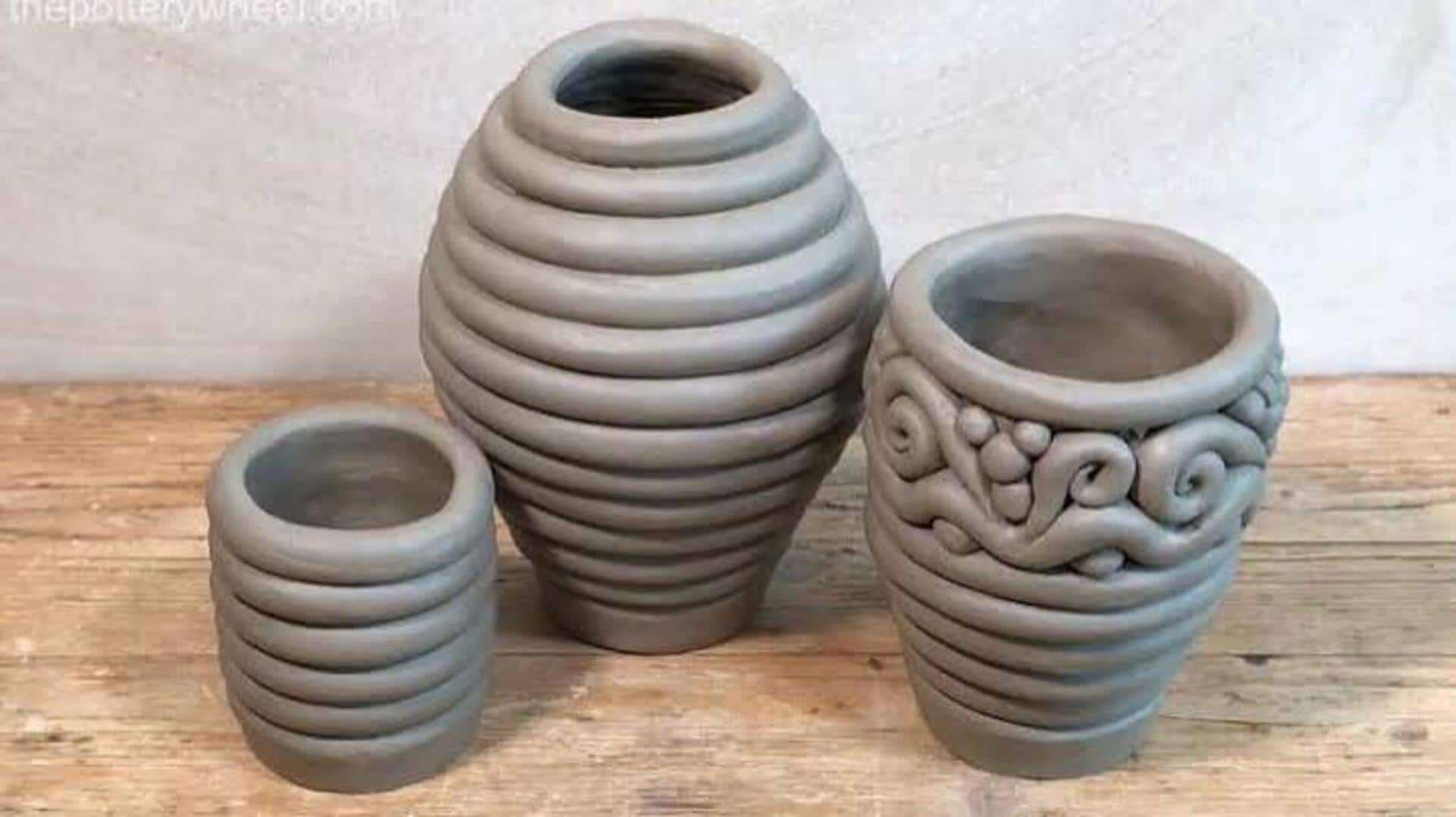
How to master coiled pottery
What's the story
Coiled pottery is an ancient technique that has been used for centuries to create beautiful, functional pieces. The method involves rolling clay into long, thin ropes and stacking them to form the walls of a vessel. This technique allows for great creativity and personal expression, making it a favorite among potters. Whether you are a beginner or looking to refine your skills, mastering the art of coiled pottery can be a rewarding experience.
Tip 1
Choosing the right clay
Selecting the right clay is essential for successful coiled pottery.
Earthenware is commonly used because of its workability and low firing temperature. Stoneware is another option, as it is more durable, but requires higher firing temperatures.
Consider what you want to achieve with your piece before choosing the clay type.
Make sure you have enough clay to complete your project without running out mid-process.
Tip 2
Mastering Coil Technique
The key to successful coiled pottery is mastering the coil technique.
Start by rolling even-sized coils with consistent thickness throughout their length.
Practice keeping them uniform in diameter, about one centimeter thick, usually.
Stack each coil on top of the previous one, smoothing out joins with your fingers or tools as you go along.
This ensures stability in your structure as it grows taller.
Tip 3
Incorporating texture and patterns
Adding texture and patterns can elevate your coiled pottery from simple to stunning.
Use tools like stamps or textured rollers to imprint designs onto the surface of each coil before stacking them together.
Alternatively, experiment with hand-carving patterns directly onto wet clay surfaces for unique effects that showcase personal style.
Tip 4
Firing techniques for durability
Firing is the final step that gives your coiled pottery its durability and functionality.
Make sure your piece is completely dry before firing it in a kiln, at the right temperature for your chosen clay type.
For example, earthenware usually needs a bisque firing at around 1,000 degrees Celsius, while stoneware needs higher temperatures.
This ensures the integrity and longevity of your pottery creations.