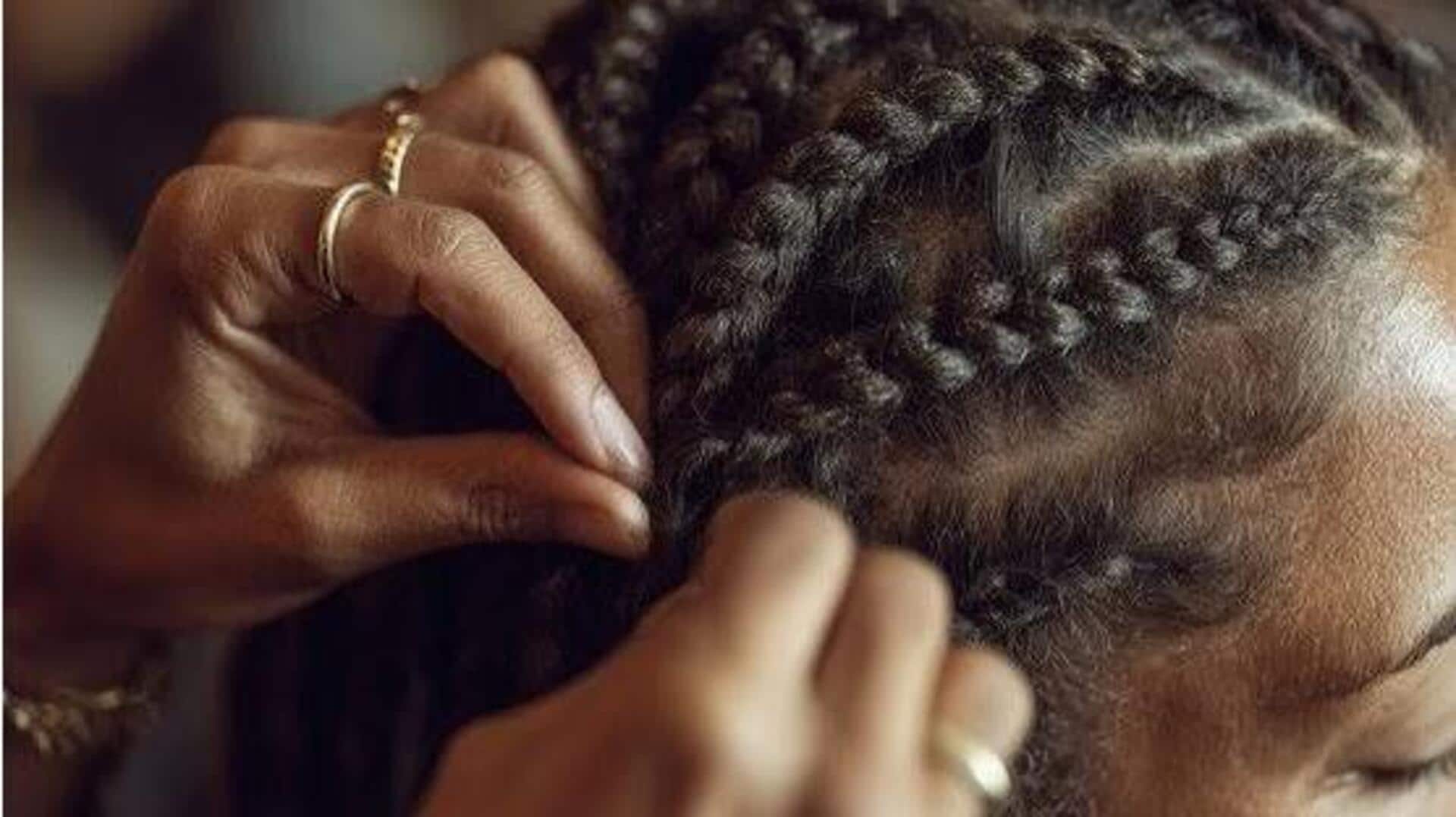
How to master African braiding
What's the story
African braiding is an art that has been practiced for centuries, showcasing cultural significance and personal expression. The intricate patterns and styles are not just about aesthetics, but also about storytelling and heritage. Mastering the art of African braiding requires patience, skill, and a deep understanding of the techniques involved. Whether you're a beginner or looking to refine your skills, these insights will guide you through the complexities of this beautiful craft.
Braid types
Understanding different braid types
African braiding comes in a variety of styles, each with its own uniqueness and cultural importance.
From cornrows to box braids, each style needs different techniques and tools.
Cornrows are usually done close to the scalp in straight lines or curved patterns, while box braids are characterized by square-shaped divisions.
Knowing the differences can help you choose the right style for your needs.
Tools needed
Essential tools for braiding
To master African braiding, you need to have the right tools at your disposal.
A fine-tooth comb is essential for parting hair neatly, while rubber bands or clips can help section hair during the process.
Moisturizing creams or oils keep hair healthy and manageable while you braid.
Investing in quality tools makes the whole process easier and gives you better results.
Braiding techniques
Techniques for perfect braids
Perfecting your technique is key to achieving professional-looking braids.
Start by practicing on small sections of hair before moving on to bigger ones.
Tension is key; too much can cause discomfort or damage hair over time, while too little may result in loose braids that unravel easily.
Consistent practice helps improve speed without compromising on quality.
Hair care tips
Caring for braided hair
Proper care ensures that both your natural hair under the braids and the braids themselves stay healthy throughout their wear time.
Regularly moisturizing keeps dryness at bay and reduces breakage risks, which is common with tightly styled hairstyles like these ones often seen across Africa today.