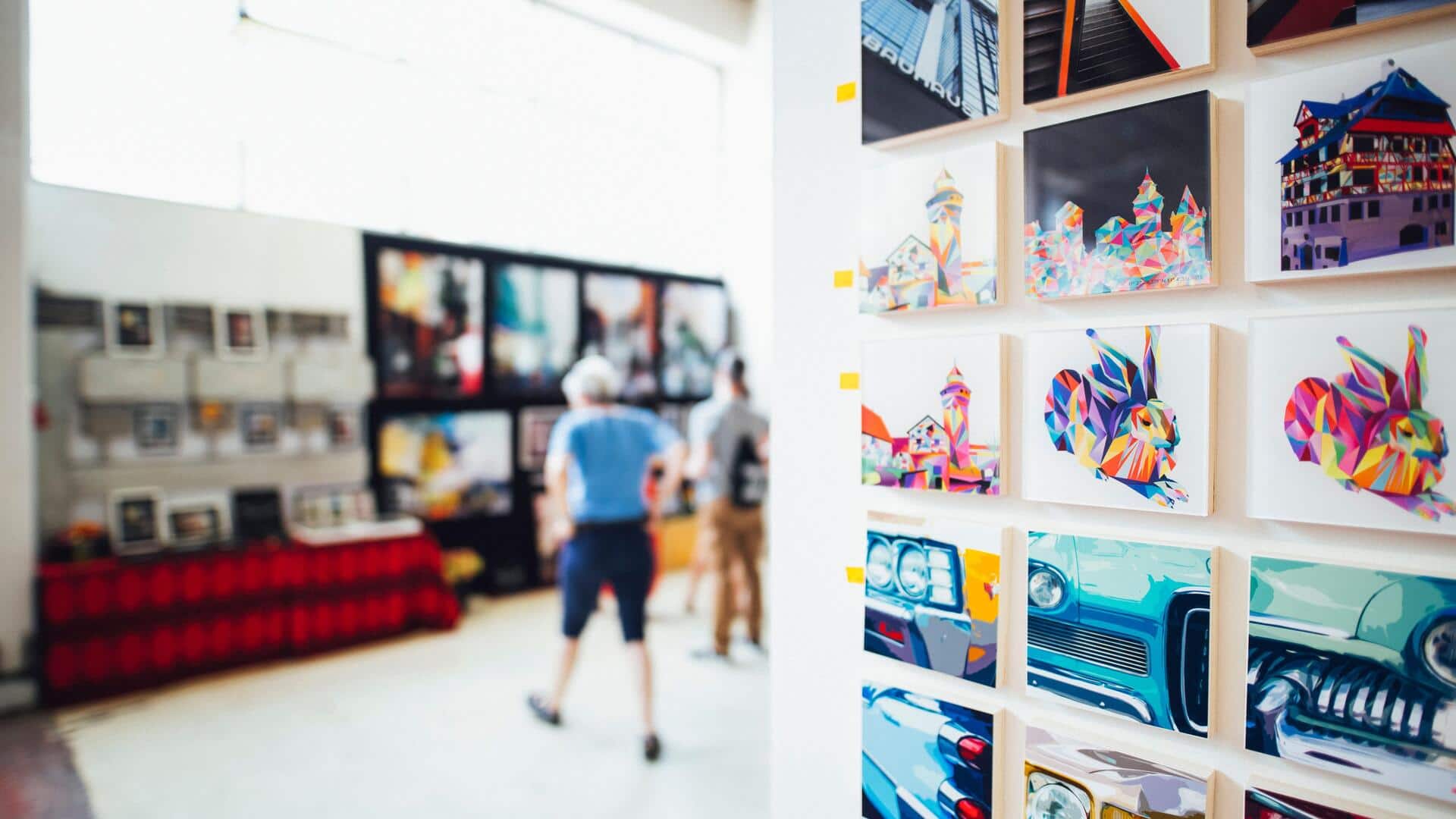
How to organize a community art exhibition
What's the story
Organizing a community art exhibition can be an enriching experience, bringing together local artists and art enthusiasts. It provides a platform for creative expression and cultural exchange. Whether you're a seasoned organizer or a first-timer, understanding the essentials of planning can help ensure the success of your event. Here are five key insights to guide you in creating an impactful exhibition that resonates with your audience.
Venue selection
Choose the right venue
Selecting the right venue is critical to the success of your art exhibition.
It should be accessible to the audience and have enough space to display all the artworks comfortably.
Consider factors like location, parking availability, and facilities like lighting and security.
A well-chosen venue can enhance the viewing experience and attract more visitors.
Art selection
Curate thoughtfully
Curating is all about selecting artworks that fit well with the theme of your exhibition.
Work closely with artists to understand their work and how it fits into your vision.
A good mix of styles and mediums can make your exhibition more appealing. Also, think about how each piece contributes to the overall narrative you want to convey.
Marketing strategies
Promote effectively
Effective promotion is key to drawing visitors to your exhibition.
Use social media platforms, local newspapers, and community boards to reach out to potential attendees.
Create engaging content that highlights what makes your event unique.
Also, consider partnering with local businesses or influencers for wider reach.
Community involvement
Engage with the community
Engaging with the community can make your exhibition more meaningful and well-attended.
Host workshops or talks related to the artworks on display, inviting participation from residents.
Collaborate with schools or community groups to encourage diverse participation and foster a sense of ownership among attendees.
Event management
Plan logistics carefully
Paying attention to logistics ensures smooth execution on the day of the event.
Plan for setup times, ensure proper installation of artworks, and arrange for adequate staffing during the exhibition period.
Also, prepare for any technical needs such as sound systems or digital displays if required by certain exhibits.