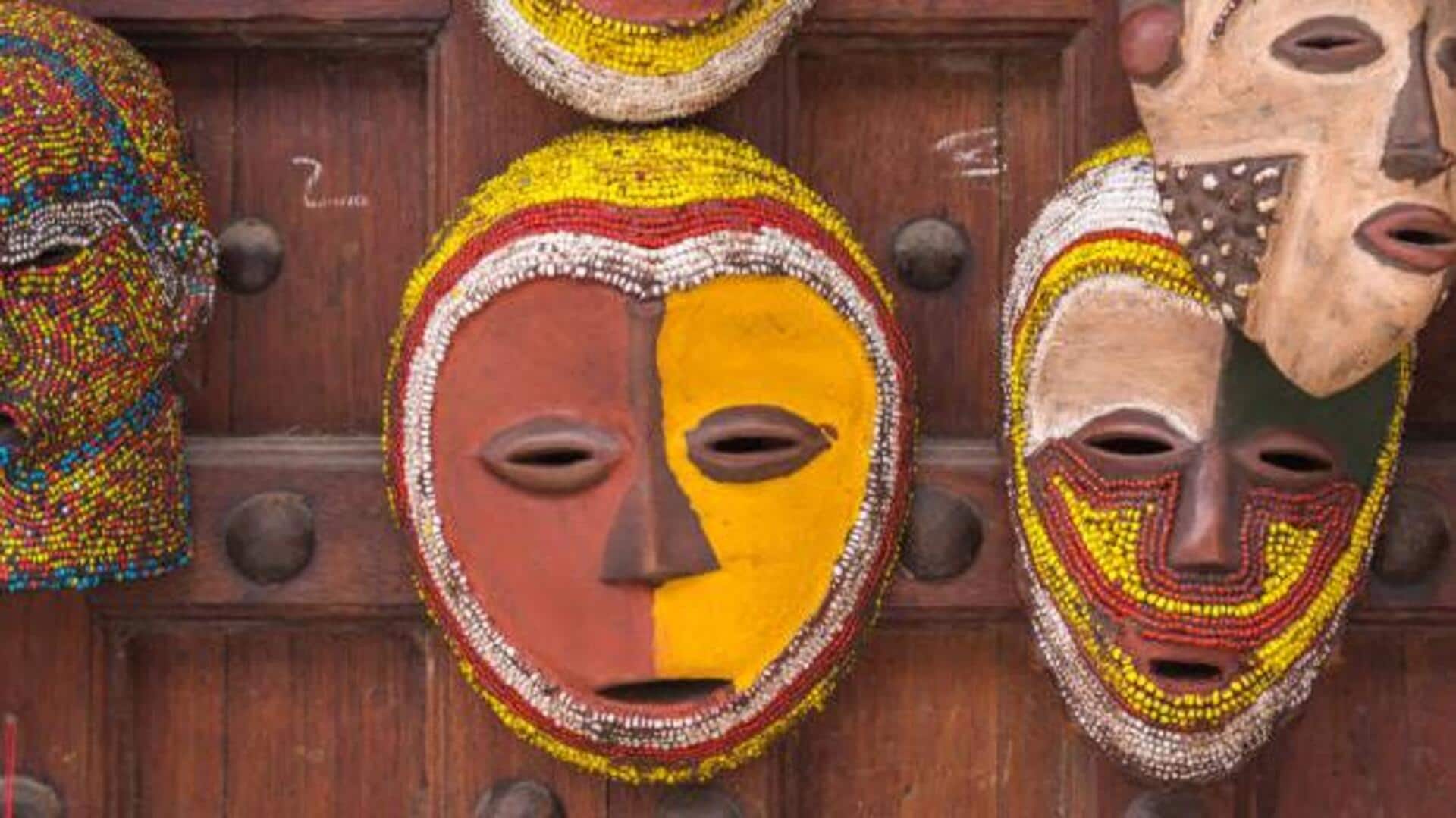
How to paint African masks
What's the story
African masks are an integral part of the continent's cultural heritage, used in ceremonies, storytelling, and rituals. Painting these masks is a way to keep the traditions alive and appreciate the artistry of African cultures. The process involves understanding the symbolism behind the designs and using natural materials to create authentic pieces. Here are some insights into painting authentic African masks.
Cultural insight
Understanding cultural significance
Before you start painting an African mask, it is important to understand its cultural significance.
Each design has a unique meaning, often representing ancestral spirits or natural elements.
Researching the specific culture you wish to represent will ensure that your artwork is respectful and accurate.
This knowledge helps in choosing appropriate colors and patterns that align with traditional practices.
Material selection
Choosing natural materials
Traditional African mask painting often employs natural materials like clay, charcoal, and plant-based dyes.
These materials not only give authentic textures but also stay true to the age-old methods of creation.
Using these natural elements, artists can replicate the look and feel of original masks, making sure their work is both genuine and connected to its cultural roots.
Pattern techniques
Techniques for authentic patterns
Authentic African mask painting requires mastering specific techniques that have been passed down through generations.
Techniques like incising lines, or using stencils made from leaves or other natural objects, can add depth and texture to your work.
Practicing these techniques will help you achieve the intricate patterns commonly found on traditional masks.
Color symbolism
Incorporating symbolic colors
Colors play an important role in African mask art, with each shade representing different aspects of life or spirituality.
For instance, red may symbolize power or strength, while white could signify purity or peace.
Knowing these color associations will help you make informed choices when selecting hues for your mask, ensuring it resonates with its intended message.