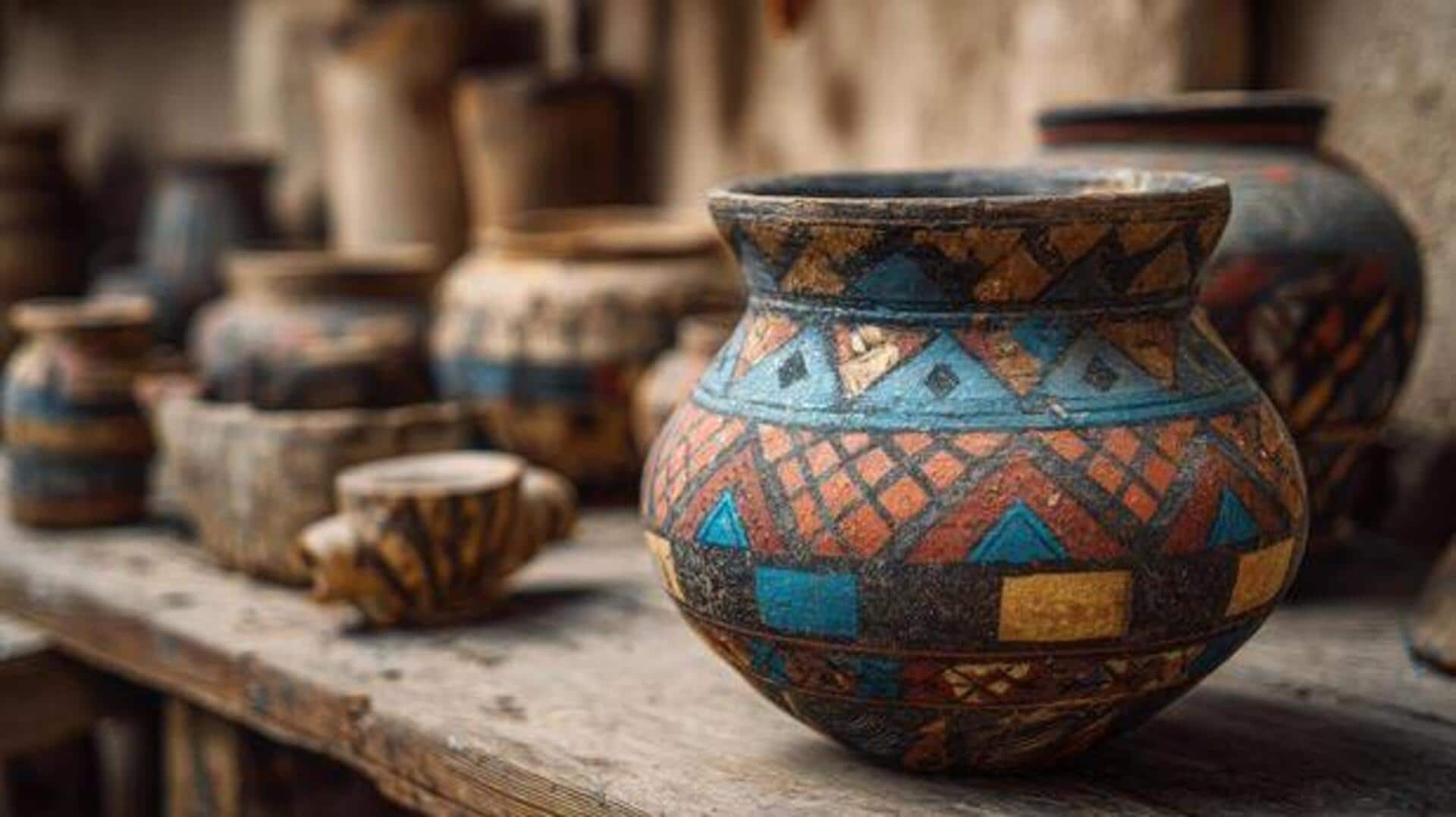
How to paint pots with African patterns
What's the story
African patterns are rich in culture and history, making them a perfect choice for painting on pots. The geometric designs and vibrant colors can transform ordinary pots into stunning pieces of art. Using acrylic paints, you can easily replicate these patterns at home. This guide provides practical steps to help you paint pots with authentic African designs, making your garden or home decor unique and colorful.
Tip 1
Choosing the right pot and paint
Selecting the right pot is essential for your project.
Go for terracotta or ceramic pots, as they absorb paint well and provide a good surface for designs.
Acrylic paints are ideal, as they dry quickly and are available in various colors.
Make sure the paints are suitable for outdoor use if you plan to keep your pots outside.
Tip 2
Preparing the surface
Before you start painting, prepare the surface of your pot by cleaning it thoroughly to remove any dust or dirt.
If necessary, lightly sand the surface to ensure better paint adhesion.
Applying a base coat of white or neutral color can help make the vibrant colors of your design pop.
Tip 3
Selecting African patterns
Choose patterns that resonate with you or have cultural significance.
Common motifs include zigzags, triangles, circles, and lines that represent different elements of African life and nature.
You can find inspiration online or in books about African art to select designs that suit your style.
Tip 4
Painting techniques for precision
Use fine brushes for detailed work on intricate patterns.
For larger areas, use broader brushes or sponges for texture effects.
Layering different colors can add depth to your design; just ensure each layer dries before applying another to avoid smudging.
Tip 5
Sealing your artwork
Once you are satisfied with your painted design, seal it with a clear acrylic sealer to protect it from moisture and fading over time.
This step is especially important if your pot will be exposed to outdoor elements like rain or sunlight.