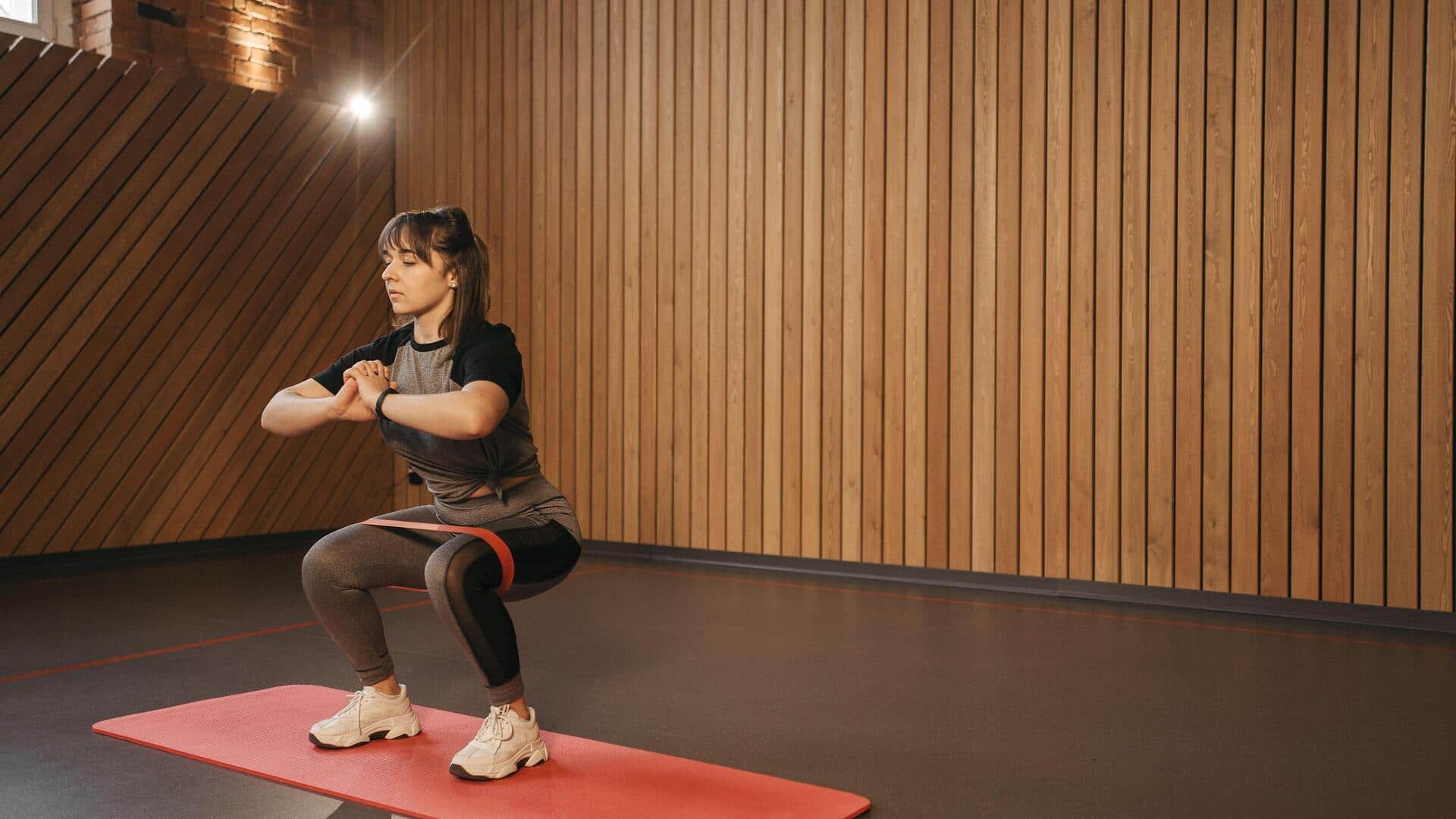
Skater squats: A beginner's guide to better balance and strength
What's the story
Skater squats are an excellent way to improve your balance and strengthen your lower body. The exercise mimics the movement of skating, working your glutes, quads, and hamstrings. It also improves your core stability and coordination. By adding skater squats to your routine, you can improve your athletic performance and prevent injuries by strengthening the muscles that support your knees and hips.
#1
Mastering the basic form
To perform a skater squat, start by standing with feet hip-width apart.
Shift your weight onto one leg as you extend the other leg behind you at a diagonal angle.
Lower into a squat on the supporting leg while keeping the other leg extended behind you.
Return to standing by pushing through the heel of the supporting foot.
Maintain balance throughout the movement to engage stabilizing muscles effectively.
#2
Benefits of skater squats
Skater squats offer a range of benefits that go beyond just building strength.
They improve your balance by forcing you to stabilize yourself on one leg, which improves your proprioception over time.
They also work multiple muscle groups at once, making them a great addition to any workout routine.
Plus, they promote joint health by encouraging a full range of motion without putting too much stress on the joints.
#3
Common mistakes to avoid
One common mistake is letting the knee extend past the toes during the squat phase, which can put pressure on joints.
Another error is not engaging core muscles enough for stability; this can lead to loss of balance or improper form over time.
Lastly, avoid rounding shoulders or leaning too far forward; keep your chest up and back straight throughout each repetition.
Tip 1
Variations for increased difficulty
To make skater squats more challenging, try adding weights like dumbbells or kettlebells held at chest level or overhead positions.
Another option is to perform them on an unstable surface, like a balance pad, to further engage stabilizing muscles.
You can also increase intensity by adding jumps between each squat repetition, creating a plyometric effect that boosts cardiovascular benefits, along with strength gains.