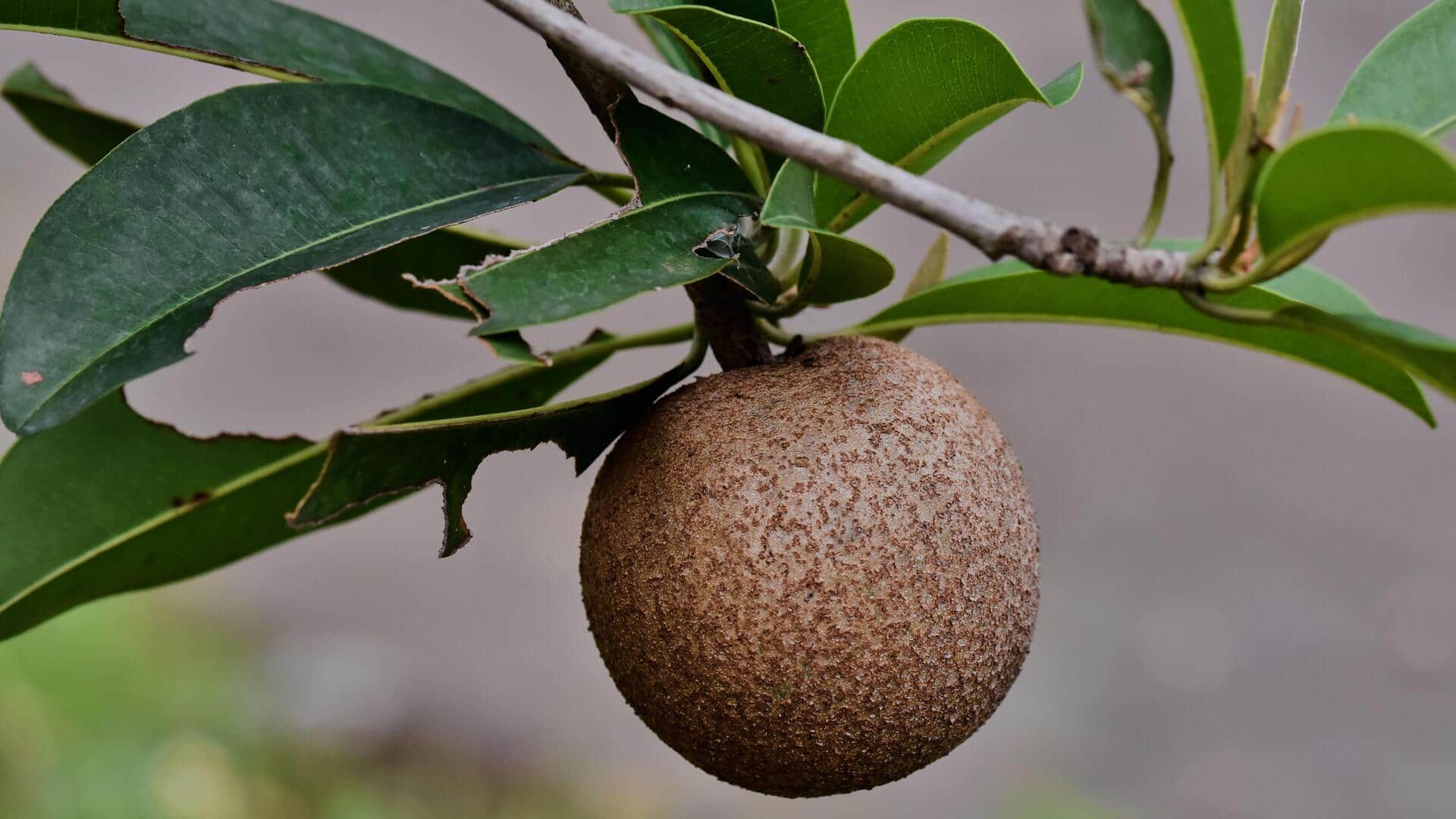
How to spot the best sapodilla at the market
What's the story
Sapodilla, a tropical fruit with a sweet, malty flavor, is loved for its unique taste and texture. Picking the perfect sapodilla can be tricky, but knowing a few key pointers can make it easier. Here's how you can choose the best sapodilla, from color to texture and ripeness indicators. With these tips, you can enjoy this delicious fruit at its best.
Tip 1
Check the skin color
The skin color of a sapodilla is an important indicator of its ripeness.
Ideally, you should look for fruits with brownish skin that is slightly soft to the touch.
Avoid those with green or yellowish tones as they are either under-ripe or overripe.
The perfect color indicates that the fruit has matured well and is ready to eat.
Tip 2
Feel the texture
The texture of the sapodilla's skin also gives you an idea of how ripe it is.
Gently press the fruit; it should give in slightly without being mushy.
A firm texture means it's still too hard and may not be sweet enough when eaten.
On the other hand, a mushy feel indicates over-ripeness.
Tip 3
Smell for sweetness
Another way to check if a sapodilla is ripe is by smelling it.
A sweet aroma emanating from the stem end of the fruit indicates that it's ready to eat.
If there's little to no scent, it may not be fully ripe yet.
This olfactory test can help you pick sweeter fruits.
Tip 4
Look for blemishes or cracks
While selecting sapodillas, check for blemishes or cracks on their surface.
Minor imperfections are normal, but deep cracks or extensive blemishes may affect the fruit's quality and taste.
Such defects can lead to spoilage or affect the texture and flavor of the fruit, making it less enjoyable.
Choosing fruits with minimal imperfections ensures a better eating experience and preserves the fruit's integrity.
Tip 5
Understand seasonal availability
Knowing when sapodillas are in season can help you get fresher produce at markets or stores.
Sapodilla season varies by region but is generally available between late summer and early winter months.
During this time, you are more likely to find high-quality, freshly harvested fruits, making them tastier and more affordable than those available off-season.