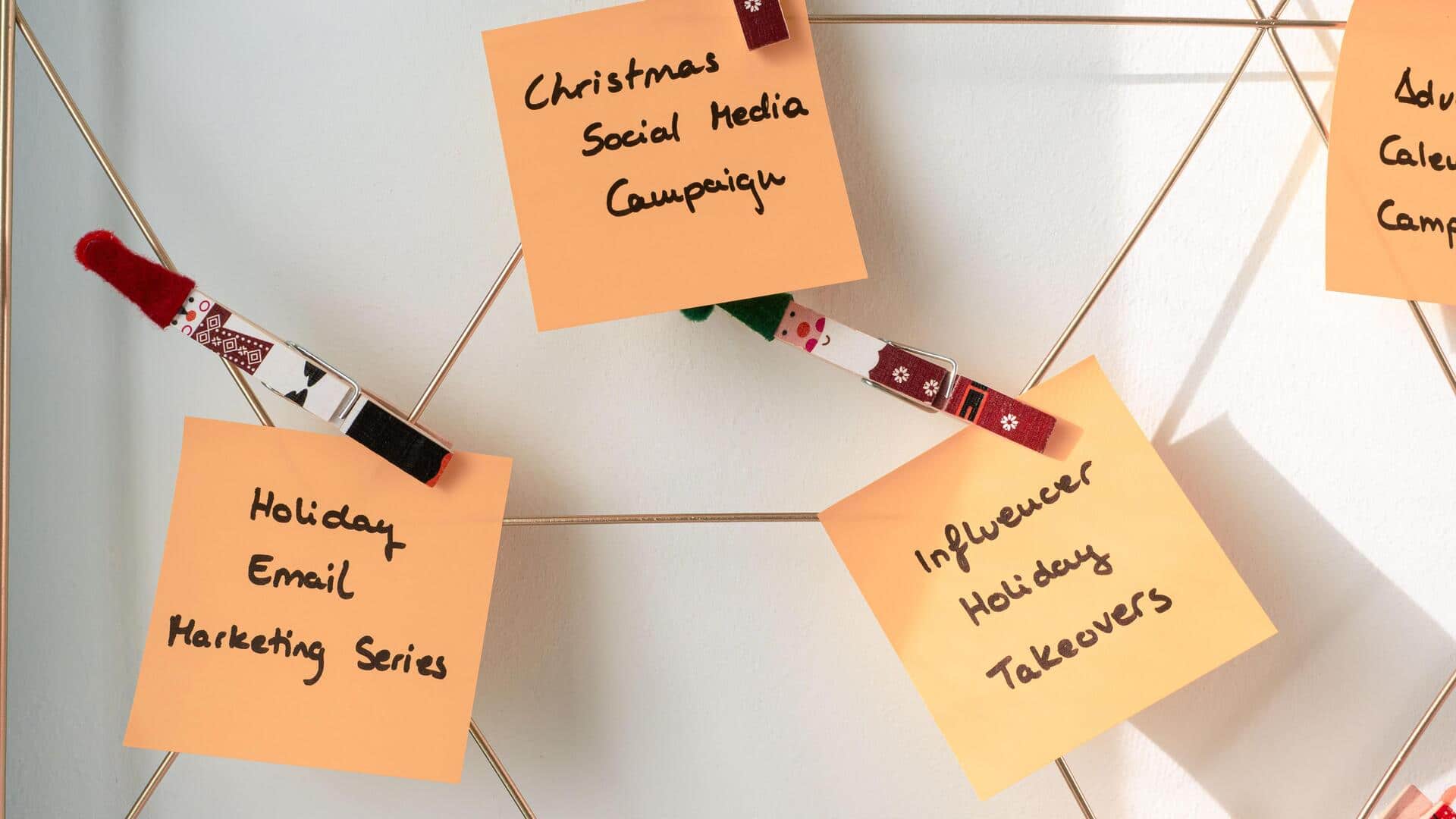
Create a social media calendar in 5 easy steps
What's the story
Creating a social media content calendar can be a game-changer for your online presence. It ensures that your posts are timely, relevant, and consistent. With a well-structured calendar, you can plan your content, align it with key dates or events, and maintain a steady flow of engagement with your audience. Here's how to create an effective social media content calendar.
Tip 1
Define your goals and audience
Before you start creating your calendar, it's important to define your goals.
What do you want to achieve through your social media? Be it increasing brand awareness or driving traffic to your website, knowing your goals will help you create targeted content.
Also, understanding your audience's preferences and behaviors will help you tailor your posts to resonate with them.
Tip 2
Choose the right platforms
Not all social media platforms are created equal. Each platform has its own user base and content style.
Choose the platforms that align best with your brand and audience.
For instance, if you are targeting professionals, LinkedIn might be more effective than Instagram.
This way, you can ensure that your content reaches the right people.
Tip 3
Plan your content types
Diverse content types keep your audience engaged. Mix up your posts with images, videos, infographics, and articles to keep things interesting.
Think about what type of content works best on each platform and how it aligns with your goals.
For example, short videos might work well on Instagram, while detailed articles could be better suited for Facebook.
Tip 4
Schedule regularly and consistently
Consistency is key in social media marketing.
Determine how often you want to post on each platform, and stick to that schedule as much as possible.
Use tools like Hootsuite or Buffer to automate posting times so that you maintain regularity without overwhelming yourself or your audience.
Tip 5
Monitor performance metrics
Tracking performance metrics is essential to understand what works and what does not in your strategy.
Keep an eye on engagement rates, click-through rates, and follower growth.
This will help you tweak your future content plans based on data-driven insights, rather than assumptions alone.