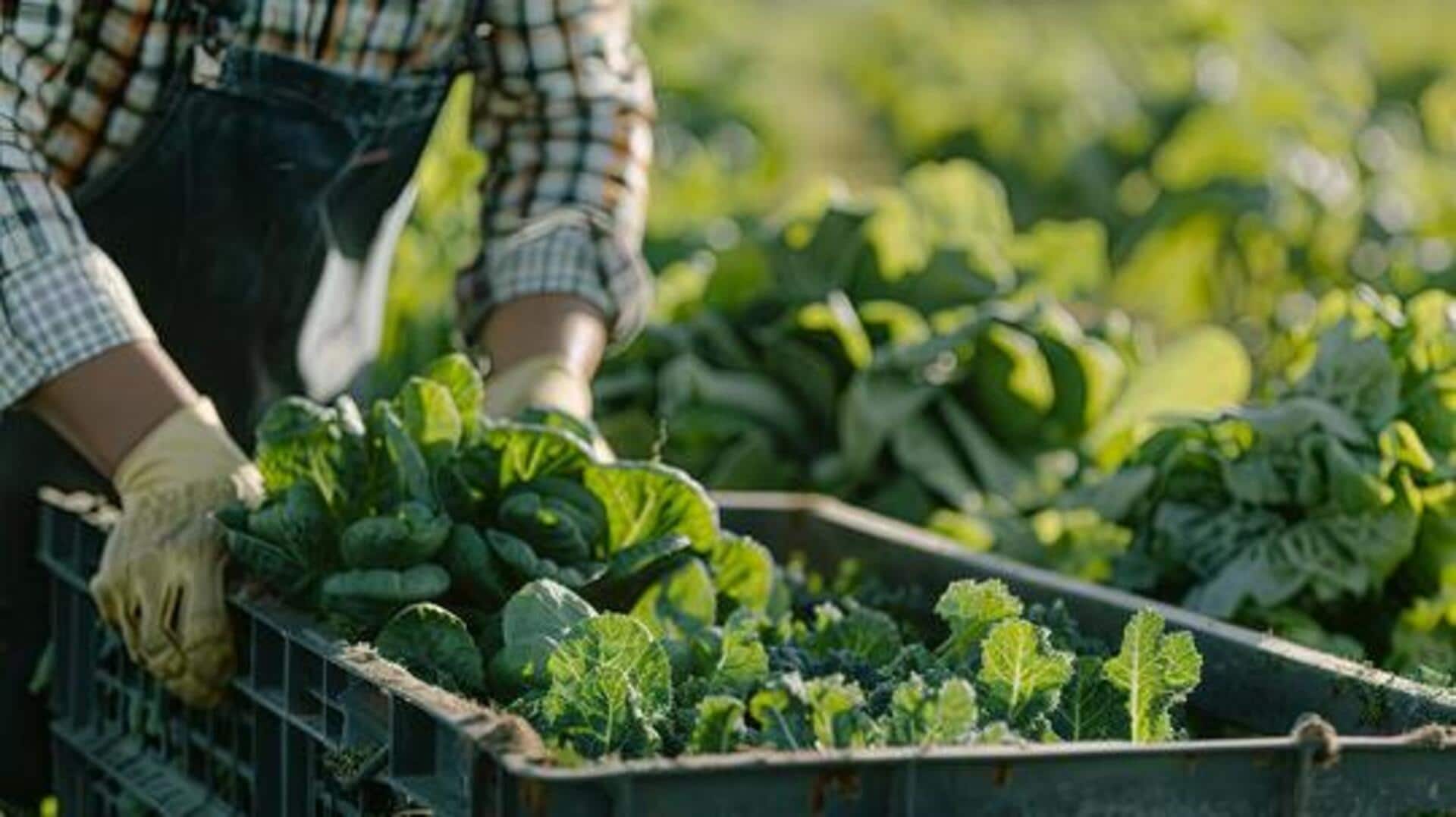
How farmers preserve seasonal produce
What's the story
African farmers have been saving seasonal produce for centuries, using traditional methods that are both practical and efficient. These techniques help preserve the quality and freshness of fruits, vegetables, and grains, ensuring they remain viable for consumption long after harvest. By employing these time-tested strategies, farmers can reduce waste and maximize their yields. Here are five traditional ways African farmers save seasonal produce.
Tip 1
Sun drying techniques
Sun drying is a common method used to preserve fruits and vegetables in Africa.
The produce is spread out in the sun on mats or trays, allowing natural sunlight to dehydrate them.
This method is cost-effective as it requires no special equipment or energy sources.
Sun-dried fruits like mangoes and tomatoes retain their nutrients while being stored for months without refrigeration.
Tip 2
Use of clay pots
Clay pots are widely used across Africa to store grains and legumes.
The porous nature of clay allows air circulation, preventing moisture buildup that can lead to spoilage.
These pots keep the contents cool and dry, extending the shelf life of stored produce significantly.
Farmers often line these pots with leaves or ash as an additional protective layer against pests.
Tip 3
Fermentation processes
Fermentation is another traditional technique that helps preserve seasonal produce, especially dairy products like milk or yogurt.
By adding natural cultures, farmers can ferment milk into yogurt or cheese, which lasts longer than fresh milk.
This process not only extends the shelf life but also enhances the nutritional value of the product through probiotic development.
Tip 4
Smoke curing methods
Smoke curing is commonly used to preserve fish in coastal regions of Africa.
The smoke from burning wood acts as a natural preservative by inhibiting bacterial growth on the surface of the food item.
This method imparts a distinct flavor while ensuring that the protein-rich foods remain safe for consumption over extended periods.
Tip 5
Leaf wrapping techniques
Wrapping vegetables such as yams or cassava leaves helps keep them fresh during storage.
The leaves act as an insulator, regulating temperature changes inside storage containers, such as baskets or wooden crates.
This prevents rot due to excess moisture levels caused by condensation during cooler nights or rainy seasons.