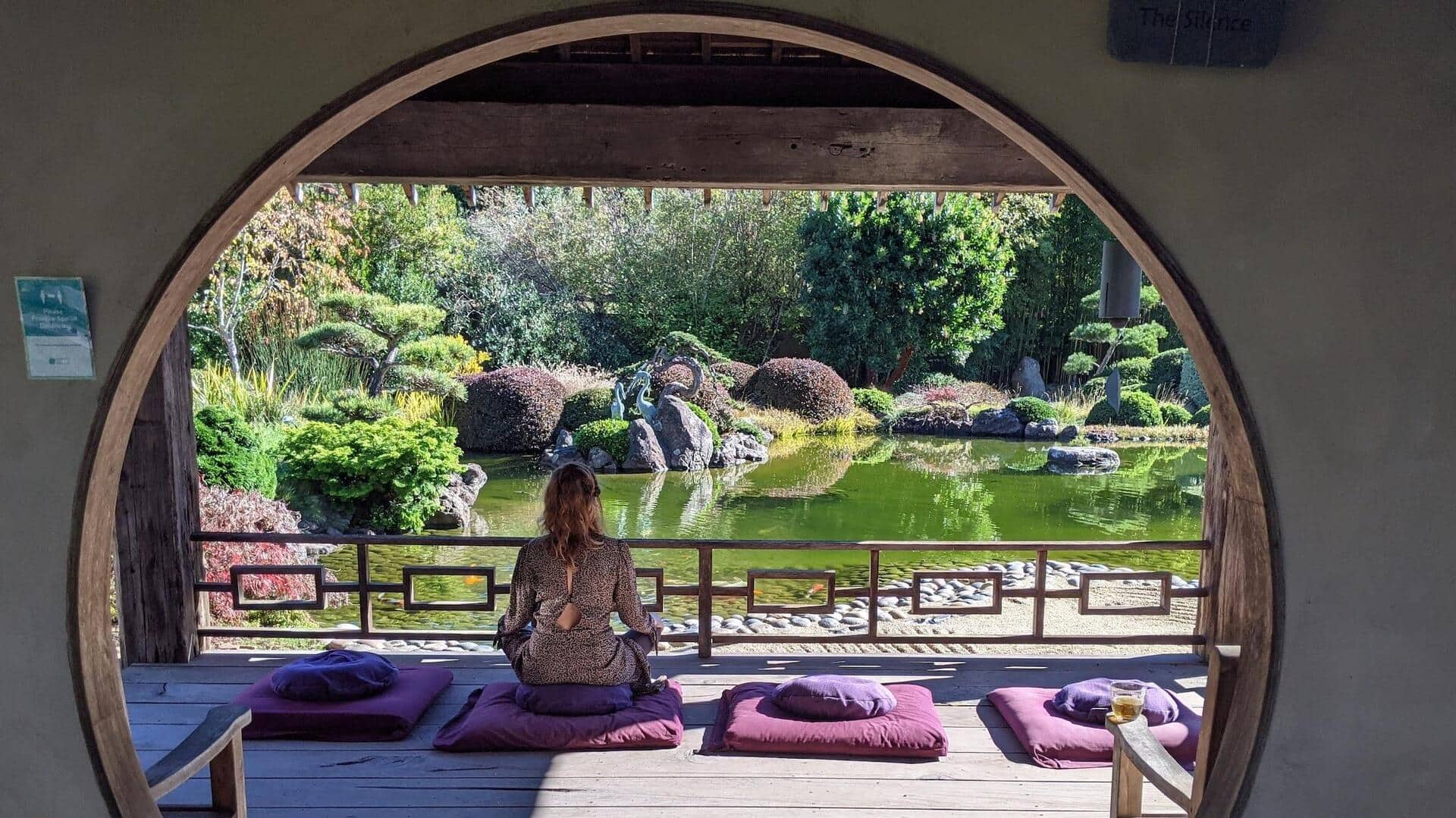
What is a sensory meditation space?
What's the story
Creating a sensory meditation space can be a transformative experience, enhancing your ability to relax and focus. By incorporating elements that engage the senses, you can craft an environment conducive to mindfulness and tranquility. This article explores practical tips for setting up a meditation space that appeals to sight, sound, touch, taste, and smell. Whether you have a large room or a small corner, these insights will help you create a personalized retreat for relaxation.
Visual appeal
Choose calming colors
Selecting calming colors is key to setting the mood of your meditation space.
Soft blues, greens, or neutrals can help create a peaceful atmosphere. These colors are known to promote relaxation and reduce stress levels.
You could use paint, cushions, or even artwork in these shades to enhance the visual appeal of your space.
Auditory elements
Incorporate soothing sounds
Integrating soothing sounds into your meditation routine can significantly enhance relaxation.
Consider adding elements like gentle music, nature sounds, or white noise machines.
These auditory elements work wonders by masking disruptive noises and creating a serene auditory backdrop that aids in achieving a meditative state.
This practice is especially beneficial for those who seek to immerse themselves in a peaceful and focused environment.
Touch sensations
Add tactile comforts
Creating a sensory meditation space isn't just about the visuals or sounds; it's also about the tactile elements.
Soft cushions, textured rugs, and comfortable blankets can make your space inviting and cozy.
These items not only add to the comfort but also make the space more enjoyable to spend time in, making it easier to relax and focus during meditation sessions.
Olfactory influences
Utilize aromatic scents
Aromatherapy can significantly enhance your meditation experience by engaging the sense of smell.
Use essential oils like lavender or eucalyptus in diffusers or candles to fill your space with calming scents.
These aromas are known for their stress-relieving properties and can help you achieve a deeper state of relaxation.
Taste experience
Tasteful refreshments
Incorporating tasteful refreshments like herbal teas or infused water can add another layer of sensory engagement to your meditation practice.
Choose flavors that promote calmness, such as chamomile or peppermint tea.
Having these beverages nearby allows you to enjoy them before or after your sessions, enhancing overall relaxation without disrupting focus during meditation time.