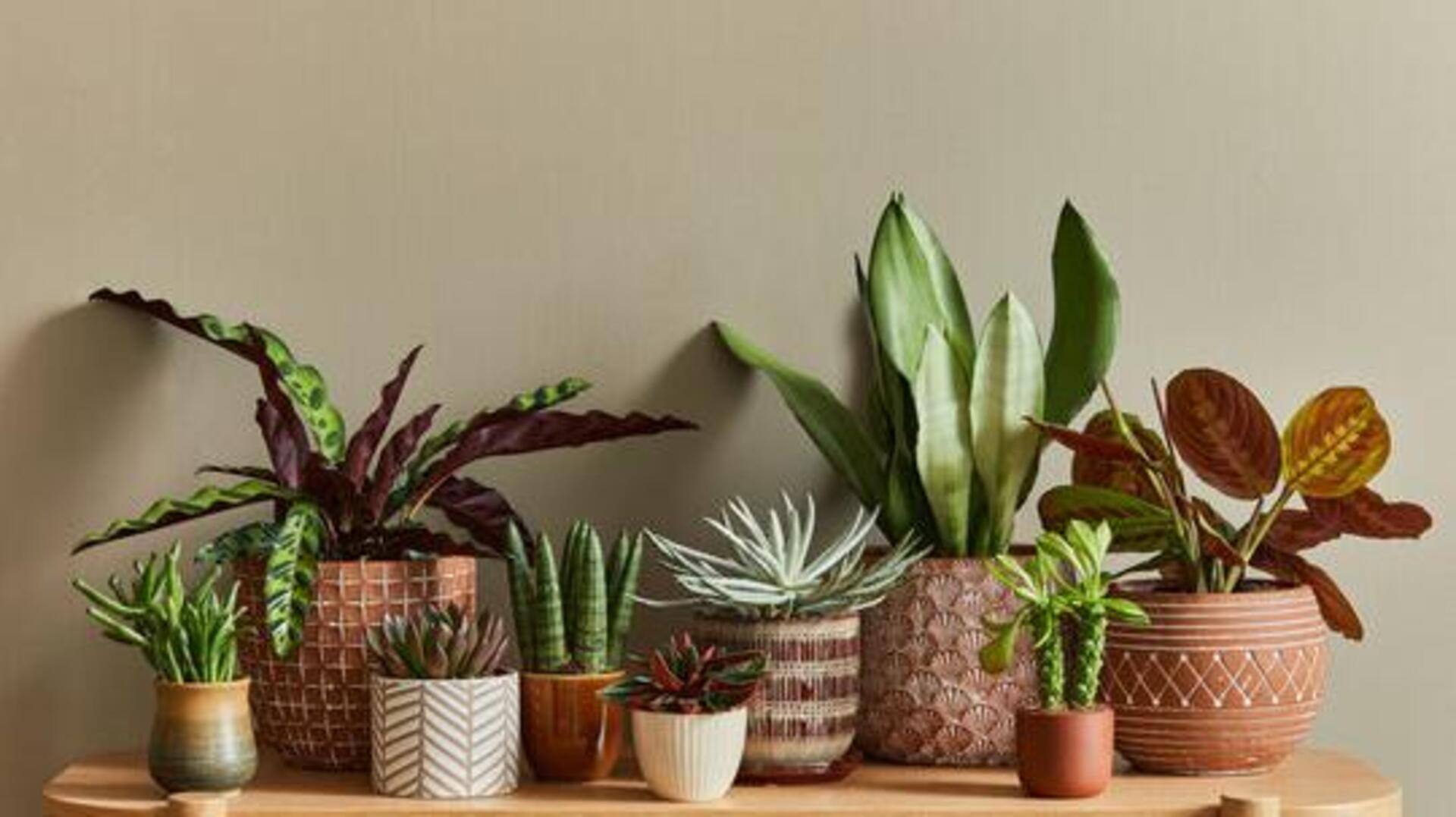
How to protect your plants from temperature changes
What's the story
Indoor plants can be quite sensitive to temperature changes, which is why it is important to keep them comfortable. Sudden temperature changes can stress plants, affecting their growth and health. By following some simple steps, you can keep your indoor plants happy and thriving. Here are five practical ways to protect your indoor plants from temperature changes, ensuring they get the best environment.
Tip 1
Use plant covers
Plant covers can be a great way to shield your indoor plants from sudden temperature changes. These covers act as a barrier against cold drafts and heat fluctuations. They are particularly useful during the night when temperatures tend to drop. Using breathable materials ensures that your plants get enough light and air circulation while being protected from extreme temperatures.
Tip 2
Position plants wisely
The placement of your indoor plants can also have a huge impact on how well they cope with temperature changes. Keep them away from windows or doors where cold drafts can hit them directly. Also, do not place them too close to heat sources, like radiators or heaters, as this can dry them out quickly. Find a spot with stable temperatures for your plants.
Tip 3
Monitor humidity levels
Humidity levels also play a key role in keeping indoor plants healthy. Low humidity due to heating systems in winter can stress some plants. Using humidifiers or placing water trays near your plants can help maintain optimal humidity levels. This not only keeps the air around your plants moist but also helps them cope with temperature changes better.
Tip 4
Adjust watering routines
Temperature changes also affect how much water your indoor plants need. In cooler temperatures, evaporation rates drop, so you may need to water less frequently than in warmer conditions. On the other hand, if it is warmer, you may need to increase watering slightly to avoid dehydration. Adjusting your watering routine according to the temperature ensures that your plants remain hydrated without overwatering.
Tip 5
Use thermal mass materials
Thermal mass materials absorb heat during the day and release it slowly at night, moderating temperature fluctuations around indoor plants. Materials like stone or ceramic pots can provide this benefit by retaining warmth longer than plastic containers would. This helps create a more stable environment for sensitive plant species prone to stress from rapid temperature changes.