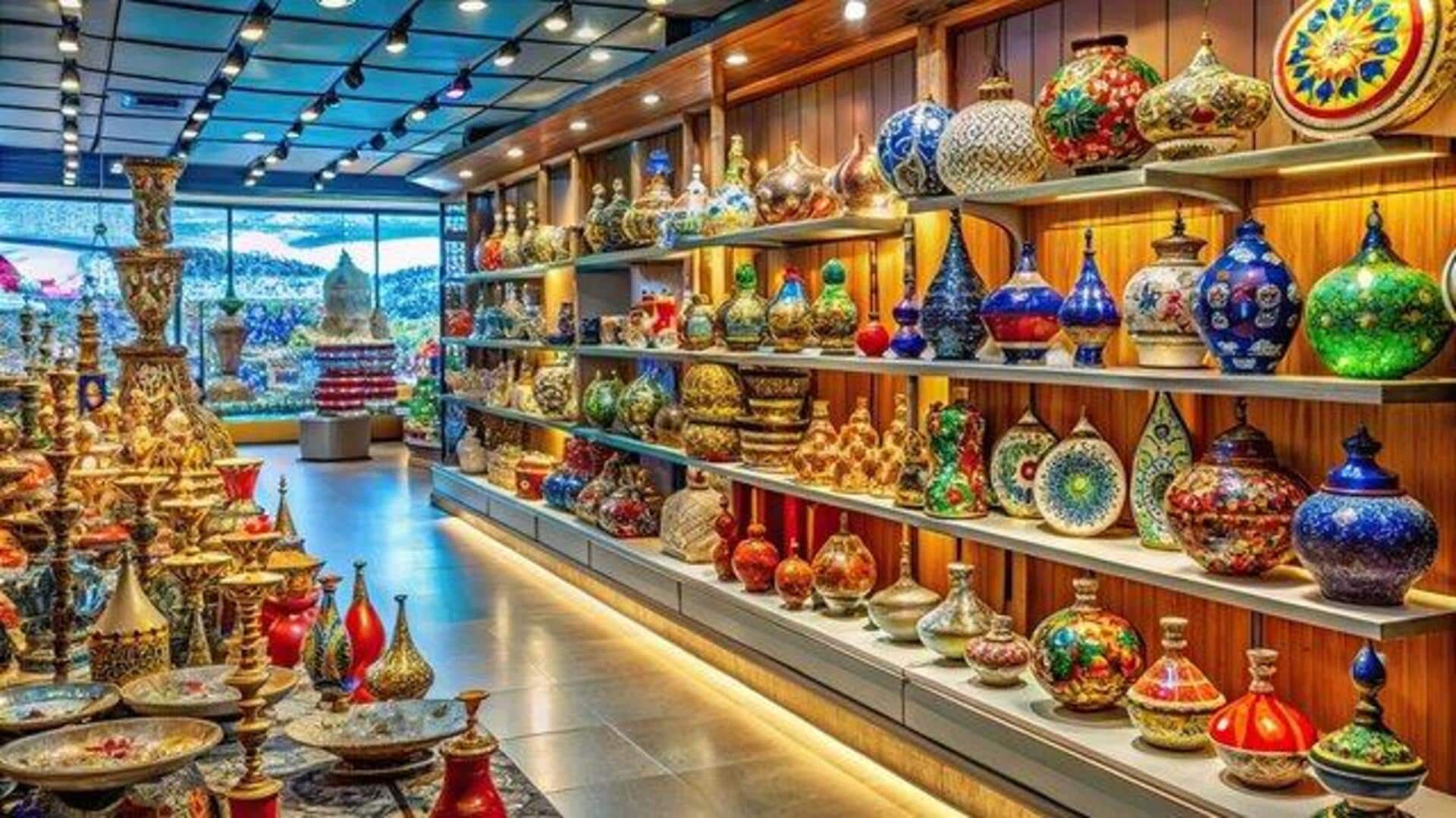
How to spot fake souvenirs in markets
What's the story
African markets are famous for their colorful souvenirs, but spotting authentic ones can be tricky. With so many options, tourists can easily get duped into buying fake products. Knowing the difference between real and fake can help you get the best out of your shopping experience and support local artisans. Here are some practical tips to help you spot genuine African souvenirs.
#1
Understand cultural significance
Many African souvenirs have cultural significance and are made using traditional techniques.
Knowing the cultural background of a product can help you determine its authenticity.
Researching the history and symbolism of different items will help you understand their value and significance.
This knowledge will help you differentiate between genuine articles and mass-produced replicas.
#2
Check craftsmanship quality
Authentic African souvenirs are usually handcrafted by skilled artisans. The quality of craftsmanship is often a telltale sign of authenticity.
Look for signs of meticulous work, like intricate details and unevenness that come with handmade items.
If the product looks too perfect or machine-made, it may be a replica rather than an authentic piece.
#3
Verify material authenticity
The materials used in making African souvenirs also play an important role in determining their authenticity.
Natural materials such as wood, clay, or beads are commonly used in traditional crafts.
Check if the materials feel genuine by touching them or examining their texture closely.
Synthetic materials may not only compromise the quality but also the cultural value of the item.
#4
Ask about origin stories
Many authentic African souvenirs come with an origin story that speaks of its maker's community or cultural heritage.
When shopping, don't hesitate to ask vendors about the story behind their products.
A knowledgeable seller will be able to share details about how an item was made, who made it, and its significance within local traditions.
Tip 1
Compare prices wisely
While bargaining is common in African markets, be wary of prices that seem too good to be true.
Authentic handcrafted items usually come at a price reflective of the time and skill involved in making them.
If an item is priced way lower than what similar products cost elsewhere or appears too cheap for its quality level, it could be a sign of inauthenticity.