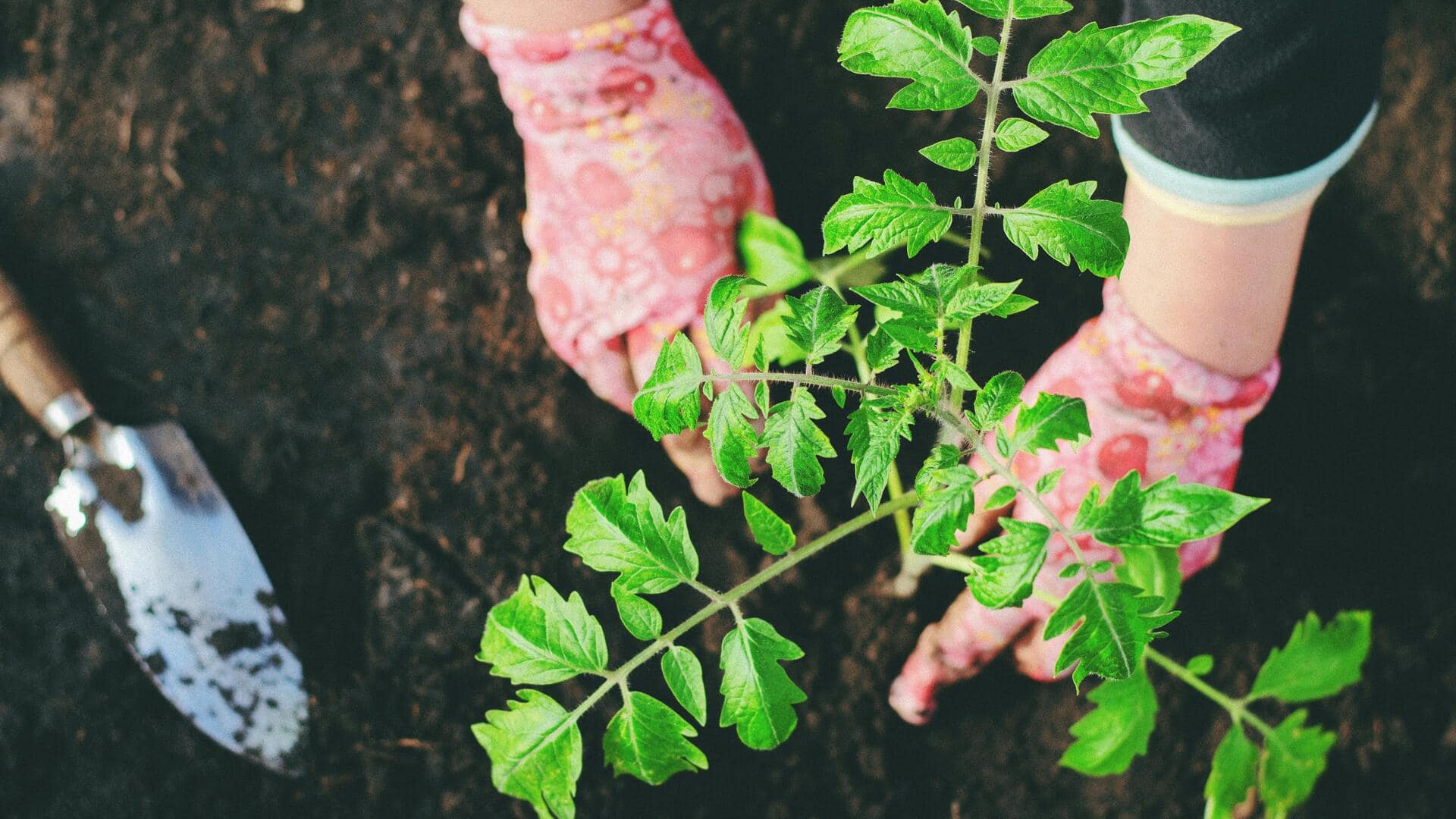
How to build a home garden without overspending
What's the story
Creating a sustainable home garden on a budget is not only eco-friendly but also economical. With a few smart tricks, you can grow your own vegetables, herbs, and flowers without burning a hole in your pocket. This article lists practical tips to help you set up an affordable garden that thrives on minimal resources. From choosing the right plants to using recycled materials, these insights will help you cultivate a green space without spending much.
Tip 1
Use recycled containers for planting
Recycling containers is a cost-effective way to start your garden.
Old buckets, jars, and plastic bottles can be repurposed as planters. Just ensure they have proper drainage holes to prevent waterlogging.
This not only saves money but also reduces waste by keeping these items out of landfills.
Many creative gardeners have turned everyday household items into unique planters that add character to their gardens.
Tip 2
Start plants from seeds or cuttings
Starting plants from seeds or cuttings is way cheaper than buying seedlings from nurseries.
Seeds are usually cheaper than seedlings and give you more plants per packet.
For some plants, like herbs and certain vegetables, you can take cuttings from existing plants and root them in water or soil.
This method not only saves money but also allows you to expand your garden without extra costs.
Tip 3
Compost kitchen scraps for soil enrichment
Composting kitchen scraps is an excellent way to enrich your garden soil without spending on fertilizers.
Fruit peels, vegetable scraps, and coffee grounds can all be composted into nutrient-rich soil amendments.
Not only does composting recycle organic waste, but it also improves soil structure and fertility over time.
It's an easy process that requires minimal investment but yields significant benefits for plant growth.
Tip 4
Utilize rainwater for irrigation
Collecting rainwater for irrigation is a sustainable way to water your garden without increasing your utility bills.
Set up simple rain barrels under downspouts to capture runoff during storms.
Using collected rainwater reduces reliance on tap water and conserves resources while providing plants with natural hydration free of chemicals found in municipal supplies.
Tip 5
Share resources with neighbors or friends
Collaborating with neighbors or friends who share similar gardening interests can help reduce costs significantly.
By sharing tools like shovels or rakes, seeds, or even plant cuttings, everyone benefits from shared resources.
This not only fosters community spirit, but also makes gardening more affordable by splitting expenses among participants.