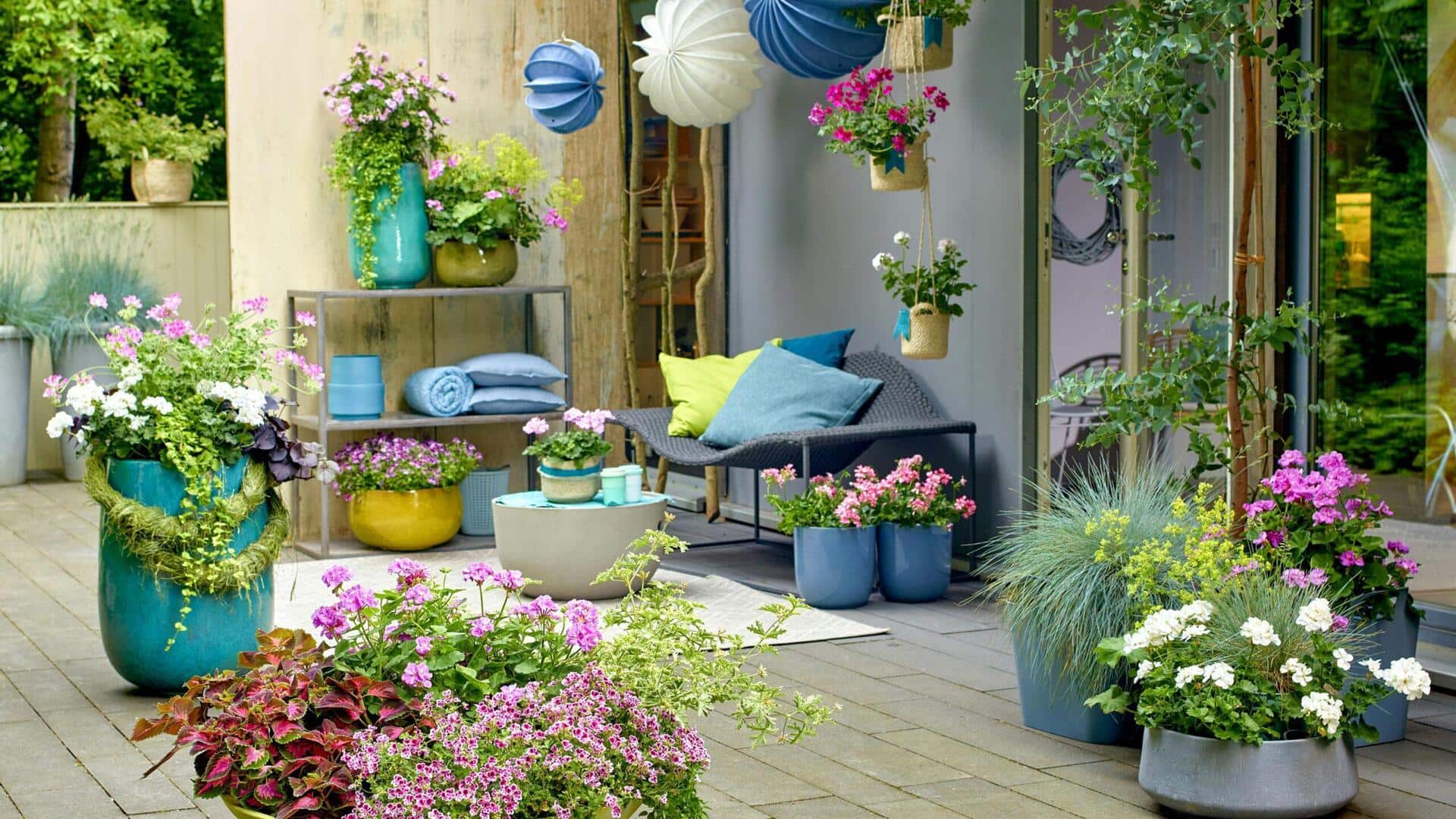
How to start gardening in small spaces
What's the story
Urban gardening is a great way to grow your own food while living in a limited space. For beginners, it may seem a little daunting, but with the right tips, you can easily set up a thriving garden. Whether you have a balcony, windowsill, or small backyard, there are plenty of options to grow vegetables and herbs. Here are some practical tips to help you get started on your urban gardening journey.
Tip 1
Choose the right containers
Selecting appropriate containers is crucial for urban gardening.
Go for pots that are at least six inches deep to ensure proper root growth.
Make sure they have drainage holes to prevent waterlogging.
You can use recycled materials like plastic bottles or old buckets as cost-effective alternatives. Just ensure these containers are clean and safe for planting.
Tip 2
Opt for space-efficient plants
Choosing the right plants can maximize your limited space.
Go for varieties that grow vertically or compactly, such as cherry tomatoes, lettuce, or herbs like basil and mint.
These plants require less horizontal space and can be grown in smaller containers or vertical planters.
This way, you can make the most of your available area while enjoying a variety of homegrown produce.
Tip 3
Utilize quality soil mix
A good soil mix is the key to healthy plant growth in urban gardens.
Go for a potting mix that is specifically designed for container gardening as it provides proper drainage and aeration.
You can also add organic matter like compost or peat moss to enhance soil fertility and moisture retention.
This way, your plants get the nutrients they need to thrive without the risk of compacted soil.
Tip 4
Implement efficient watering techniques
Proper watering is key to keeping your urban garden healthy.
Water your plants early in the morning or late in the evening when temperatures are cooler to avoid evaporation loss.
Consider using self-watering pots or drip irrigation systems for efficient water usage, especially if you're busy or forgetful about regular watering schedules.
Tip 5
Monitor pests regularly
Urban gardens can also attract pests, so it's important to keep a close watch on your plants.
Regularly inspect leaves and stems for signs of infestation, such as holes or discoloration.
If you do find pests, use natural remedies like neem oil or insecticidal soap instead of chemical pesticides that may harm beneficial insects in your garden ecosystem.