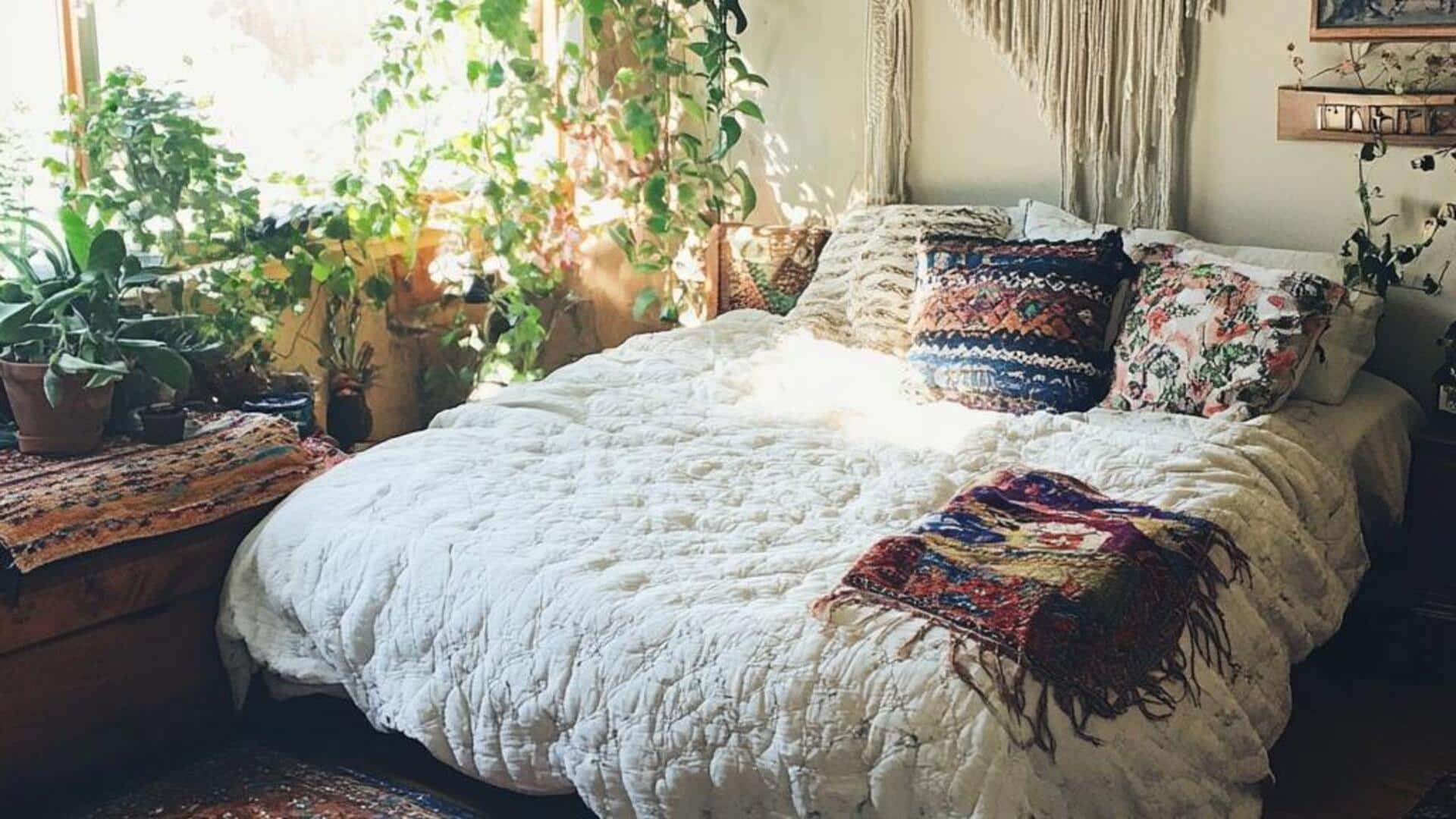
Layered textile is the decor hack you need!
What's the story
Layering textiles is a simple yet effective way to add warmth and depth to any space. By mixing different fabrics, colors, and patterns, you can create a cozy atmosphere that feels inviting. This technique is all about balancing textures and harmonizing elements within a room. Whether it is your living room or bedroom, layering textiles can make your space feel more dynamic and personalized without overwhelming the senses.
Pattern play
Mix patterns with care
Mixing patterns can be tricky, but if done right, it can add so much character to a room.
Start with one dominant pattern and add smaller ones that complement it. Use neutral tones as a base to tie everything together.
Stripes, florals, and geometrics can work well together if they share common colors or themes.
The key is to maintain balance so that no single pattern overshadows the others.
Texture variety
Use varying textures
Incorporating different textures is key to making a layered textile look inviting.
Think of adding soft throws, plush cushions, and woven rugs to your space.
Mixing smooth fabrics like silk or cotton with rougher ones like jute or wool adds depth and interest.
Touch is just as important as sight when it comes to creating a cozy environment, so do not shy away from experimenting with various materials.
Rug layering
Layering with rugs
Rug layering is an amazing way to add warmth underfoot while defining different areas in a room.
Start with a larger area rug as your base layer before adding smaller accent rugs on top.
Make sure the colors of the rugs complement each other for cohesion.
This technique works especially well in open-plan spaces, where you want distinct zones without completely separating them.
Nature's touch
Incorporate natural elements
Bringing natural elements into your textile layering scheme can enhance the coziness tenfold.
Think of linen curtains that let in soft light during the day, or bamboo blinds for privacy at night.
Add cushions made from organic cotton, alongside throws crafted from sustainable materials like hemp or jute blends.
These additions not only make your home look good but also eco-friendly.
Hue Harmony
Balance light and dark hues
Balancing light and dark hues is key to achieving harmony in layered textiles.
Use lighter shades as a base, like creams or pastels, before introducing darker accents through pillows or blankets. This contrast adds depth without making the space feel heavy.
It is ideal for smaller rooms where the light needs to be maximized, while still having cozy corners to unwind.