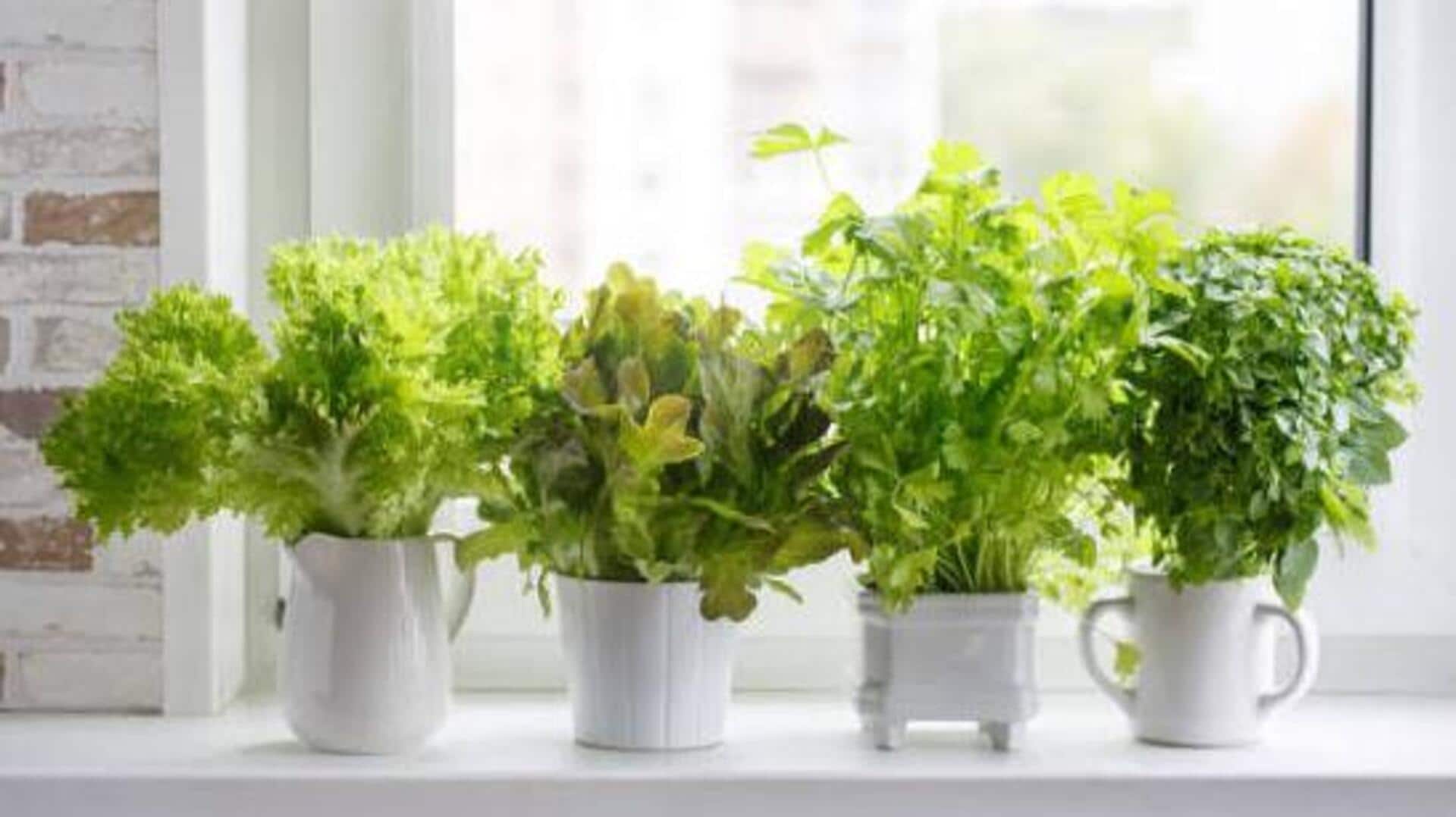
How to grow herbs in pots
What's the story
Growing herbs in pots is a rewarding way to add fresh flavors to your kitchen. With limited space, potted herbs provide a practical solution for those wanting to grow their own plants. Not only does this method save space, but it also allows you to control the environment of your plants. Be it a seasoned gardener or a newbie, growing herbs in pots can be simple and fulfilling.
Tip 1
Choosing the right pot
Selecting the right pot is essential for healthy herb growth.
Choose pots with drainage holes to prevent waterlogging, which can damage roots.
The size of the pot should be adequate for the herb's root system; generally, six to eight inches in diameter works well for most herbs.
Terra cotta pots are a great option, as they allow air circulation through the walls.
Tip 2
Soil and drainage essentials
Using the right soil mix is key to successful herb gardening in pots.
A well-draining potting mix, enriched with organic matter like compost or peat moss, works best.
This ensures that nutrients are available while maintaining adequate moisture levels without becoming waterlogged.
Adding small stones or broken pottery shards at the bottom of the pot can further improve drainage.
Tip 3
Watering techniques
Proper watering is key to keeping your potted herbs healthy.
Always check the top inch of soil before watering; if it's dry, it's time to water.
Overwatering can lead to root rot, so make sure excess water drains out completely from the pot's base after each watering session.
During hot weather, you may need to increase frequency, but avoid letting soil become soggy.
Tip 4
Light requirements for herbs
Most culinary herbs need plenty of sunlight to flourish, ideally six hours a day at least.
Place your potted herbs where they can get direct sunlight, such as on windowsills or balconies facing south or west.
If natural light is insufficient indoors, consider using grow lights as an alternative source of illumination.
Tip 5
Fertilizing your potted herbs
To keep your potted herbs healthy and thriving, you need to fertilize them regularly.
Use a balanced liquid fertilizer, diluted to half the recommended strength, every four weeks during the growing season.
This will provide essential nutrients without overwhelming the plants with excess salts.