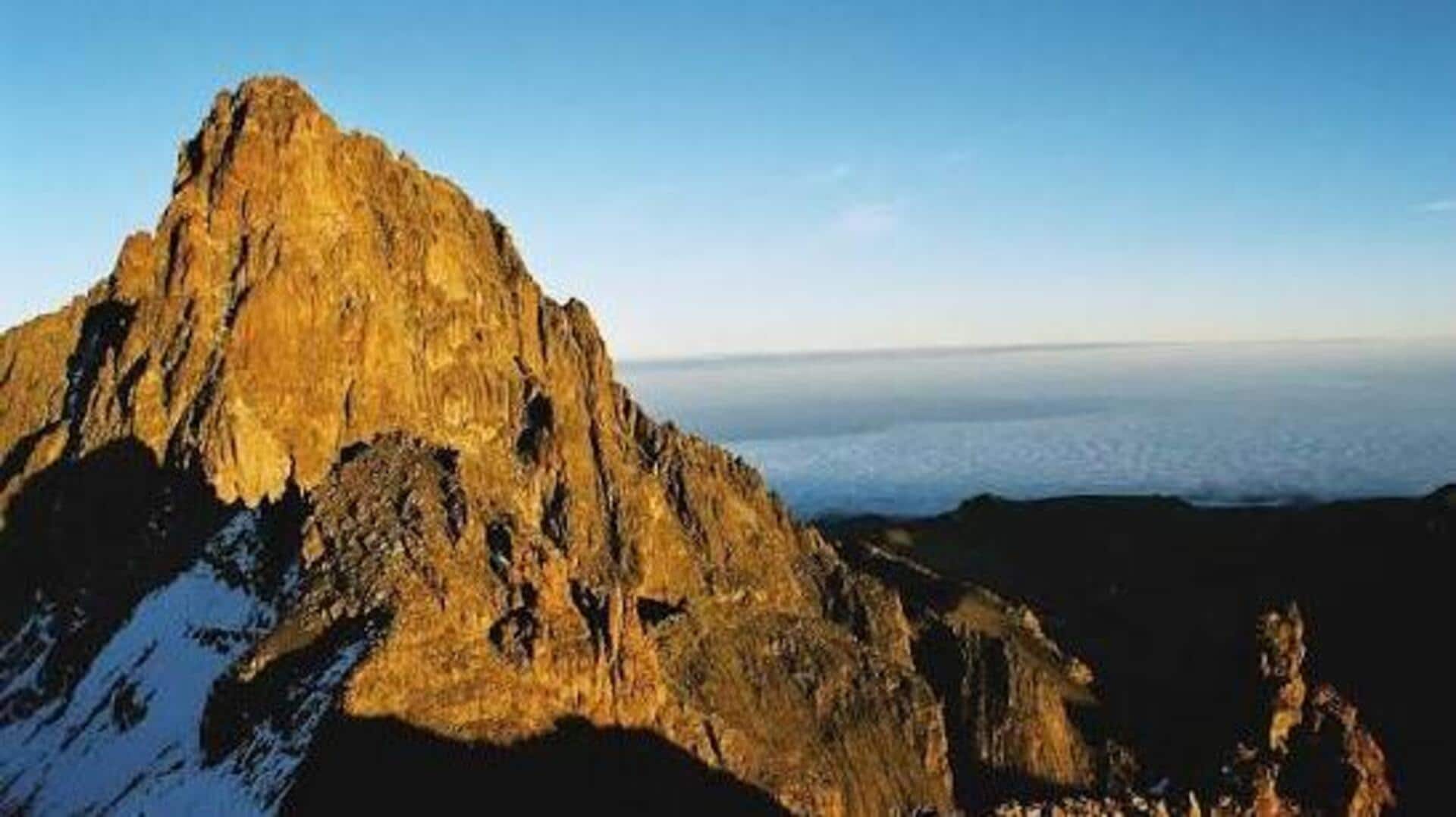
How to prepare for a Mount Kenya climb
What's the story
Mount Kenya, Africa's second-highest peak, offers a thrilling experience to climbers. With its diverse terrain and challenging routes, it is a paradise for those looking for adventure. To conquer this majestic mountain, climbers need to be well-prepared and informed about the best routes and tips. Here are some practical insights into climbing Mount Kenya, focusing on essential preparations and route details.
Route selection
Choosing the right route
Selecting the right route is critical for a successful climb.
The Sirimon Route is famous for its gentler slopes, and less crowd. The Chogoria Route is more scenic but also tougher.
For experienced climbers, the North Face offers technical challenges.
Assess your fitness level and experience before choosing a route.
Gear checklist
Essential gear and equipment
Proper gear is essential for a safe climb.
Make sure you have sturdy hiking boots, warm clothing layers, a reliable backpack, a sleeping bag rated for low temperatures, and a good-quality rain jacket.
Don't forget essentials like trekking poles, headlamps with extra batteries, water purification tablets or filters, and high-energy snacks.
Altitude adjustment
Acclimatization strategies
Acclimatization is key to avoiding altitude sickness on Mount Kenya.
Spend at least two days at lower altitudes before starting your climb to allow your body to adjust.
Drink plenty of water during this period.
Gradually increase your elevation gain each day during your ascent to help your body adapt.
Safety measures
Safety tips for climbers
Safety should always be a priority while climbing Mount Kenya.
Travel in groups, where possible, for added security and support in case of emergencies.
Keep an eye out for weather changes, as conditions can change rapidly on the mountain; turn back if necessary rather than risk exposure to extreme weather or fatigue-related accidents.