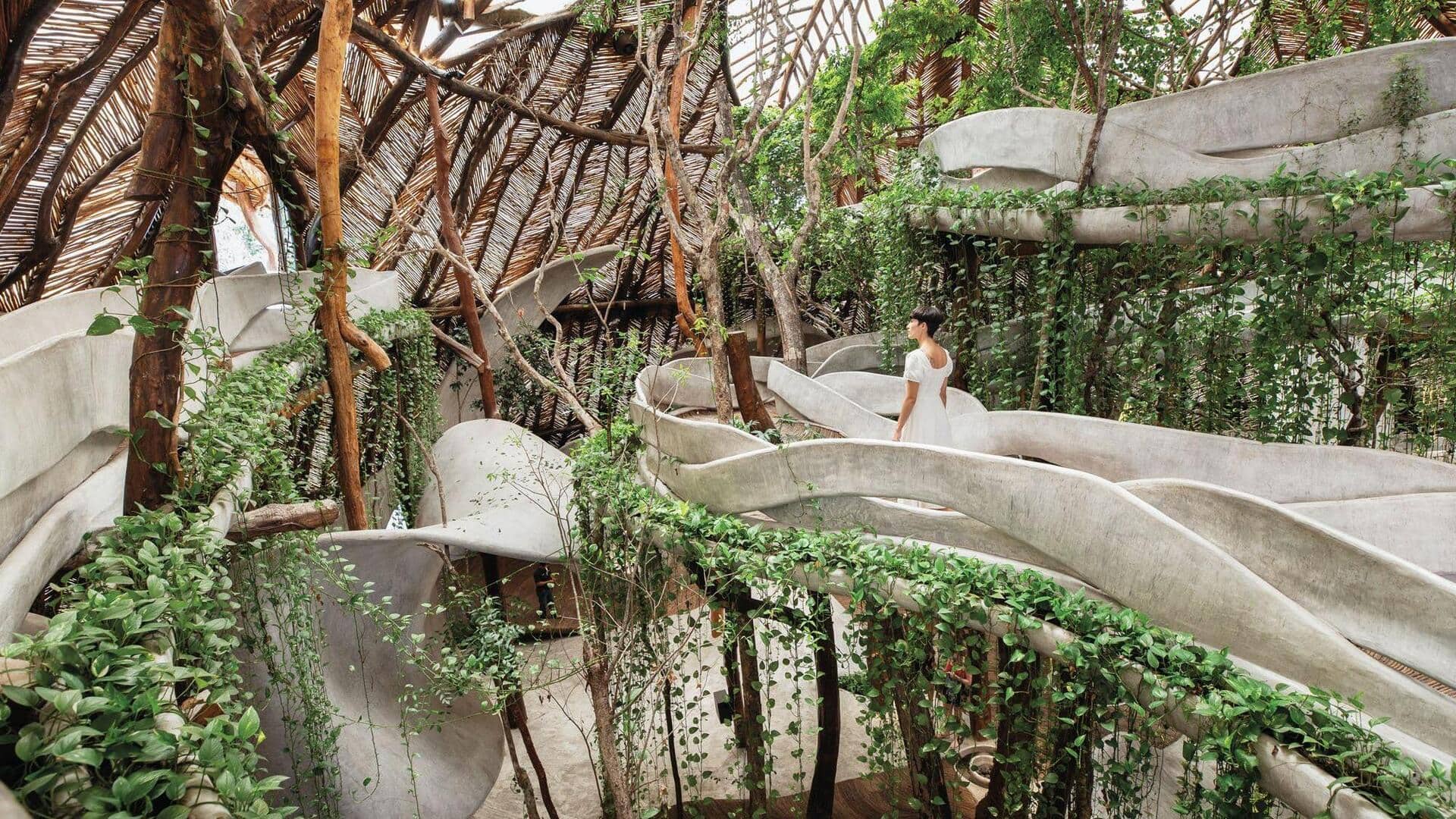
What is biophilic design?
What's the story
Biophilic design includes natural elements, materials, and forms in a living environment to make occupants reconnect with nature. This architectural and interior design approach is known to reduce stress and improve cognitive function, thus enhancing a person's physical, mental, and emotional well-being. Here are five effective ways to add biophilic design to your home for a healthier living space.
Tip 1
Incorporate indoor plants
Indoor plants are an essential part of biophilic design. They purify the air and add a splash of color and life to any room. Choose low-maintenance plants, like snake plants or pothos, if you're a beginner. Place them in areas where they can get natural light, like near windows or on shelves. Not only do plants improve air quality, but they also reduce stress levels by up to 60%.
Tip 2
Use natural materials
Incorporating natural materials like wood, stone, or bamboo can make your home feel more connected to nature. Use wooden furniture or stone accents in your living spaces to add texture and warmth. Bamboo flooring or wall panels can also be a sustainable choice that adds an earthy vibe to your home. These materials are durable and easy to maintain, making them perfect for any room.
Tip 3
Maximize natural light
Natural light is an essential element of biophilic design as it mimics the outdoors and improves mood and productivity. Use sheer curtains or blinds that allow sunlight to filter through during the day. Skylights or large windows can also be installed to maximize daylight exposure, without compromising on privacy.
Tip 4
Create water features
Adding water features such as small fountains or aquariums can bring a sense of calmness and tranquility into your home. The sound of flowing water has been proven to reduce stress by up to 30% while creating a soothing ambiance for relaxation or meditation purposes. Choose compact designs that fit easily into smaller spaces without overwhelming them visually.
Tip 5
Design with nature-inspired colors
Nature-inspired colors like greens, blues, browns, and soft neutrals help bring the outdoors inside through paint choices or decorative accents like cushions or rugs. These hues not only create harmony within interiors but also promote relaxation by mimicking natural landscapes. This makes them ideal for bedrooms, living rooms, and workspaces alike.