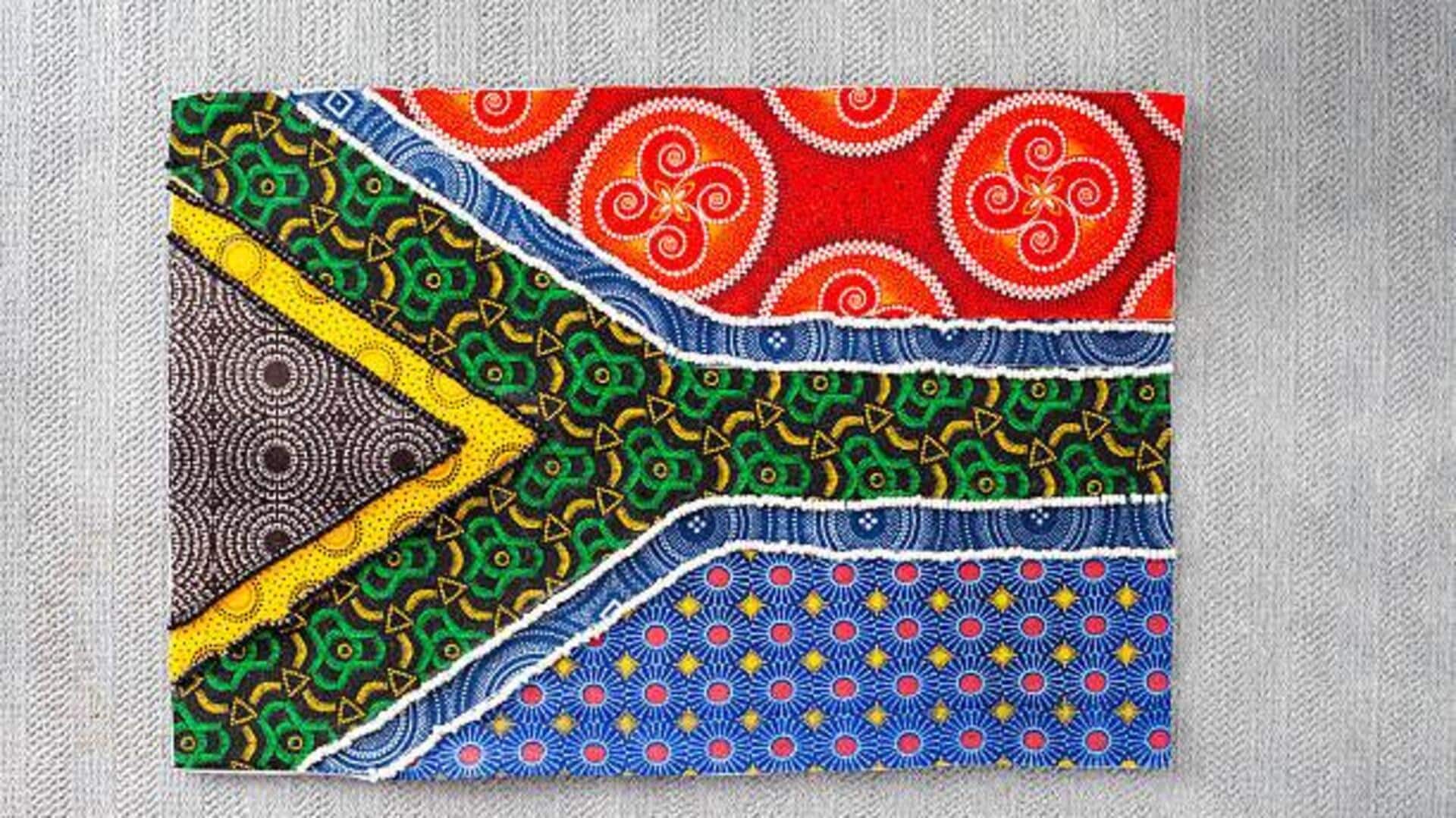
What is shweshwe fabric? Why is it so unique?
What's the story
Shweshwe fabric, with its intricate patterns and vibrant colors, is a staple in African textiles. Famous for its durability and unique designs, this fabric is now being used beyond traditional clothing. In the world of quilting, shweshwe brings a fresh perspective to the art form. Its geometric patterns and rich history add depth to modern quilts, making them not just functional but also artistic expressions.
Historical roots
The history of shweshwe fabric
Shweshwe fabric has a long history, dating back to the 19th century when it was first introduced to Southern Africa by German missionaries.
The fabric was initially used as a substitute for imported textiles. Over the years, it evolved into a cultural symbol, especially among the Xhosa people.
The name shweshwe is derived from the sound made when the fabric is folded or crumpled.
Pattern exploration
Unique patterns in shweshwe fabric
One of the most distinctive features of shweshwe fabric is its intricate patterns.
These designs are created using a process called discharge printing, where dye is removed from the fabric to create patterns.
The result is a variety of geometric shapes, including diamonds, circles, and lines, that lend themselves beautifully to quilting projects.
Modern applications
Versatility in modern quilts
Shweshwe fabric's versatility makes it an ideal choice for modern quilts.
Its bold colors can either be used as the main attraction or as subtle accents in quilt designs.
Quilters love how shweshwe pairs well with other fabrics, while still retaining its unique character.
This adaptability makes it a favorite among those looking to experiment with new textile combinations.
Maintenance tips
Caring for shweshwe fabrics
To keep shweshwe fabrics looking their best in quilts, proper care is essential.
Always wash them gently by hand, or use a delicate cycle on your washing machine with cold water.
Avoid harsh detergents that may fade the colors over time.
When drying, opt for air drying instead of using a dryer to prevent shrinkage or damage to the delicate prints.