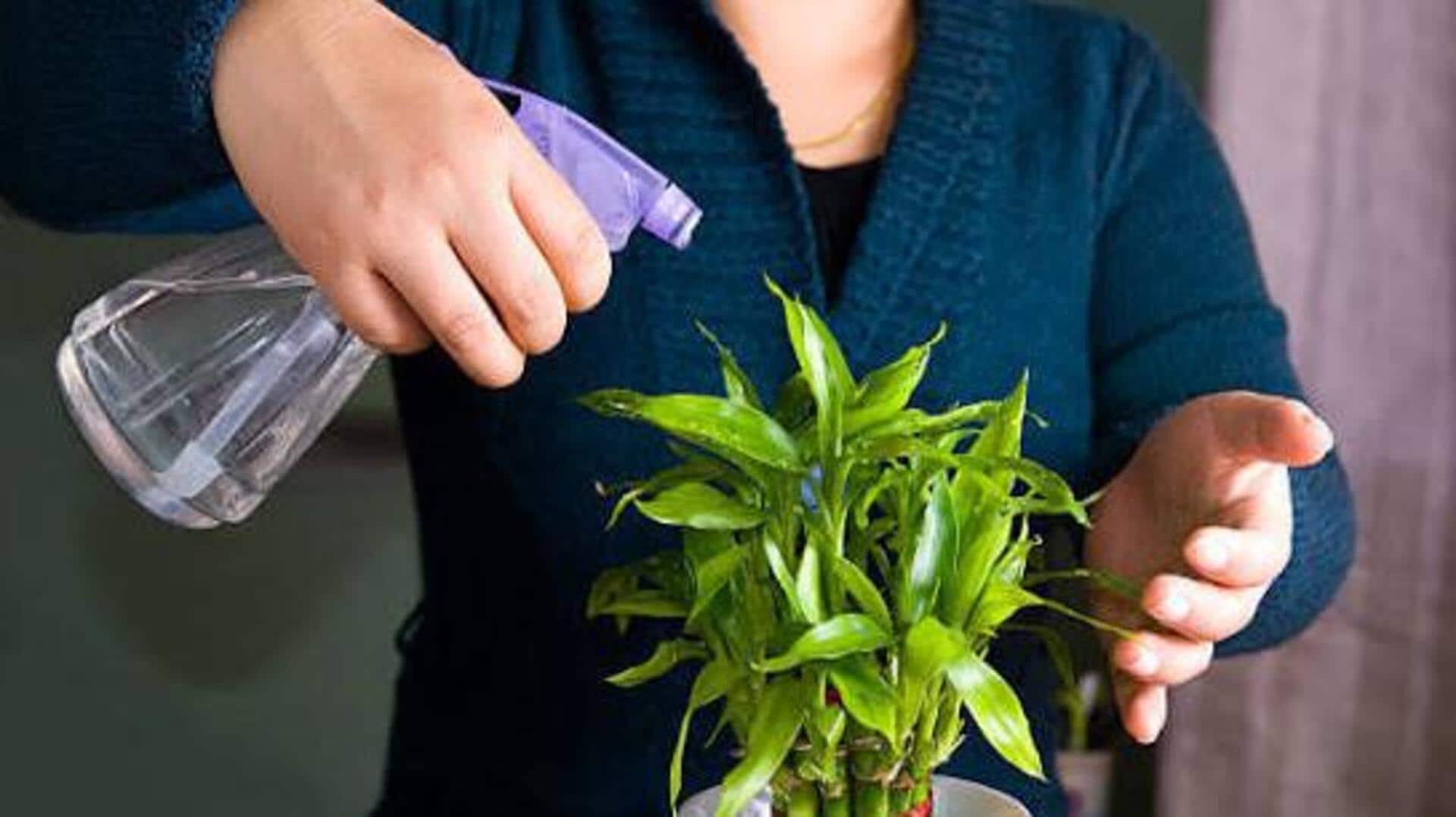
How to water bamboo plants the right way
What's the story
Indoor bamboo plants are a great way to add a touch of greenery to your home. They are low-maintenance, but proper watering is key to their health. Knowing the right watering techniques can keep your bamboo plants healthy and thriving. Here are five ways to water indoor bamboo plants effectively, ensuring they get the right amount of moisture, without overwatering.
Tip 1
Use distilled water for best results
Using distilled water for your indoor bamboo plants can do wonders.
Tap water has chlorine and other chemicals that can harm the plant over time.
Distilled water, on the other hand, is free from these chemicals and is gentle on the roots.
This way, you can keep the soil pH balanced and prevent any mineral buildup that could hinder growth.
Tip 2
Water when topsoil feels dry
It's important to check the topsoil of your bamboo plant regularly.
Watering should be done when the top inch of soil feels dry to touch.
This way, you can avoid overwatering, which can lead to root rot.
By sticking to this practice, you ensure that your plant gets the right amount of moisture without being waterlogged.
Tip 3
Use room temperature water
When watering your indoor bamboo plants, always use room temperature water.
Cold water can shock the roots and affect their growth negatively.
Let tap water sit out for a few hours before using it, or use distilled water at room temperature.
This simple step can make a big difference in keeping your bamboo healthy.
Tip 4
Ensure proper drainage in pots
Proper drainage is key to keeping your indoor bamboo plants healthy.
Make sure the pots you use have drainage holes, so that excess water can escape easily.
This prevents water from pooling at the bottom of the pot, which could cause root rot or fungal problems.
Using well-draining soil also helps maintain optimal moisture levels.
Tip 5
Mist leaves occasionally
Misting leaves of indoor bamboo plants every now and then can help keep humidity levels up, especially in dry indoor environments.
It also helps keep dust off the leaves, allowing them to photosynthesize better.
Just don't overdo it; mist lightly once or twice a week, depending on how dry your home is, without making leaves soggy or too wet.