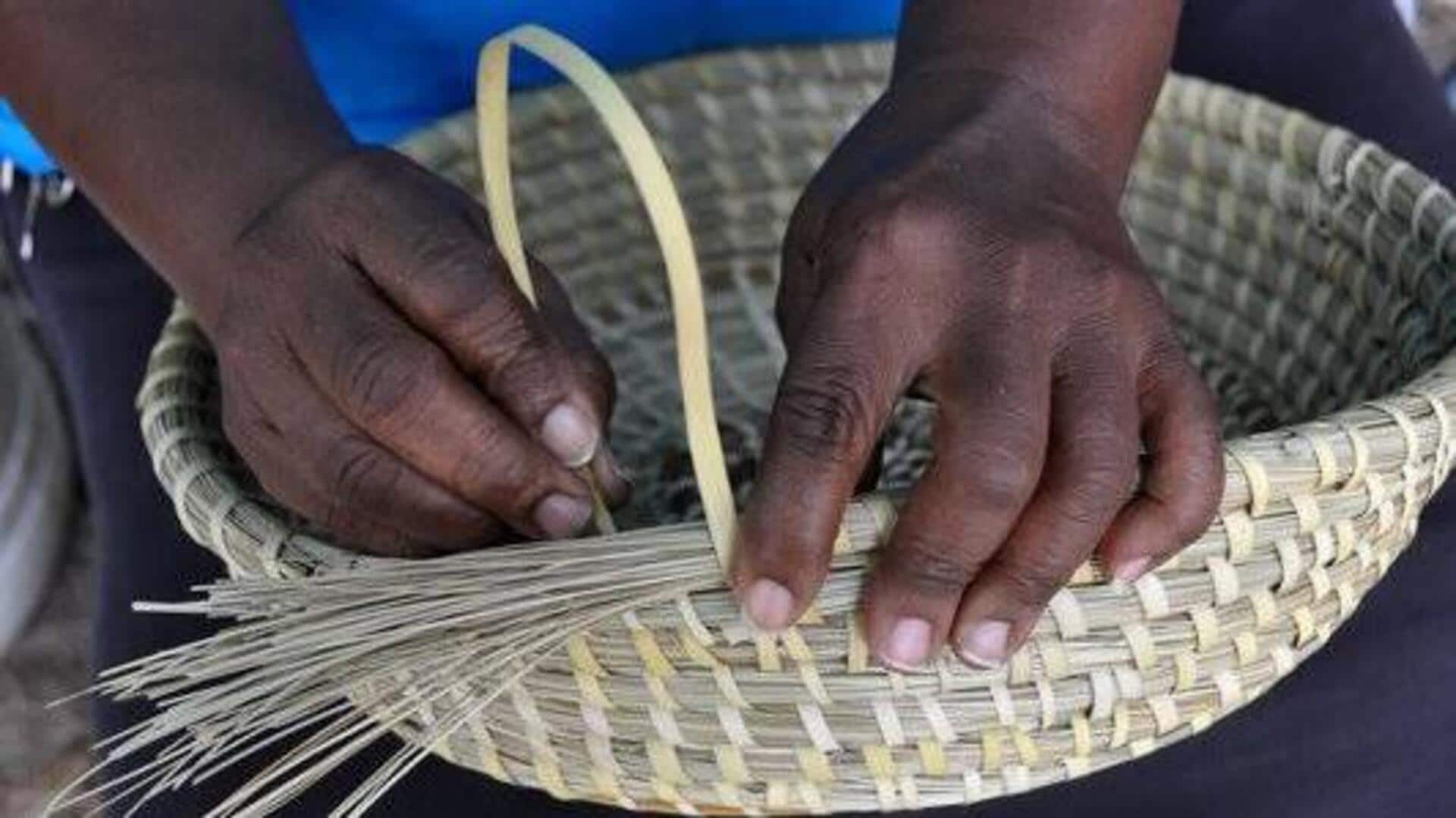
How to weave baskets using wild grass
What's the story
African basket weaving is an ancient craft that has been passed down generations. The technique uses wild grass to create intricate designs, reflecting the culture and traditions of various African communities. By learning this art, one can appreciate the skill and creativity involved in making these beautiful baskets. This guide provides insights into the materials, techniques, and cultural significance of African basket weaving with wild grass.
Material selection
Choosing the right wild grass
Selecting the right type of wild grass is crucial for basket weaving. Different grasses offer varying textures and strengths. Commonly used grasses include bulrush and sedge, known for their durability and flexibility. These materials are often found near water bodies, where they grow abundantly. Ensuring that the grass is properly dried before use helps maintain its integrity during the weaving process.
Weaving skills
Mastering basic weaving techniques
Understanding basic weaving techniques is essential to create sturdy baskets. The most common methods include coiling and plaiting. Coiling involves wrapping grass around a core material, while plaiting consists of interlacing strands over and under each other. Practicing these techniques helps develop hand-eye coordination and patience, which are vital for successful basket creation.
Design patterns
Incorporating traditional designs
Traditional African baskets are known for their unique patterns and designs, which are symbolic and culturally significant. From zigzag lines to geometric shapes, each design tells a story or represents a specific community's identity. Learning about these patterns not only enhances your weaving skills but also deepens your understanding of African culture.
Cultural insights
Understanding cultural significance
Basket weaving is not just a craft in Africa; it is a cultural expression. Each region has its own unique styles, which are a reflection of its history and social structures. By learning these traditions, one can appreciate the deep-rooted connections between communities and their crafts. It is a journey through time, witnessing the evolution of these techniques and their importance in daily life and rituals.