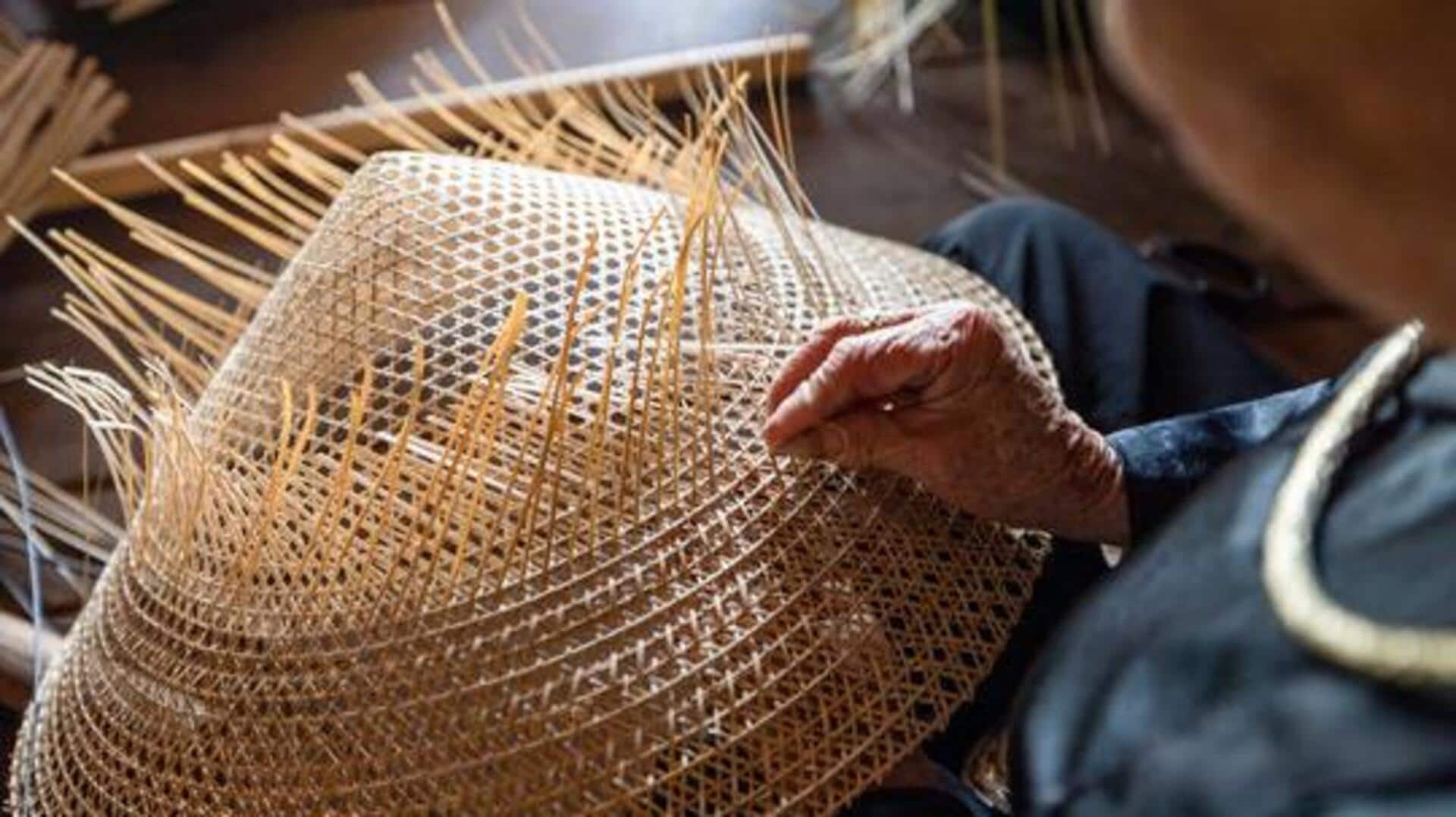
How to weave with palm fronds
What's the story
Yoruba palm frond weaving is an age-old craft that showcases the creativity and skill of artisans. Using palm fronds, this traditional art form is practiced in many parts of Nigeria and beyond. The intricate designs created by the weavers are not just functional, but also aesthetically pleasing. Learning this craft can give you an insight into cultural heritage and hone your weaving skills.
#1
Understanding palm fronds
Palm fronds are the most important element of Yoruba weaving.
These leaves are flexible yet strong, making them perfect for weaving.
They are harvested from palm trees, which are abundant in tropical regions.
The preparation of palm fronds includes drying and cutting them into manageable sizes before using them in various designs.
#2
Basic weaving techniques
The basic techniques of Yoruba palm frond weaving include plaiting, looping, and interlacing.
These techniques are used to create different patterns and structures.
Plaiting involves crossing the fronds over and under each other, while looping adds another layer by wrapping around sections of the plaited work.
Interlacing combines both methods for more complex designs.
#3
Tools required for weaving
To start with Yoruba palm frond weaving, you need a few basic tools.
A sharp knife is essential for cutting the fronds to size, and scissors can help with finer adjustments.
A flat surface makes it easier to work on larger pieces, while smaller projects can be done on tabletops or even laps.
#4
Cultural significance of the craft
Beyond its practical uses, Yoruba palm frond weaving holds cultural importance within communities where it is practiced.
The craft is often passed down through generations as a means of preserving cultural identity and traditions.
It also serves as a source of income for many artisans who sell their woven goods locally or internationally.