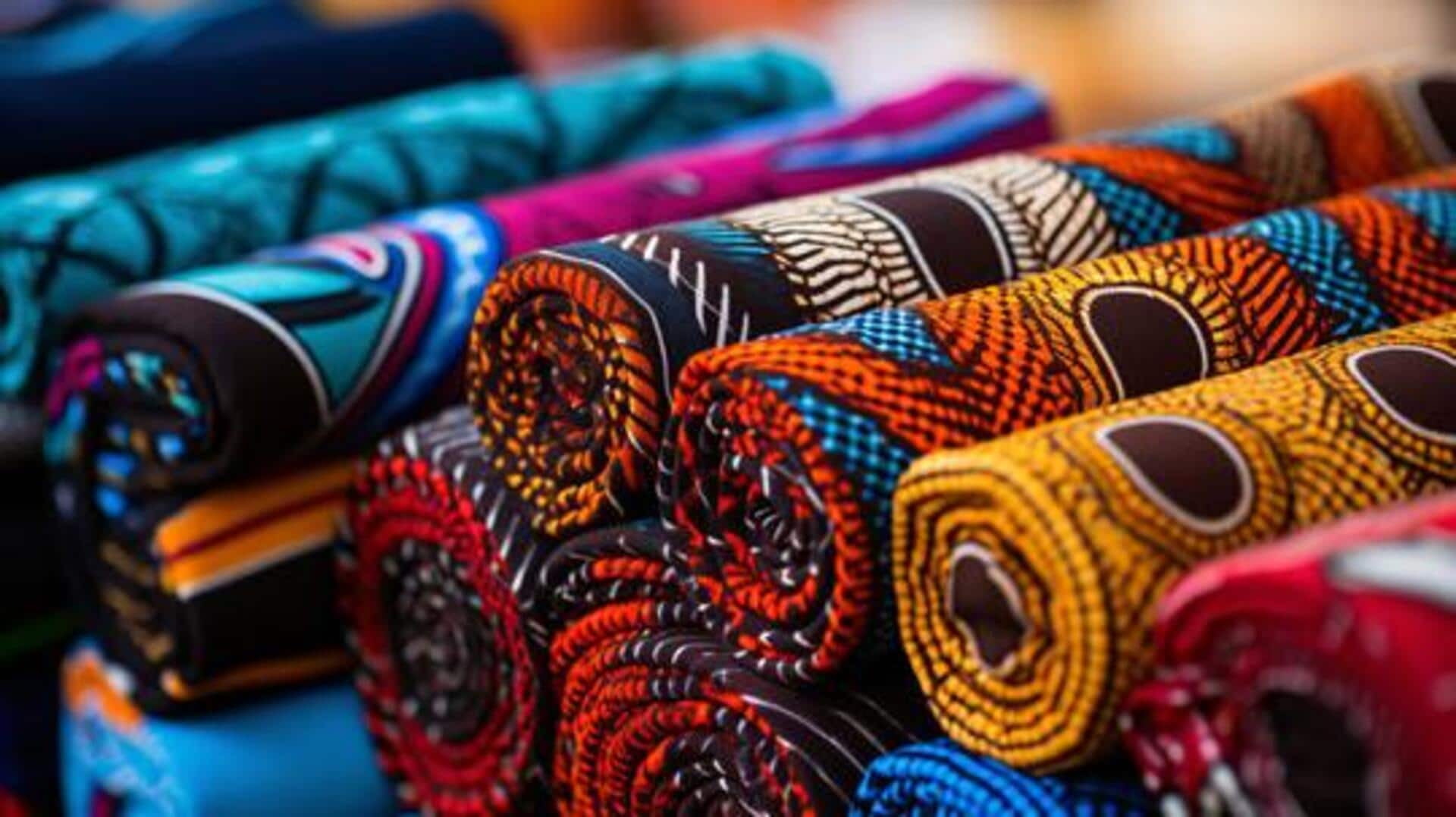
All about Yoruba textiles
What's the story
Yoruba adire textiles, famous for their intricate patterns and vibrant colors, have been a part of Nigeria's cultural heritage for centuries. These fabrics are made using traditional resist-dyeing techniques, which have been passed down through generations. Over the years, the art of adire has evolved, adapting to modern tastes while keeping its cultural significance intact. Here's a look at the evolution of Yoruba adire textiles.
#1
Traditional techniques and patterns
Traditional Yoruba adire is made by tying or folding cloth in certain ways before dyeing it with indigo.
This resist-dyeing technique creates unique patterns on each piece.
Common designs include geometric shapes and symbols that have cultural meanings.
The patterns are not just decorative, but also tell stories or convey messages within the community.
#2
Modern adaptations in fashion
In recent years, Yoruba adire has found a place in modern fashion, both locally and internationally.
Designers are now incorporating these textiles into contemporary clothing lines, giving a modern twist to traditional designs.
This fusion appeals to younger generations, who appreciate the cultural heritage while looking for unique fashion statements.
#3
Economic impact on local communities
The production of Yoruba adire textiles also contributes to the economy of local communities in Nigeria.
By creating jobs and supporting local artisans, the craft helps sustain livelihoods.
As demand for these fabrics increases globally, it opens up new opportunities for economic growth without compromising cultural integrity.
Tip 1
Preservation efforts and cultural significance
Preserving the art of Yoruba adire is essential to keep the culture alive for future generations.
Educational programs are being held to teach the younger ones about traditional techniques and their importance in history and identity.
These efforts ensure that this unique textile art continues to be a source of pride and connection to the past for the Yoruba people.