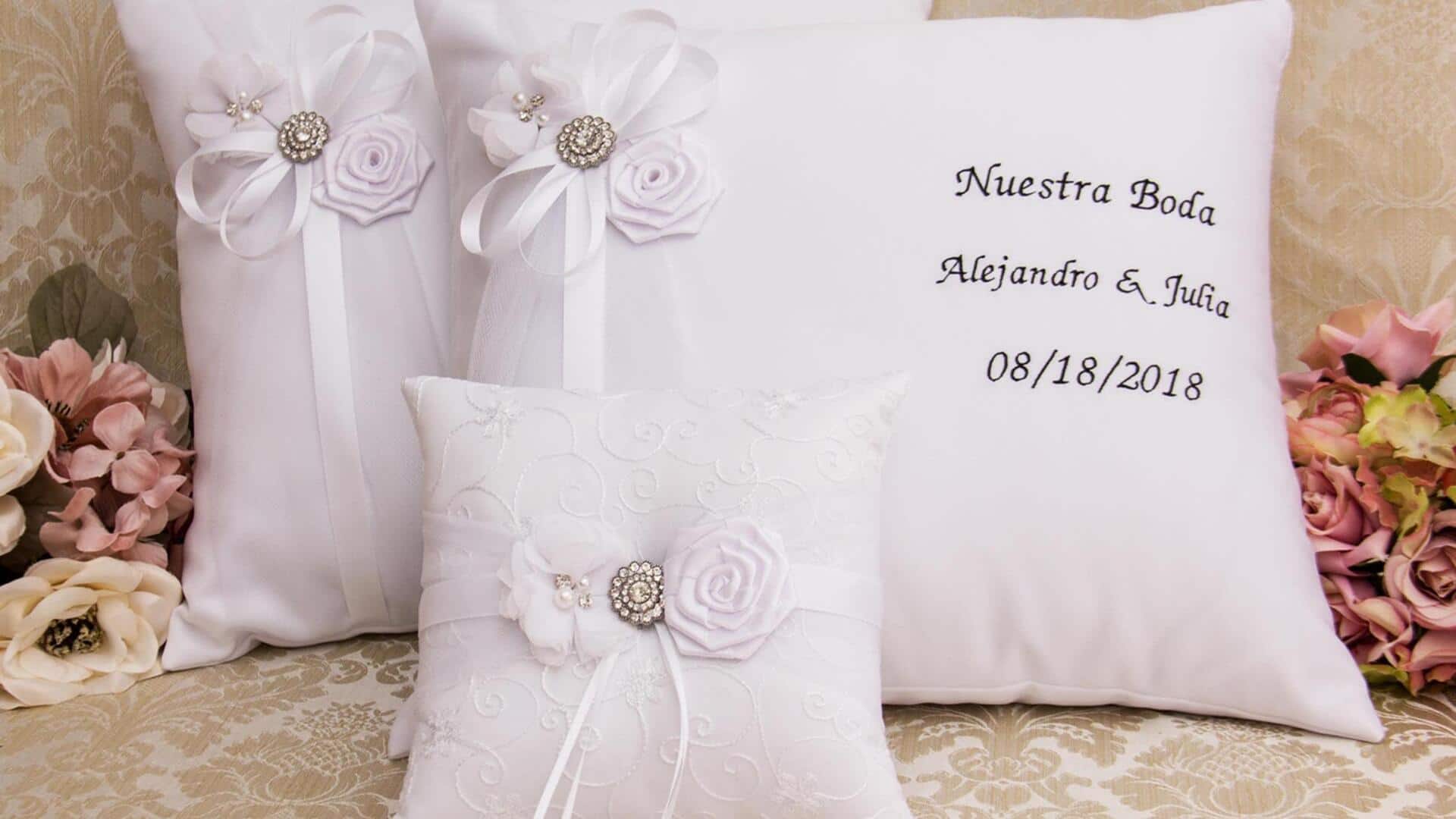
Why are pillows used in Hungarian weddings
What's the story
Hungarian wedding pillows are a beautiful part of the country's wedding traditions. These pillows are usually embroidered with symbols of love and prosperity, and are an essential part of the ceremonies. They are not just decorative but also carry deep cultural significance. The use of wedding pillows can differ from one region to another, but their importance in celebrating unions is universal across Hungary.
#1
Symbolism of embroidery
Embroidery on Hungarian wedding pillows usually features symbols such as hearts, flowers, and vines.
Each design has its own meaning, usually related to love, fertility, or prosperity.
The intricate patterns are made with great care and attention to detail, reflecting the skill of the artisans who create them.
These symbols are meant to bless the couple with a happy and prosperous life together.
#2
Regional variations in design
The design of wedding pillows can differ significantly from one region of Hungary to another.
In some areas, traditional motifs may be used, while in others, modern interpretations may be preferred.
These regional variations highlight the diversity within Hungarian culture and how local traditions continue to evolve over time.
Despite these differences, the core purpose of the pillow remains the same—to symbolize unity and harmony.
#3
Role in wedding ceremonies
During Hungarian weddings, these pillows are usually placed on altars or given as gifts to the couple.
They may be used during specific rituals or simply serve as decorative pieces at receptions.
Their presence at a wedding ceremony highlights their importance as a token of good fortune for newlyweds embarking on their journey together.
#4
Preservation of cultural heritage
The tradition of using wedding pillows also plays an important role in preserving Hungarian cultural heritage.
As modern influences seep into wedding customs around the world, these timeless pieces remain a link to the past.
By keeping this tradition alive, families honor their ancestors while also passing on meaningful practices to future generations.