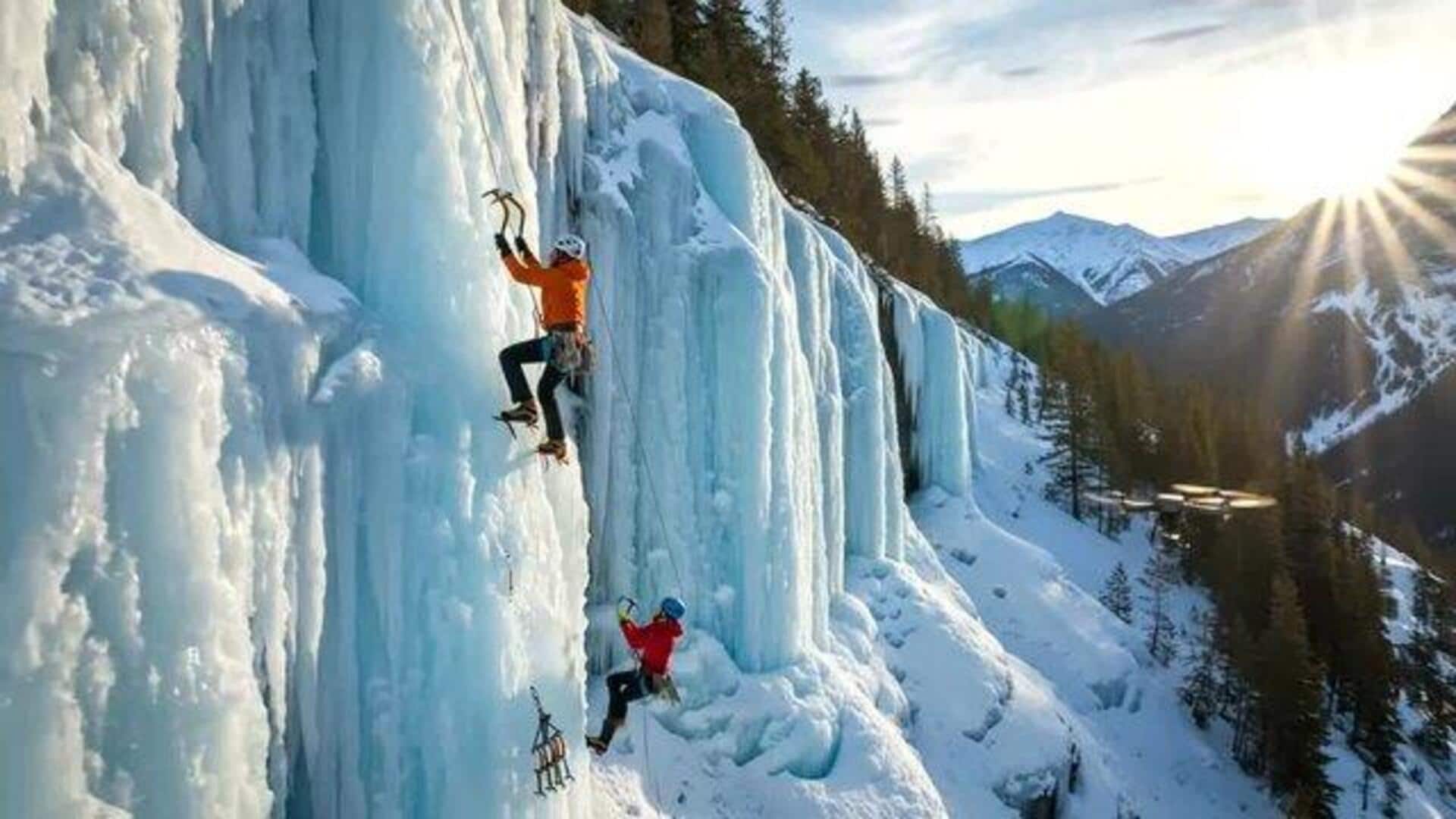
Where to go for ice climbing in Uganda
What's the story
The Rwenzori Mountains in Uganda provide an unusual ice climbing experience, making them a hidden gem for adventure seekers. Famous for their stunning glaciers and tough terrain, these mountains are a dream come true for climbers looking for something different. Unlike other popular ice climbing destinations, the Rwenzoris provide a unique environment and challenges that test even the most seasoned climbers. Here are some insights into this extraordinary adventure.
#1
Unique glacier formations
The glaciers of the Rwenzori Mountains are unlike any other in the world. Formed over thousands of years, these ice structures are constantly changing due to weather conditions.
Climbers can expect to encounter a variety of formations, from crevasses to icefalls, which require technical skills and adaptability.
The dynamic nature of these glaciers adds an element of unpredictability to each climb, making it an exhilarating experience.
#2
Diverse ecosystems on ascent
As climbers ascend the Rwenzori Mountains, they pass through different ecosystems, from tropical rainforests to alpine meadows.
This biodiversity makes the journey even more interesting, as climbers get to see various plant species and wildlife along the way.
The transition between ecosystems also brings different challenges and conditions that climbers must navigate carefully.
#3
Challenging weather conditions
Weather in the Rwenzori Mountains can be unpredictable and extreme, with frequent rainfall and rapid temperature changes.
Climbers must be prepared for these conditions by carrying appropriate gear and being ready for sudden shifts in weather patterns.
Understanding how weather affects climbing routes is crucial for safety and success on these climbs.
Tip 1
Preparation is key for success
Proper preparation is essential before attempting any climb in the Rwenzori Mountains.
This includes physical training to build endurance, as well as mental preparation for the challenges ahead.
Additionally, acquiring knowledge about the specific routes, equipment needed, and potential hazards can significantly increase chances of a successful climb without incident.