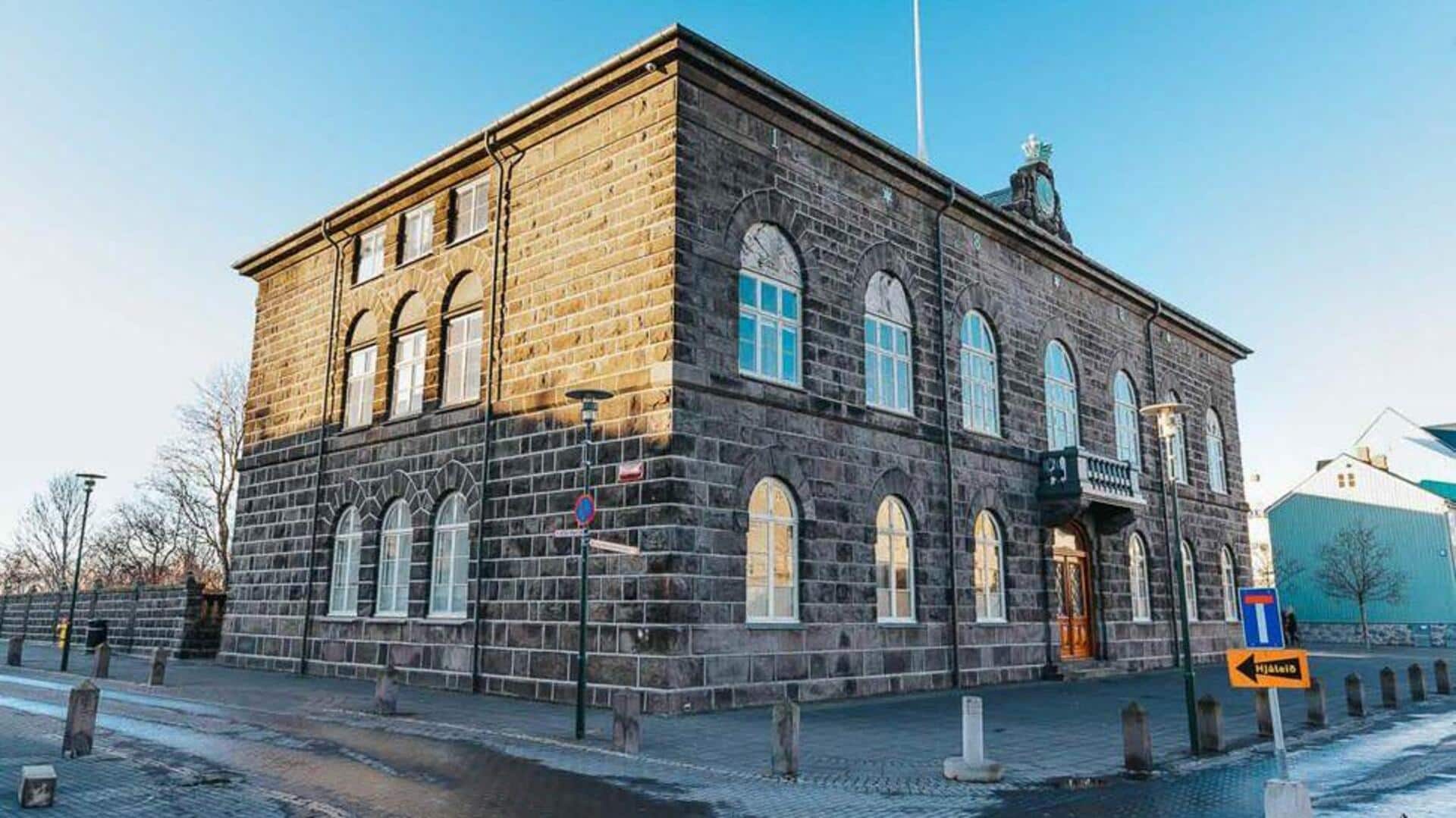
When in Iceland, visit these historical sites
What's the story
Iceland is famous for its stunning landscapes and natural wonders, but it also has a rich history that is often overshadowed by its more popular attractions. While most tourists flock to the Blue Lagoon or the Golden Circle, there are lesser-known historical sites that offer a glimpse into the island's past. These hidden gems provide an opportunity to explore Iceland's history without the crowds, making for a unique travel experience.
#1
The ancient Althing site
Located at Thingvellir National Park, the ancient Althing site is one of the oldest parliaments in the world.
Established in 930, it was here that Icelanders gathered to make laws and settle disputes.
Today, visitors can walk through this historic area and learn about its significance through informative signs.
The park also offers stunning views of rift valleys and clear waters.
#2
Skallagrimur's grave at Borgarnes
Skallagrimur's grave at Borgarnes is a tribute to one of Iceland's most famous settlers, Skallagrimur Kveldulfsson.
A prominent character in Egil's Saga, his grave is located on a small hill overlooking the town.
The site gives visitors an insight into Viking Age life and lore.
It is a quiet place where one can reflect on Iceland's storied past while enjoying panoramic views of the surrounding landscape.
#3
Reykholt's medieval manuscripts
Reykholt was once home to Snorri Sturluson, a medieval scholar who penned down the sagas that are important to understanding Norse mythology and history.
His home has been turned into a museum where visitors can see manuscripts he wrote and learn about his life through exhibitions.
The site offers guided tours that give an insight into medieval Icelandic literature.
#4
Hrafnseyri's Museum of Exploration
Hrafnseyri's museum celebrates Icelandic explorers who ventured beyond the shores of their homeland during the Age of Discovery in the 19th century.
The museum exhibits artifacts from these expeditions, along with stories detailing their journeys across uncharted territories.
It highlights how these adventurers contributed to global exploration efforts at large, beyond just regional discoveries alone.