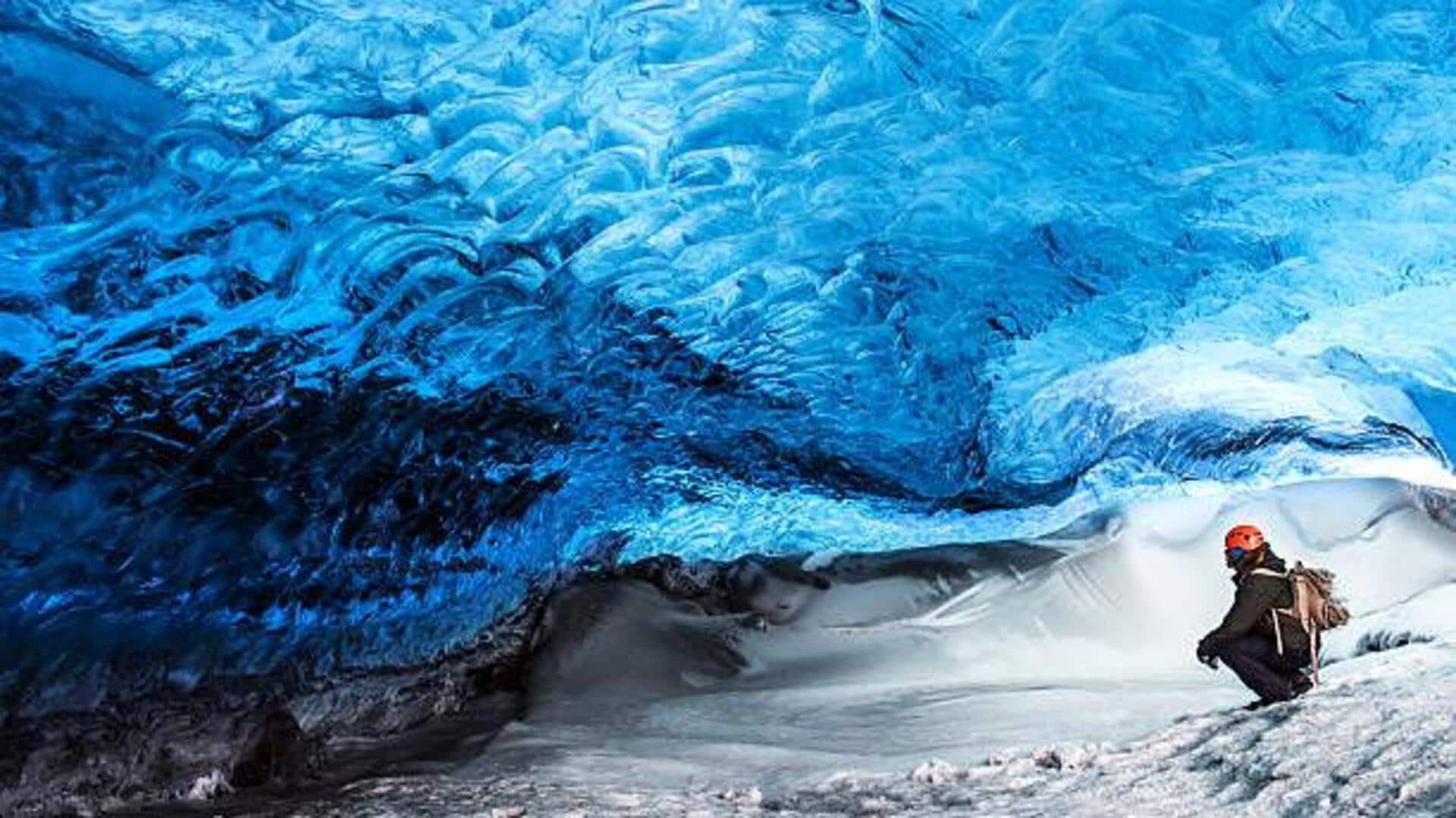
Your guide to exploring Iceland's ice caves
What's the story
Iceland's ice caves are a true wonder of nature, attracting travelers from all over the world. These caves, formed by the melting and refreezing of glaciers, provide an ever-changing landscape of ice formations and colors. Exploring these caves can be an unforgettable experience for those who love adventure and natural beauty. Here are some key insights into exploring Iceland's ice caves, including what to expect and how to prepare for your journey.
Timing
Best time to visit ice caves
The best time to visit Iceland's ice caves is during winter, when the glaciers are stable enough to be explored. From November to March, the temperatures are low enough to keep the caves intact. However, it is important to note that conditions can vary year by year, so checking weather forecasts and consulting local guides is advisable before planning your visit.
Preparation
Essential gear for exploration
When exploring ice caves in Iceland, proper gear is essential for safety and comfort. Warm clothing layers are a must, as temperatures inside the caves can be below freezing. Waterproof boots with good traction will help navigate icy surfaces safely. A helmet with headlamp is often provided by tour operators, but bringing your own can enhance visibility in darker areas of the cave.
Safety
Safety tips while exploring
Safety should always be a priority when exploring ice caves. Always go with a guided tour led by experienced professionals who know the terrain well. Stay within marked paths, and heed all safety instructions given by guides. Be mindful of changing weather conditions that could affect cave stability or accessibility during your visit.
Photography
Photography opportunities inside caves
Ice caves also provide unique photography opportunities with their stunning formations and colors. A camera with manual settings will help capture the intricate details of ice structures, and a tripod can help with long exposure shots in low-light conditions inside the cave. Respecting natural formations by not touching or altering them ensures they remain preserved for future visitors' enjoyment.