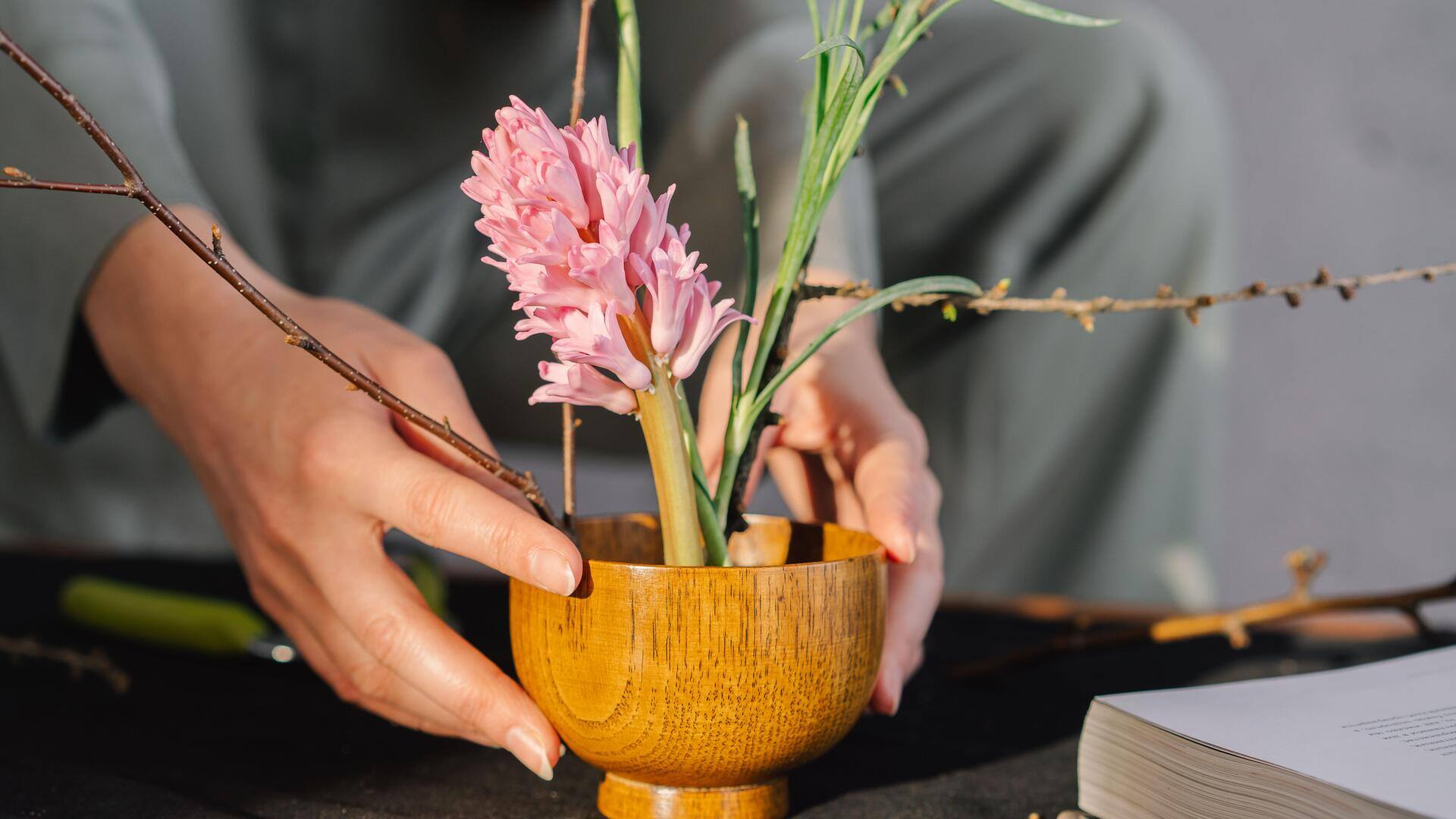
5 things to know about Japan's ikebana art
What's the story
Ikebana, the Japanese art of flower arrangement, is so much more than just aesthetics. It is a way of expressing emotions, philosophies, and the beauty of nature. Each arrangement has its own meaning and purpose, making it a unique form of art. Here are five intriguing aspects of ikebana that highlight its cultural significance and artistic complexity.
#1
The philosophy behind Ikebana
Ikebana is rooted in the philosophy of simplicity and minimalism.
Unlike Western floral arrangements that focus on volume and color, ikebana emphasizes line, balance, and harmony with nature.
Practitioners aim to create compositions that reflect the beauty of natural elements while maintaining a sense of tranquility.
#2
Seasonal influences in arrangements
Seasonality plays a vital role in ikebana. Arrangements often include flowers or branches that are in season, highlighting the changes in nature throughout the year.
This practice not only showcases the beauty of each season but also encourages practitioners to develop an awareness of their surroundings.
#3
Use of space in arrangements
Space is an integral part of ikebana arrangements.
The empty spaces between elements are as important as the flowers themselves, as they add to the composition's balance and harmony.
This mindful use of space encourages viewers to appreciate both the elements present and those absent, creating a sense of completeness.
#4
Tools used by practitioners
Practitioners use specific tools like kenzan (a needle holder), shears, and vases designed for ikebana arrangements.
Each tool has its own purpose in creating precise cuts or holding stems securely without damaging them.
The choice of tools reflects the meticulous nature of this art form.
#5
Educational aspects within Ikebana practice
Learning ikebana involves understanding various styles (like rikka or nageire) and techniques (like wiring or bending stems).
It also emphasizes discipline through regular practice sessions under experienced instructors who guide students on how to refine their skills over time.