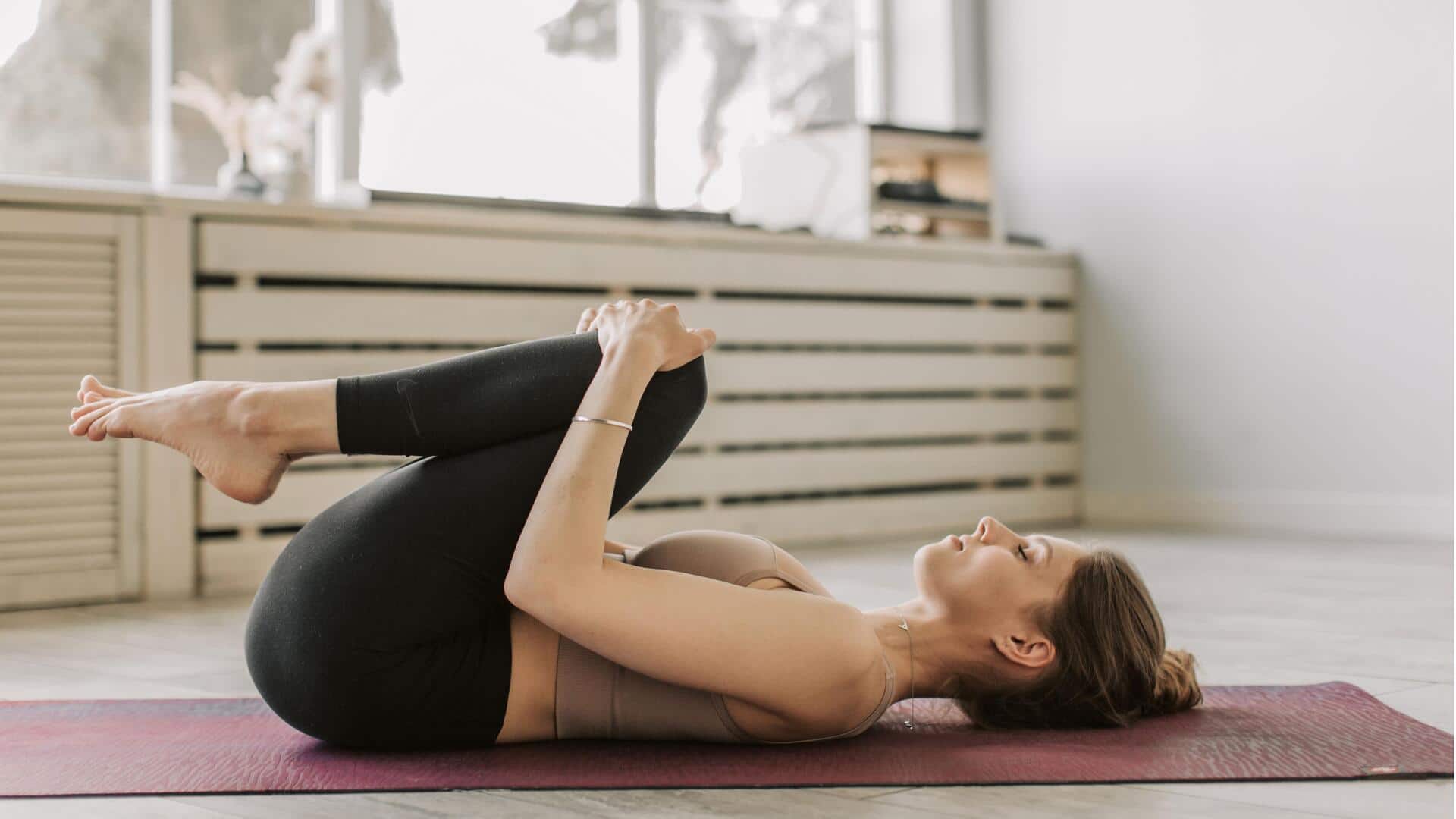
Supine pelvic tilt: Improve your posture with this easy exercise
What's the story
Supine pelvic tilt is a simple yet effective exercise that can improve core stability and relieve lower back pain. The movement involves tilting the pelvis while lying on your back, strengthening the abdominal muscles, and improving posture. It is an accessible exercise for beginners and can be performed without any equipment. Regular practice of supine pelvic tilt can lead to better balance, reduced discomfort in the lower back, and enhanced overall physical performance.
#1
Understanding the pelvic tilt movement
The pelvic tilt movement is all about flattening the lower back against the floor by tightening the abdominal muscles and tilting the pelvis upwards.
This simple motion engages core muscles, which are essential for stability and support of the spine.
By mastering this movement, you can improve your posture and reduce strain on your lower back.
#2
Benefits of supine pelvic tilt exercises
Incorporating supine pelvic tilts into your routine comes with a bunch of benefits.
First, it strengthens core muscles, which helps in better balance and coordination.
Second, it relieves tension in the lower back by promoting proper alignment of the spine.
Third, it improves the flexibility of hip flexors, which are often tight due to prolonged sitting.
#3
Tips for performing pelvic tilts correctly
To perform pelvic tilts correctly, start by lying flat on your back with knees bent and feet flat on the floor.
Place your hands under your head or at your sides for support.
Inhale deeply to prepare, then exhale as you engage your abdominal muscles to flatten your lower back against the floor.
Hold for a few seconds before releasing.
#4
Common mistakes to avoid
One common mistake is using too much force while performing the tilt, which may lead to strain instead of strengthening muscles.
Another mistake is using improper form during each repetition.
Keep your shoulders relaxed against the ground throughout the movement. Avoid arching your back or lifting your shoulders unnecessarily.