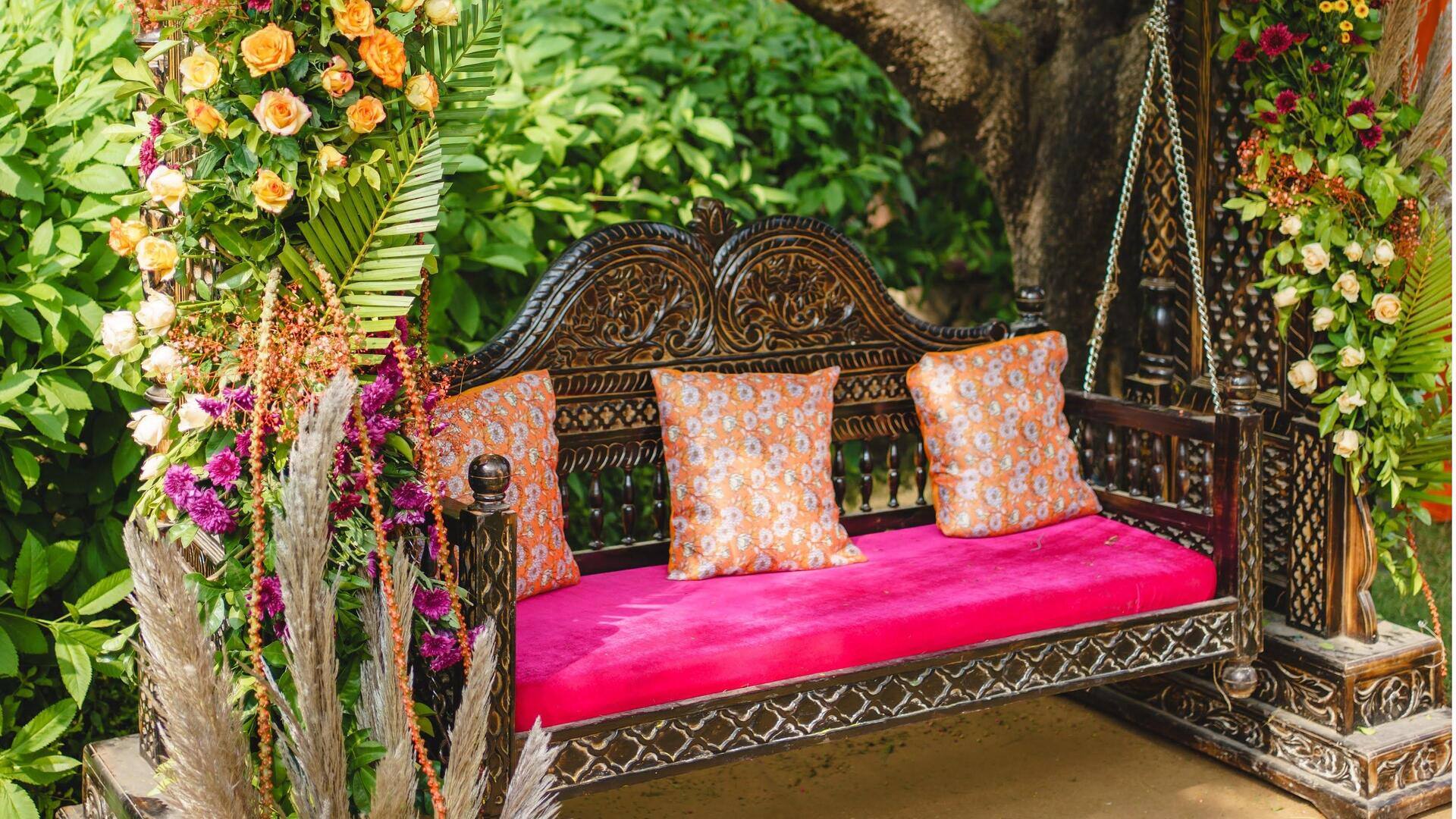
Why jhoolas hold a special place in India
What's the story
The jhoola culture of India is a beautiful blend of tradition and community spirit. These swings, which are an integral part of many Indian festivals and rural life, bring people together in a simple yet profound way. They are not just a source of fun but also a means of socializing and bonding among families and friends. Here's a look at the essence of jhoola culture in India.
#1
Jhoolas in festivals
In India, jhoolas are an integral part of festivals like Teej and Hariyali.
They are decorated with flowers and colorful fabrics, and are set up in homes and public spaces.
People take turns swinging on them, singing traditional songs.
This practice symbolizes joy and prosperity, making it a highlight of the celebrations.
#2
Community bonding through swings
Jhoolas also serve as a social glue in rural areas.
During fairs or village gatherings, swings become the focal point where people from different walks of life come together.
The act of swinging side by side encourages conversations, laughter, and camaraderie among participants.
It reinforces community ties in a simple yet effective way.
#3
Variations across regions
While the essence of jhoola culture remains the same, its form varies from region to region in India.
In some areas, they are made of wood with intricate carvings, while in others, they are simple rope swings.
Each variation reflects the local craftsmanship and traditions, adding to the diversity of this cultural practice.
#4
Psychological benefits of swinging
Swinging on a jhoola comes with a lot of psychological benefits.
The rhythmic motion can help reduce stress levels and improve mood by releasing endorphins.
For many, spending time on a swing is a way to unwind after a long day or escape from daily routines for a while.