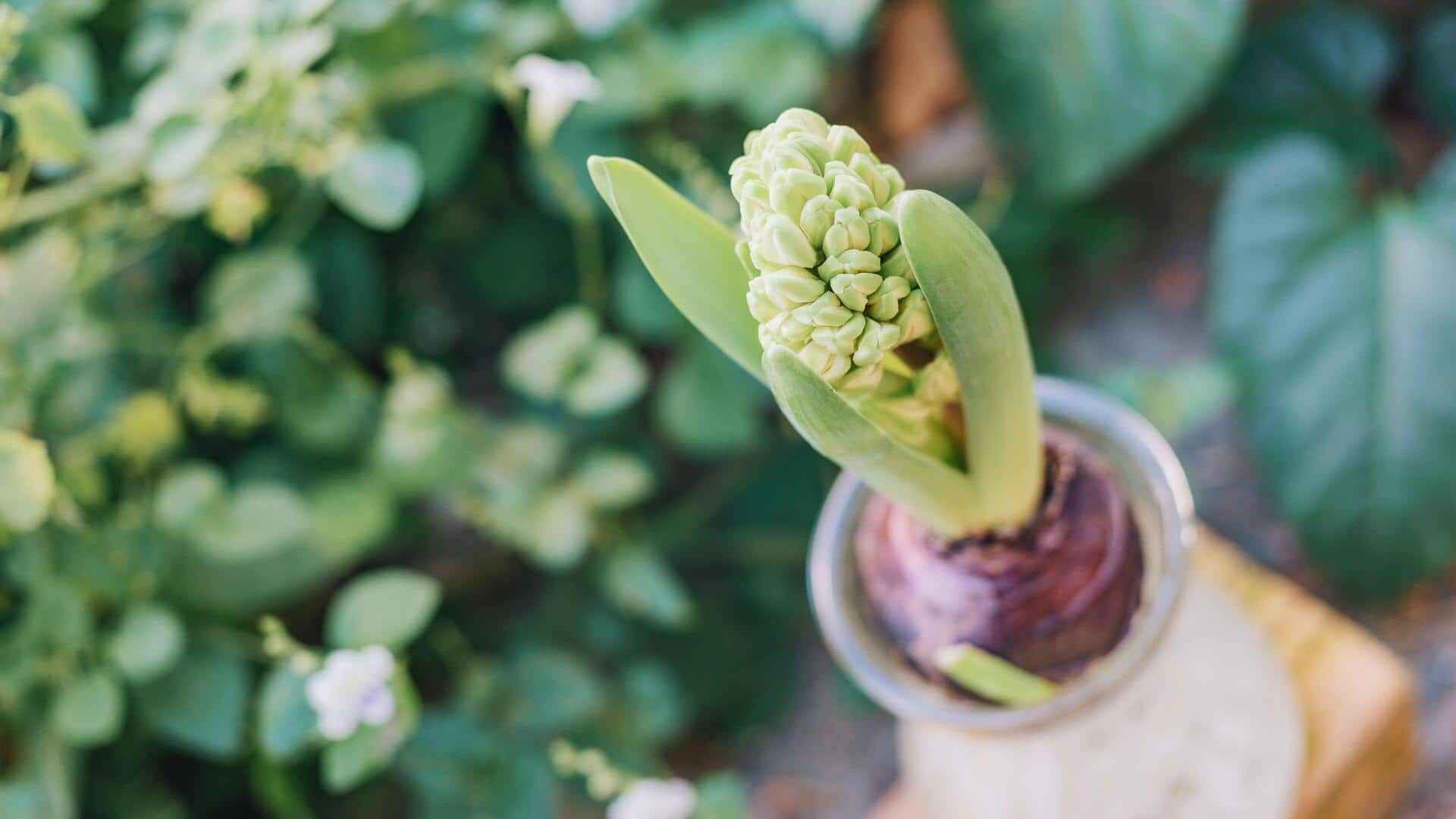
Want flowers indoors? Try growing hyacinths
What's the story
Hyacinths are the perfect indoor plant for beginners. Their vibrant colors and lovely fragrance can brighten up any space. These bulbs are easy to grow and require minimal care, making them the perfect choice for novice gardeners. With a few simple steps, you can enjoy the beauty of hyacinths indoors all year round. Here are some practical tips to help you get started with growing hyacinths indoors.
Tip 1
Choosing the right bulbs
Selecting high-quality bulbs is essential for successful growth.
Look for firm, plump bulbs without any signs of mold or rot.
The size of the bulb also matters; larger bulbs usually produce bigger flowers.
It's best to buy bulbs from reputable sources to ensure they are disease-free and healthy.
Tip 2
Preparing the soil and pot
Use a well-draining potting mix to prevent waterlogging, which can cause bulb rot.
A mix specifically designed for bulbs or a combination of regular potting soil with sand or perlite works well.
Choose pots with drainage holes to allow excess water to escape easily. This setup mimics natural conditions and promotes healthy root development.
Tip 3
Watering and light requirements
Hyacinths need moderate watering; water them only when the top inch of soil feels dry.
Overwatering can cause the bulbs to rot, so avoid letting them sit in waterlogged soil.
Place your pots in bright, indirect sunlight; direct sunlight can scorch the leaves.
A consistent light source helps in the growth of strong stems and vibrant blooms.
Tip 4
Fertilizing for optimal growth
To give your hyacinths a nutrient boost, use a balanced liquid fertilizer every two weeks after they've sprouted.
This will ensure that they grow healthy and bloom beautifully.
But be careful not to over-fertilize, as this can damage the roots of the bulbs.
The key is to follow the instructions on the fertilizer package to avoid any mishaps.
Tip 5
Managing temperature and humidity
Hyacinths thrive in cool temperatures between 60 degrees Fahrenheit and 65 degrees Fahrenheit during the day, and slightly cooler at night if possible.
Keep humidity levels moderate by avoiding overly humid environments, which could lead to fungal issues.
Proper ventilation also helps maintain an ideal indoor climate for these plants.