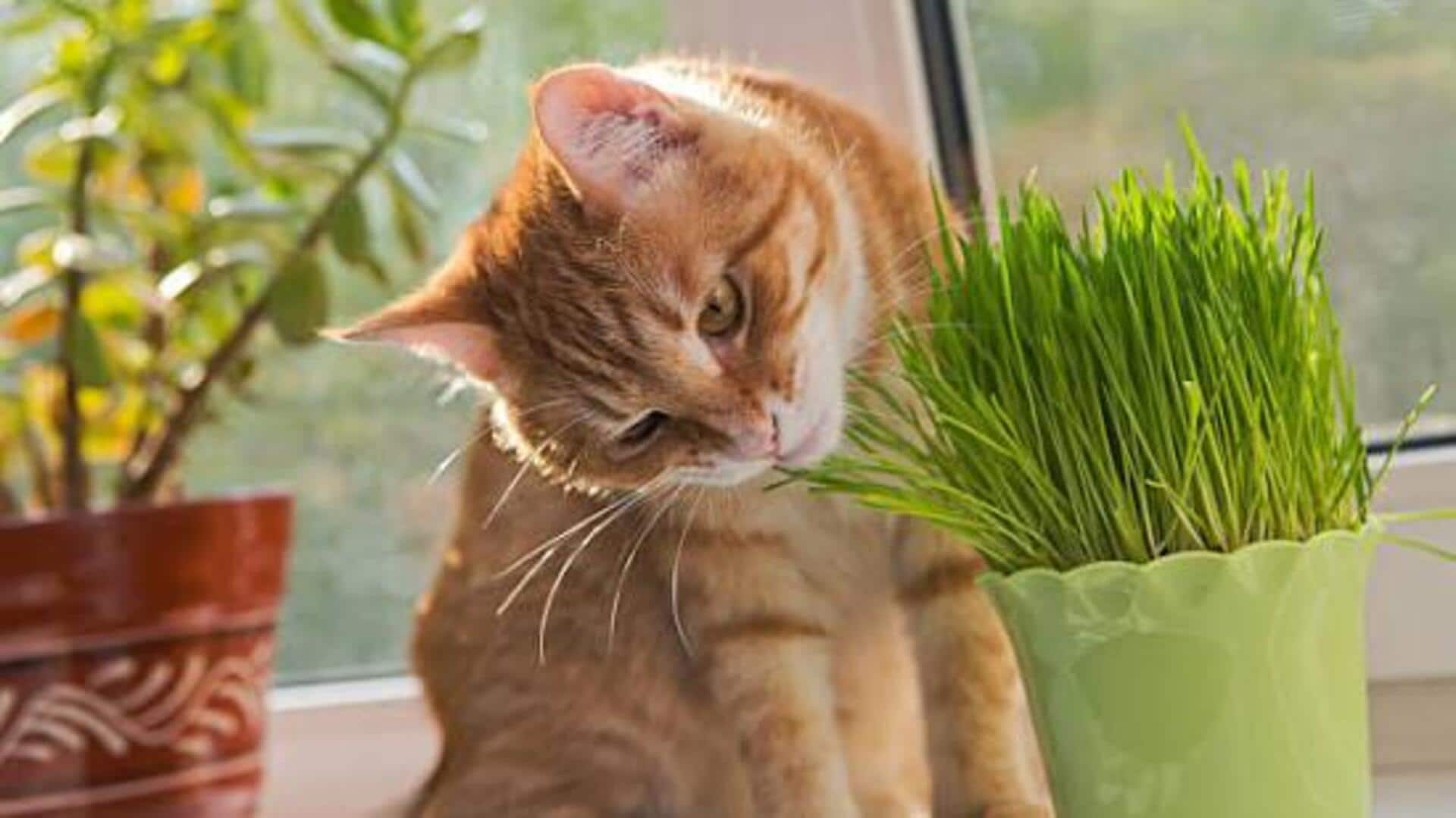
How to grow cat grass at home
What's the story
Growing cat grass indoors is a simple and rewarding task, which can be done with limited resources. Cat grass, usually wheatgrass, provides essential nutrients to your feline friend while also serving as a natural remedy for hairballs. With the right approach, you can grow cat grass indoors without spending a fortune. Here are some practical tips to help you cultivate cat grass at home, efficiently and cost-effectively.
Tip 1
Choosing the right seeds
Selecting the right seeds is crucial for successful cat grass cultivation.
Wheatgrass is the most popular choice owing to its nutritional benefits. You can also try barley or oat seeds.
Make sure the seeds are organic and free from pesticides to ensure safety for your pet.
Most importantly, they should be specifically labeled for sprouting to guarantee good germination rates.
Tip 2
Preparing your containers
Recycling containers is an economical way to grow cat grass.
Old plastic trays or shallow pots can be repurposed for this purpose.
Just ensure that your containers have drainage holes to prevent waterlogging.
Line the bottom with a layer of paper towel or coffee filter before adding soil to keep moisture in, while allowing excess water to escape.
Tip 3
Soil selection and preparation
Choosing the right soil is essential for healthy cat grass growth.
Go for organic potting soil without any added fertilizers or chemicals.
Fill your container with about one inch of soil, and level it out evenly.
Moisten the soil lightly before sowing seeds, but do not make it soggy, as it can lead to mold growth.
Tip 4
Watering techniques
Proper watering is key to growing cat grass indoors.
After sowing seeds evenly on top of the soil, cover them lightly with more soil, and mist them lightly with water using a spray bottle.
Keep the soil consistently moist but not overly wet by checking daily and adjusting as needed.
Tip 5
Providing adequate light conditions
Cat grass needs plenty of light to grow well indoors.
Place your container near a sunny window where it can get at least six hours of indirect sunlight every day.
If natural light isn't enough, you can use LED grow lights as an alternative source of illumination, keeping them about 12 inches above the plants for optimal results.