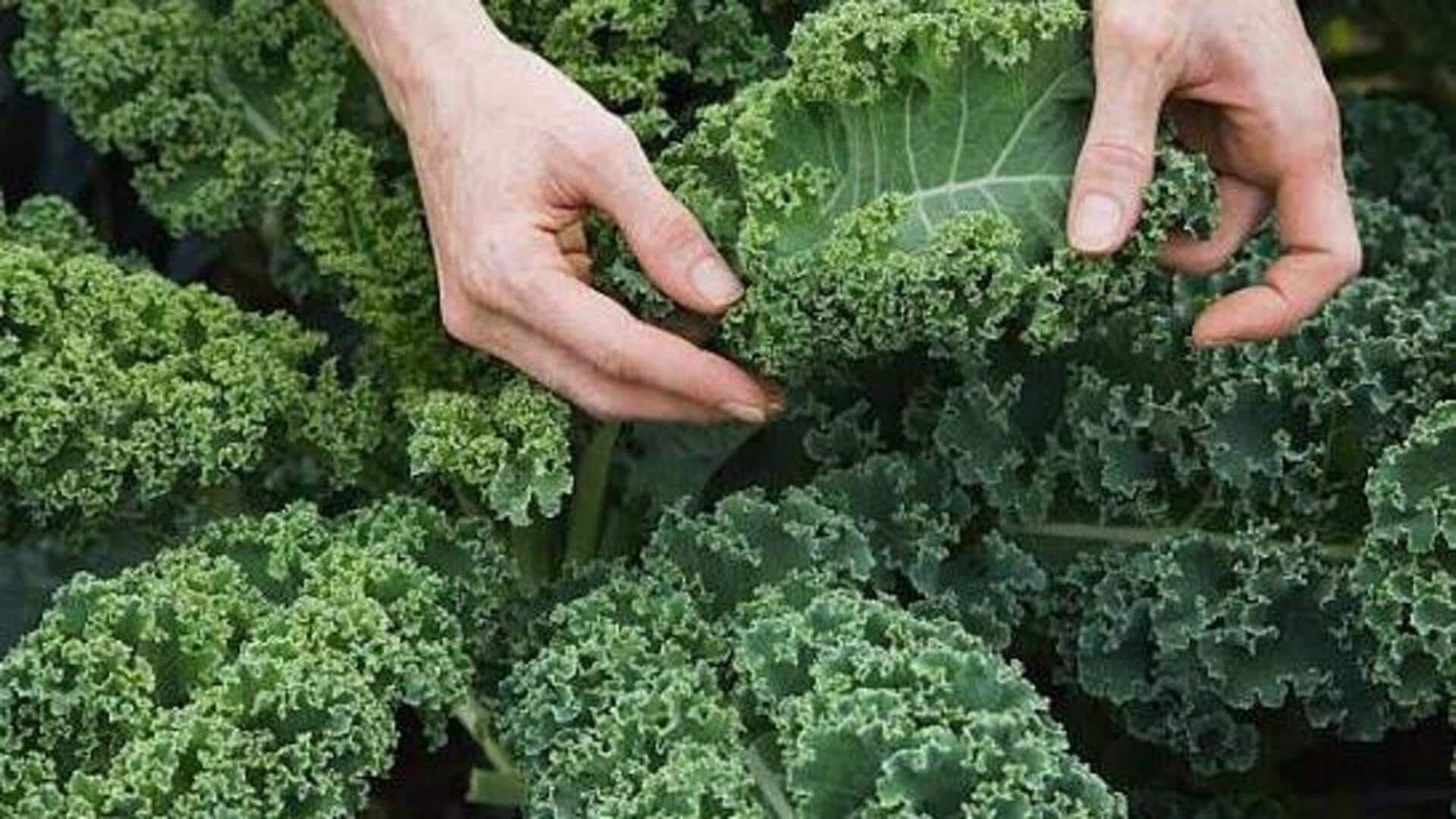
How to grow kale indoors
What's the story
Growing kale indoors is a great way to have fresh greens all year round. Kale, a hardy leafy green, flourishes in cooler temperatures and can be easily grown in containers. With the right conditions and care, you can have a constant supply of this nutrient-rich vegetable at home. Here are some practical tips on how to successfully grow kale indoors, ensuring optimal growth and yield.
Tip 1
Choosing the right container
Selecting an appropriate container is crucial for indoor kale cultivation.
Go for pots that are at least eight inches deep to allow adequate root growth.
Ensure that the containers have drainage holes to avoid waterlogging, which can damage the roots.
Using lightweight materials like plastic or fabric pots can make it easier to move them around as needed.
Tip 2
Optimal lighting conditions
Kale needs plenty of light to grow well indoors.
Ideally, place your containers near a south-facing window where they can soak up six to eight hours of sunlight every day.
If natural light is insufficient, you can use grow lights as an alternative. Position the lights about 12 inches above the plants, and keep them on for 14 hours every day.
Tip 3
Soil and watering requirements
Using well-draining soil is essential for healthy kale growth.
A potting mix enriched with organic matter like compost or peat moss works best.
Water your plants consistently, but avoid overwatering; let the top inch of soil dry out between watering sessions.
This prevents root rot while keeping moisture levels balanced.
Tip 4
Temperature control techniques
Kale thrives in cooler temperatures between 60 degrees Fahrenheit and 70 degrees Fahrenheit (15 degrees Celsius and 21 degrees Celsius).
Keep indoor temperatures within this range by adjusting heating or cooling systems as necessary.
If temperatures rise too high, consider using fans or opening windows during cooler parts of the day to maintain an optimal environment for your plants.