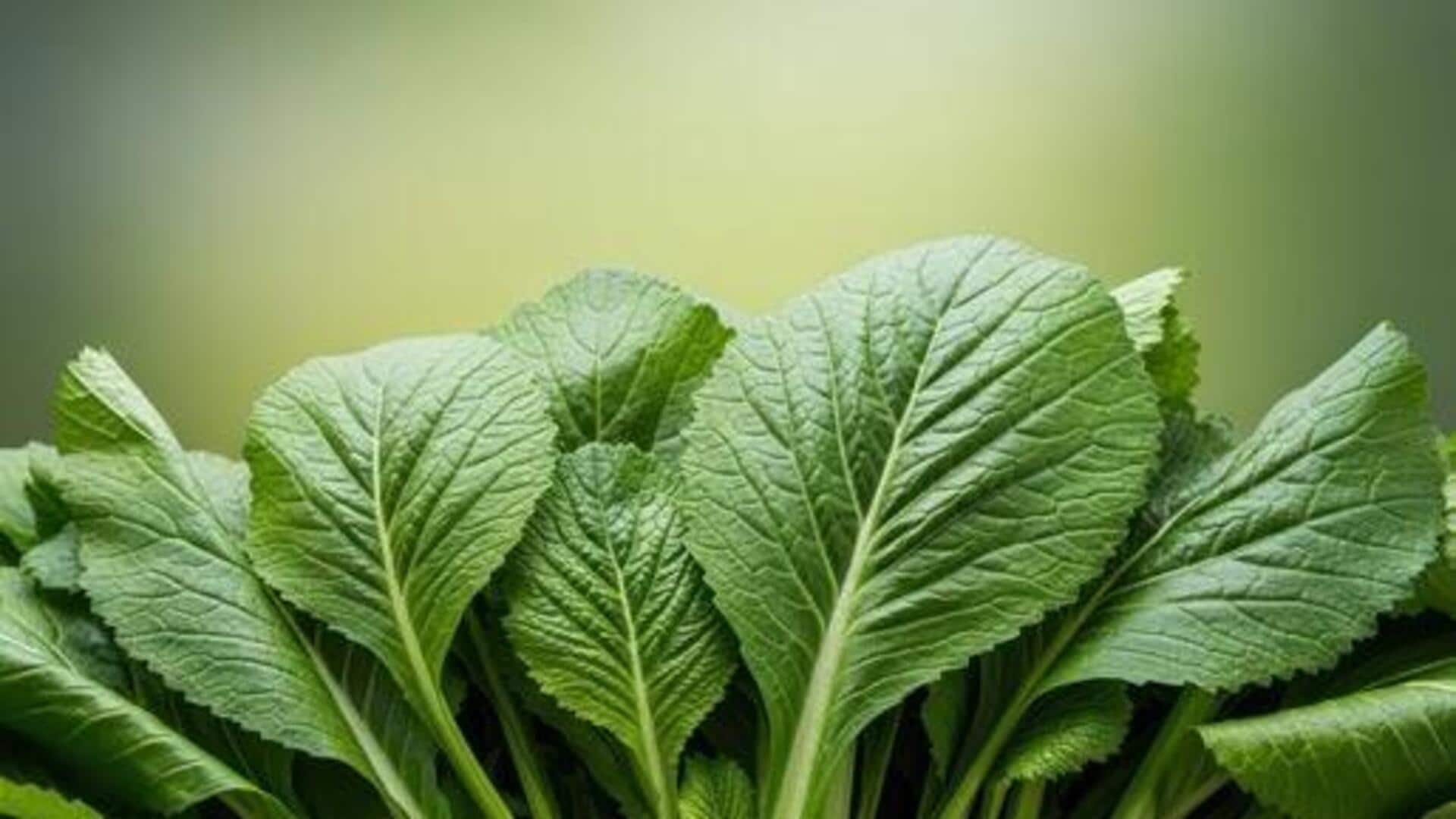
How to grow mustard greens at home
What's the story
Growing mustard greens indoors is a rewarding way to enjoy fresh, nutritious greens all year round. These leafy vegetables are easy to grow and require minimal space, making them ideal for indoor gardening enthusiasts. With the right conditions and care, you can have a continuous supply of mustard greens at your fingertips. Here are some practical tips to help you grow these greens indoors successfully.
Tip 1
Choosing the right containers
Selecting appropriate containers is essential for growing mustard greens indoors.
Choose pots that are at least six inches deep, with drainage holes to prevent waterlogging.
Consider using lightweight materials, such as plastic or fabric pots, which are easier to move and manage indoors.
Ensure each container has a saucer underneath to catch excess water and protect your surfaces.
Tip 2
Optimal soil mix for growth
A well-draining soil mix is essential for healthy mustard green growth.
Use a blend of potting soil mixed with perlite or vermiculite to improve aeration and drainage.
This mix will retain enough moisture while preventing the roots from becoming waterlogged.
Avoid using garden soil, as it may contain pests or diseases that could harm your plants.
Tip 3
Ensuring adequate light exposure
Mustard greens require plenty of light to grow indoors.
Place your containers near a south-facing window, where they can receive at least six hours of direct sunlight each day.
If natural light is insufficient, consider using LED grow lights positioned about 12 inches above the plants for around 12 hours daily.
Tip 4
Watering techniques for healthy plants
Proper watering is key to keeping your mustard greens healthy indoors.
Water the plants when the top inch of soil feels dry to touch, but avoid overwatering, as it can lead to root rot.
Use room temperature water and ensure that excess moisture drains out completely from the bottom of the pot after each watering session.
Tip 5
Fertilizing for optimal growth
To ensure your mustard greens grow well indoors, it's important to fertilize them regularly.
Use a balanced liquid fertilizer diluted to half strength every two weeks during the growing season.
This will ensure they get the nutrients they need, without overwhelming their roots with too much fertilizer at once.