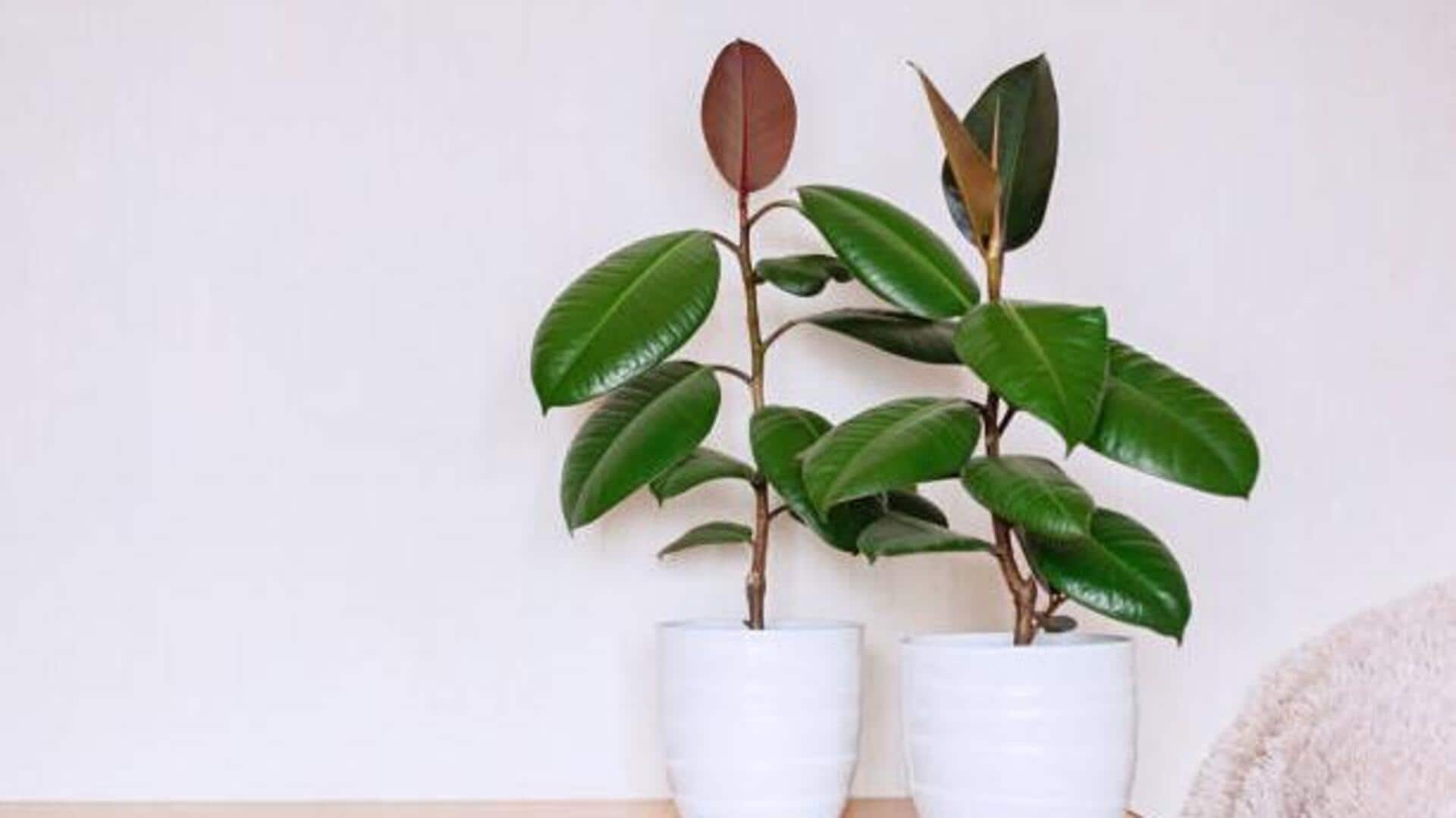
How to grow a rubber plant indoors
What's the story
The rubber fig tree, or Ficus elastica, is a popular choice for indoor gardening. Its hardy nature and attractive foliage make it an ideal plant for both novice and experienced gardeners. With proper care, this tree can thrive indoors, adding a touch of greenery to any space. Here are some practical tips on how to care for your rubber fig tree indoors, ensuring it remains healthy and vibrant.
Light requirements
Ideal lighting conditions
Rubber fig trees flourish in bright, indirect sunlight.
While direct sunlight can scorch their leaves, inadequate light can hinder their growth.
Ideally, place your tree near a window where it receives filtered sunlight.
If natural light is limited, consider using grow lights to meet its lighting needs.
Watering tips
Watering techniques
Proper watering is key to keeping your rubber fig tree healthy.
Let the top inch of soil dry out before watering again to avoid root rot.
Use room temperature water, and ensure that excess water drains out from the pot's bottom.
During the growing season, increase watering frequency slightly, but reduce it in winter when the plant's growth slows down.
Soil choice
Soil and pot selection
Choosing the right soil and pot is crucial for your rubber fig tree's health.
A well-draining potting mix enriched with organic matter works best. It allows for proper drainage while retaining some moisture.
Choose a pot with drainage holes to prevent waterlogging, which can lead to root rot.
This combination ensures that your tree has the best conditions to thrive indoors.
Climate needs
Temperature and humidity control
Rubber fig trees prefer temperatures between 60 degrees Fahrenheit and 75 degrees Fahrenheit (15 degrees Celsius and 24 degrees Celsius).
Keep them away from drafts or sudden temperature changes that could stress the plant.
These trees also like humidity levels around 40% to 60%. If your home is too dry, consider using a humidifier or placing a tray of water near the plant to increase humidity levels.
Pruning advice
Pruning for growth management
Regular pruning helps maintain the shape and size of your rubber fig tree while promoting healthy growth.
Use clean, sharp tools to trim back any leggy branches or leaves that appear damaged or discolored.
Prune during spring when new growth begins, but avoid excessive cutting, as this can shock the plant.